16+ Tiny Bedroom Ideas That Make Your Small Space Look Bigger & Stylish
Many people live with small bedrooms that need smart ideas to feel comfortable and functional. A tiny bedroom doesn’t have to feel crowded or dull. With the right approach, it can become a cozy and inviting space that meets daily needs.

The key to a successful tiny bedroom is making the most of every inch while keeping the room stylish and organized. Simple changes in layout, storage, and decor can help transform even the smallest rooms into practical and pleasant places to rest and relax.
1. Use Multifunctional Furniture Like A Bed With Built-In Drawers:
Multifunctional furniture helps save space in tiny bedrooms. A bed with built-in drawers offers extra storage without taking up more room. This design keeps seasonal clothes, bedding, or other items organized and easy to access. It also reduces the need for extra storage furniture.

Choosing pieces that serve more than one purpose makes the room cleaner and more efficient. This approach maximizes both comfort and space.
2. Install Floating Shelves To Free Up Floor Space:
Floating shelves attach directly to the wall, leaving the floor clear. This design helps small bedrooms feel more open and less crowded. They provide storage for books, decor, or daily essentials without bulky furniture.

Because floating shelves come in many sizes and styles, they fit well in various spaces. Using corners or higher walls can increase storage while keeping the room tidy.
3. Choose A Loft Bed To Create Usable Space Underneath:
A loft bed raises the sleeping area, freeing up floor space below. This space can be used for a desk, storage, or a cozy seating area. Loft beds with built-in shelves or drawers help keep the room organized. They offer practical storage without taking up extra room.
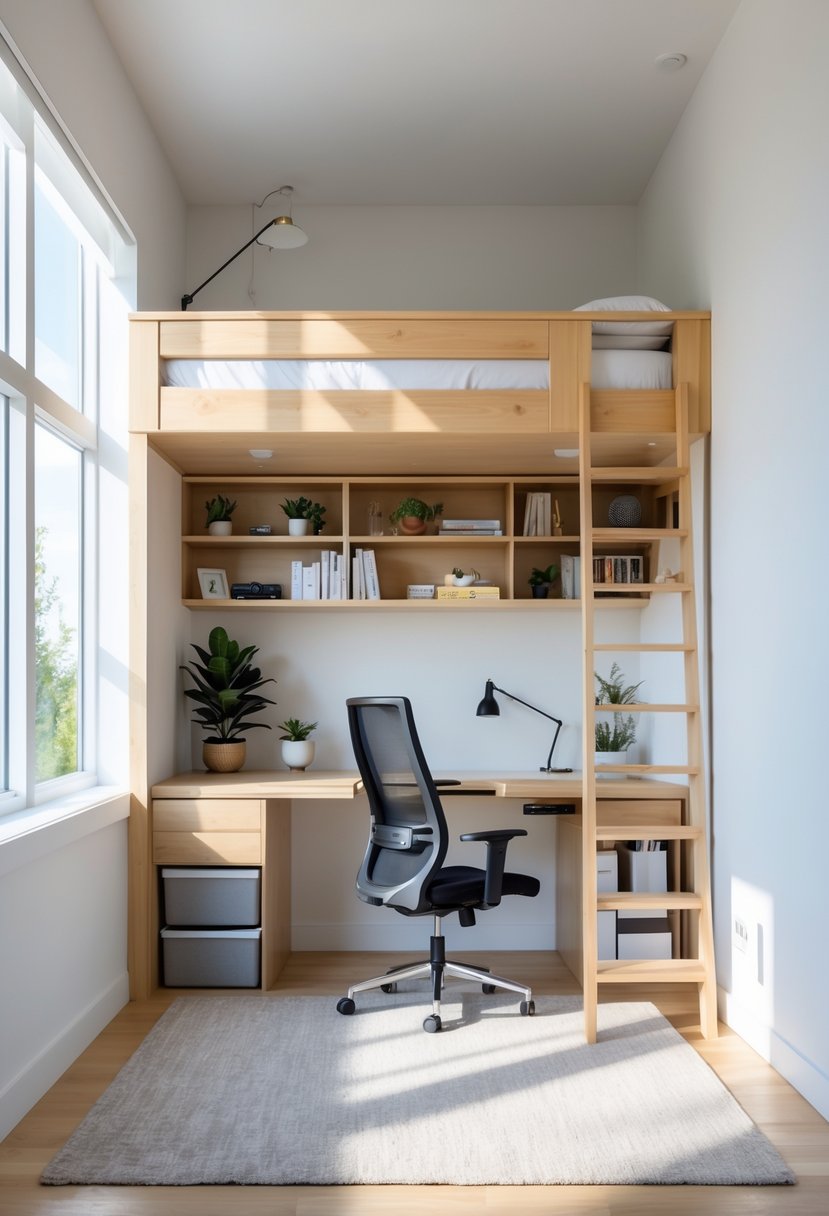
This design is ideal for small bedrooms where every inch counts. It combines sleeping and living areas efficiently.
4. Opt For Light, Neutral Wall Colors To Open Up The Room:
Light, neutral colors help make a tiny bedroom feel more open and bright. Shades like soft gray, beige, and off-white reflect more light, creating an airy atmosphere. These colors work well with many styles and keep the space from feeling crowded. They also make the room easier to decorate with different furniture and accessories.
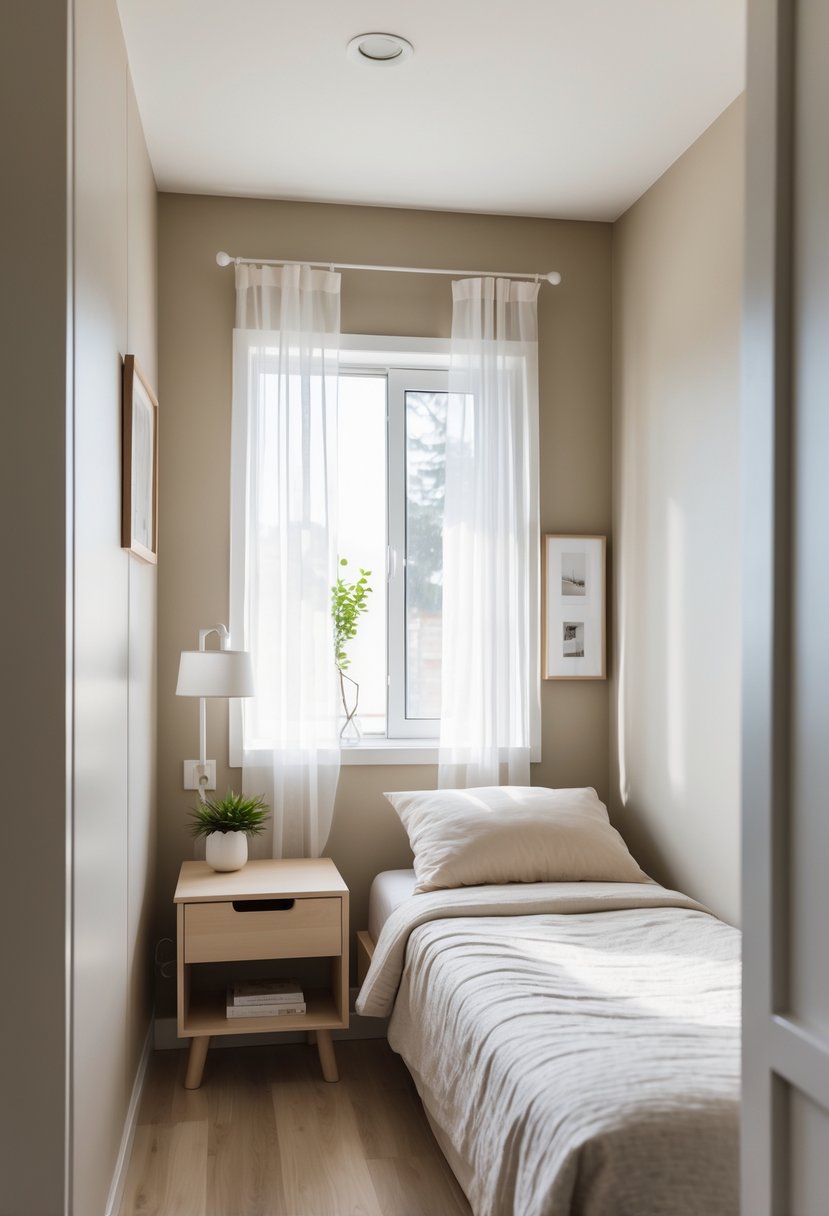
Using light neutrals on walls and ceilings can visually expand the space by allowing light to bounce around the room.
5. Place Mirrors Strategically To Enhance Natural Light:
Placing mirrors opposite or near windows helps reflect natural light across the room. This makes the space feel brighter and larger without extra bulbs. Mirrors also add depth, making a small bedroom seem more open.

By carefully choosing mirror size and position, the room’s brightness and sense of space improve naturally. This is a simple way to refresh a tiny bedroom.
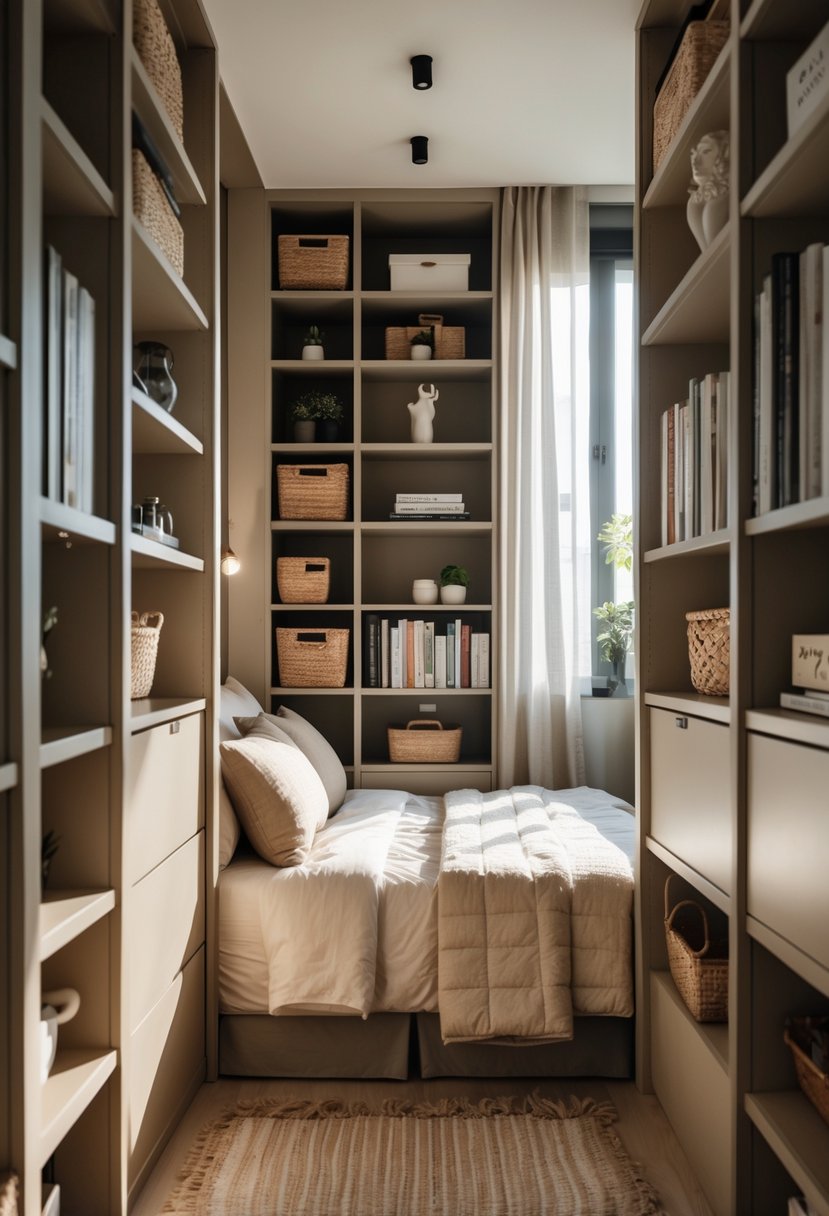
6. Incorporate Vertical Storage Solutions Such As Tall Bookcases:
Tall bookcases use vertical space efficiently, freeing up the floor area in a tiny bedroom. They provide multiple shelves to organize books, clothes, or decor items neatly. Vertical storage keeps items visible and accessible, reducing clutter. Using tall, narrow units helps maximize storage without making the room feel crowded. Shelves that reach near the ceiling make the most of limited wall space.
7. Use Under-Bed Storage Bins For Seasonal Items:
Under-bed storage bins help keep seasonal clothes and bedding out of sight. They use space that often goes wasted in small bedrooms. Bins with wheels make it easy to pull out and access items. Fabric bins work well but are best for bulkier, non-delicate items.

This storage method helps keep the room tidy and frees up closet space for daily use.
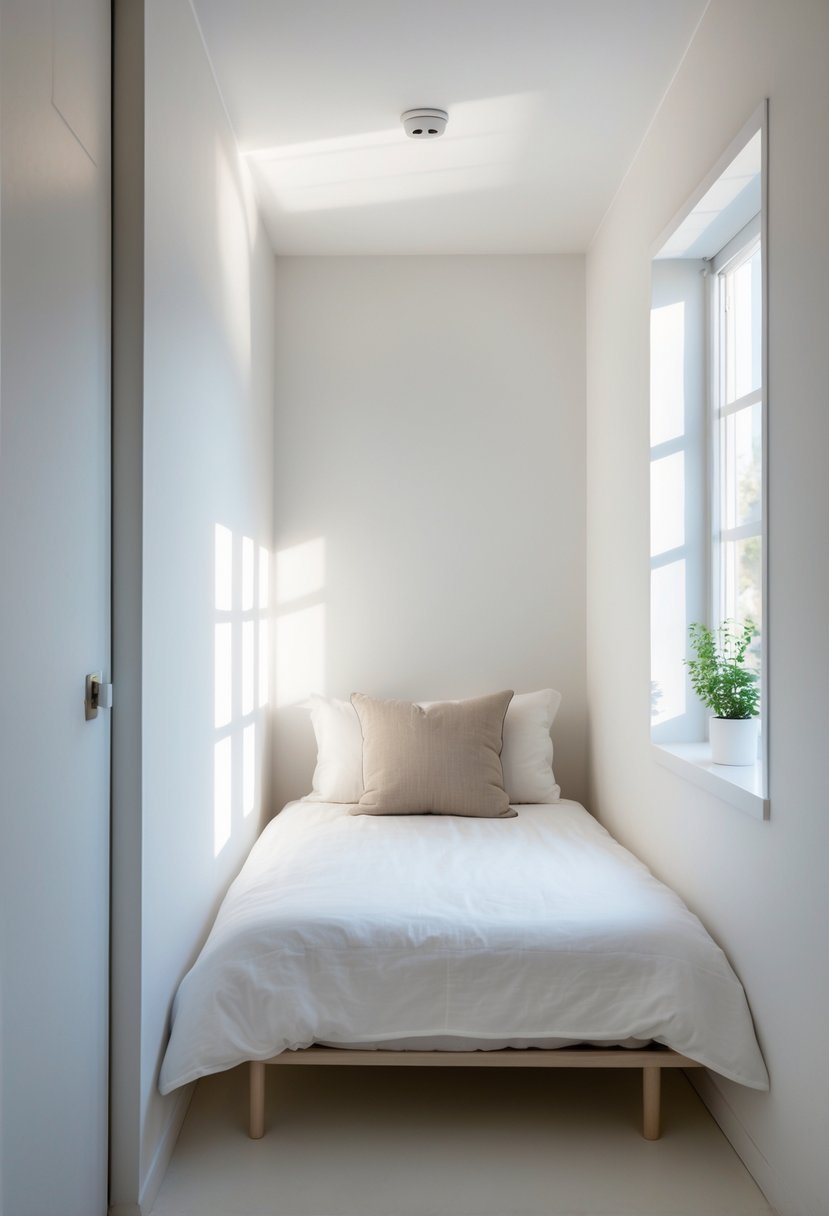
8. Choose Minimalist Bedding To Keep The Space Uncluttered:
Minimalist bedding uses simple designs and neutral colors. This helps the room feel calm and not busy. Choosing platform or low-profile beds pairs well with clean, plain bedding. It avoids visual clutter. Textiles should be soft but not heavy. This keeps the space light and open while still being comfortable.
9. Select Slim-Profile Furniture To Maximize Floor Area:
Slim-profile furniture takes up less space, leaving more open floor area in a tiny bedroom. This type of furniture usually has a narrower frame and simpler design. Choosing pieces that are low and streamlined helps the room feel less crowded. It also makes moving around easier.
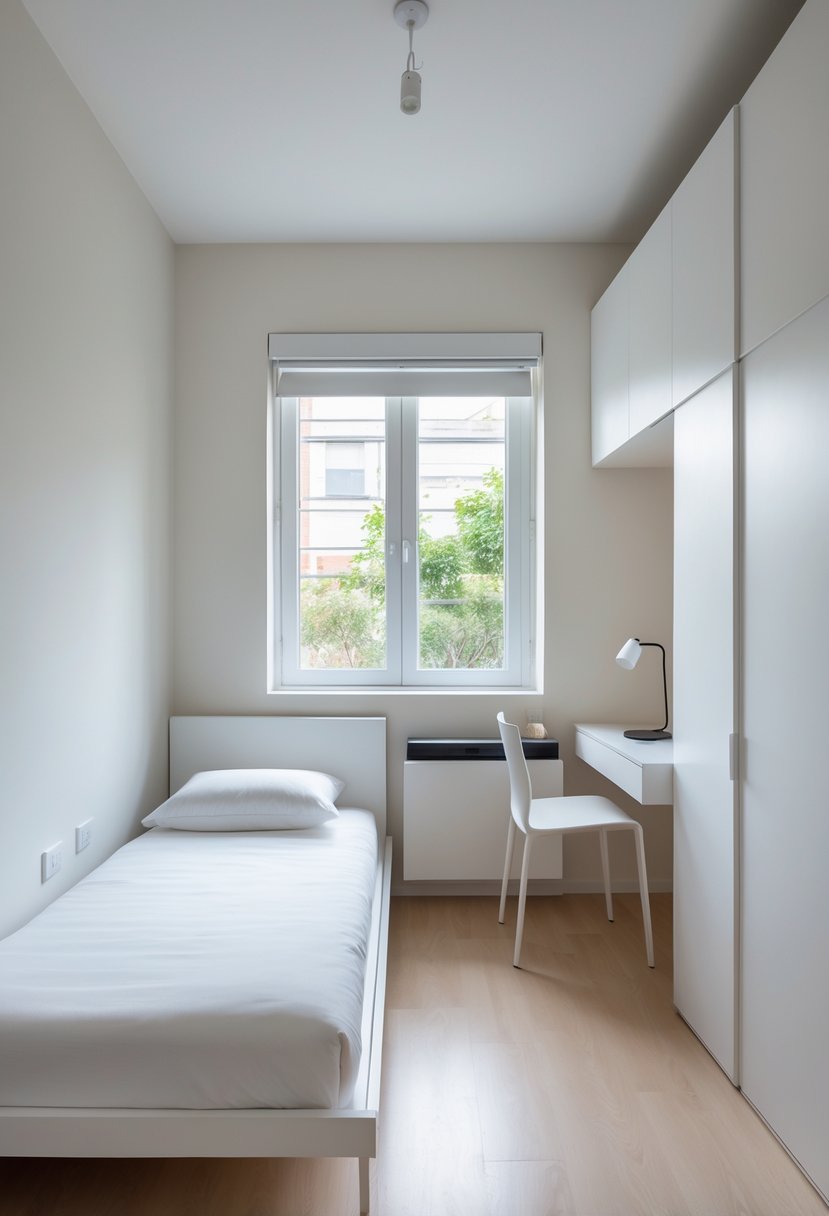
Furniture that doesn’t bulk up the room keeps both the visual and physical space clear. This approach supports a more spacious and comfortable environment.
10. Add Hooks On Walls Or Doors For Hanging Bags And Accessories:
Hooks on walls or doors create extra storage without taking up floor space. They keep bags and accessories organized and easy to find. Installing hooks inside closet doors or near the bed adds convenience. This method helps avoid clutter and makes daily items more accessible.
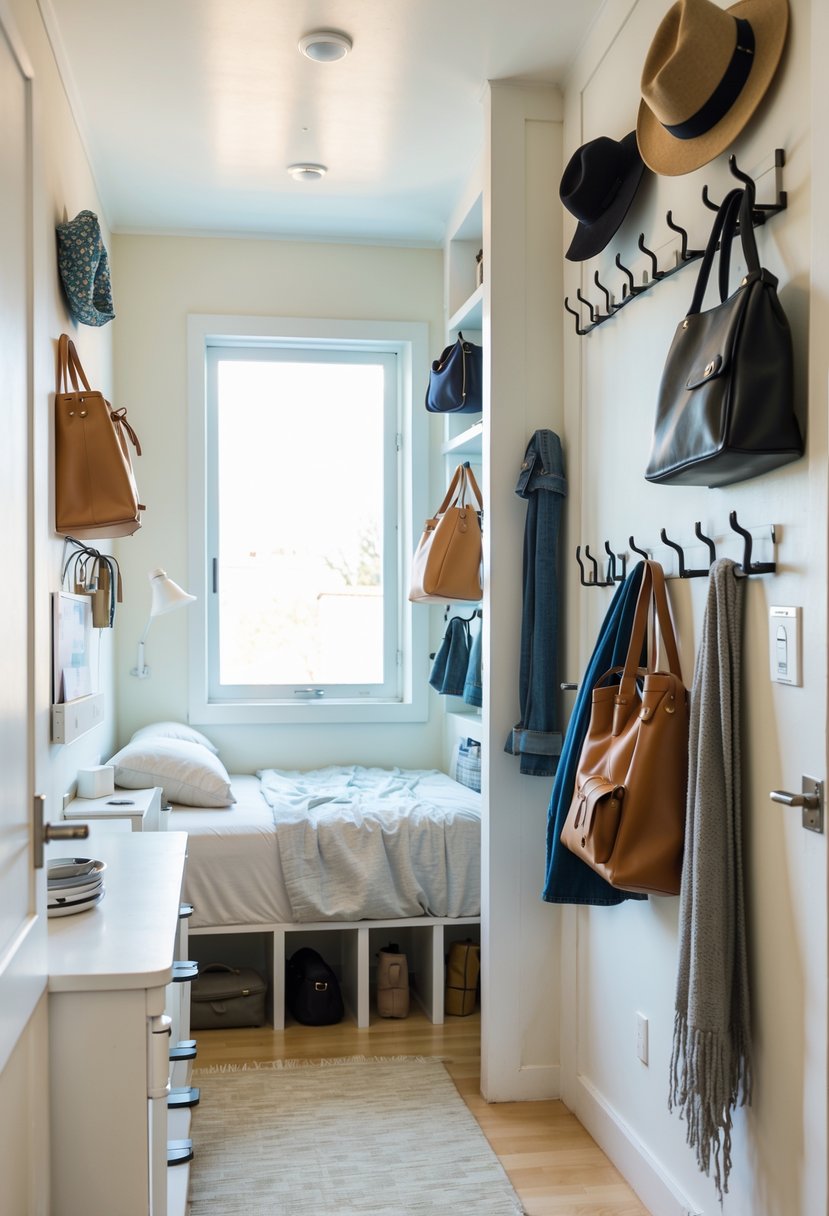
Using strong adhesive or mounted hooks is ideal for holding bags safely. Hooks can also add a simple decorative touch to the room.
11. Integrate Fold-Down Desks To Save Space For Work Areas:
Fold-down desks are a practical choice for small bedrooms. They attach to the wall and fold away when not in use, freeing up valuable floor space. These desks fit well in bedrooms, hallways, or kitchens. They offer a clean, minimalist look while providing a functional workspace.
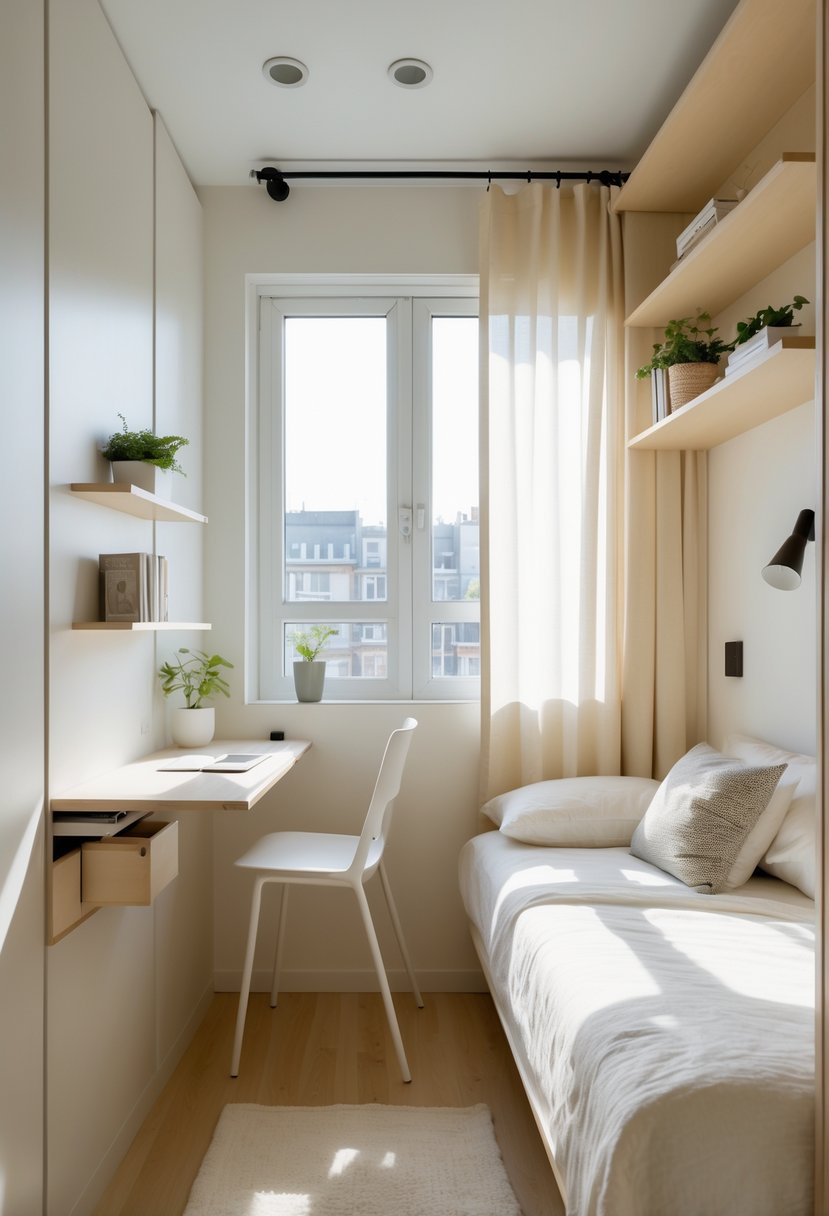
Installation is usually simple, and many designs blend with modern decor. This makes them ideal for both occasional and daily use.
12. Use Sliding Doors Instead Of Swinging Doors:
Sliding doors save space because they do not need room to swing open. This makes them ideal for tiny bedrooms where every inch matters. They come in many styles, like glass, wood, or metal, allowing for privacy or letting light pass through. Sliding doors can also add a modern look without taking up extra floor space.
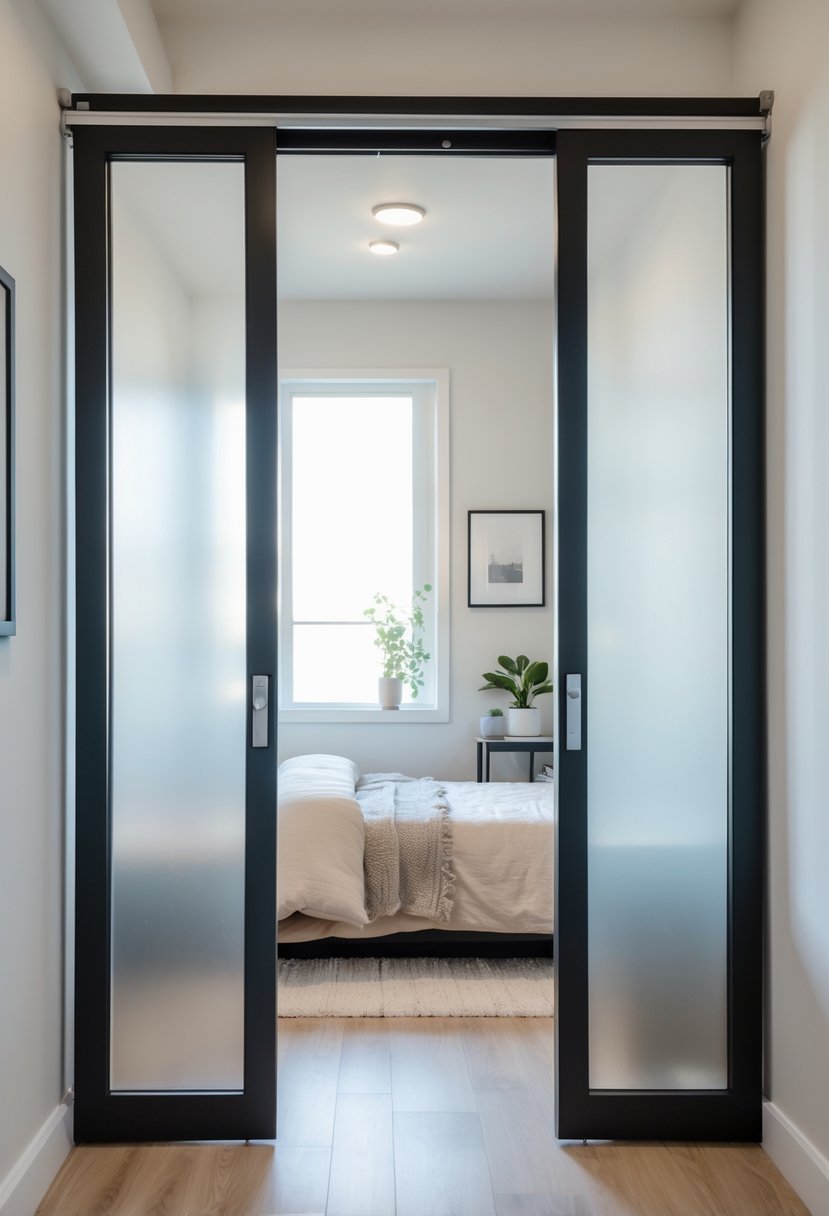
Using pocket or barn-style sliding doors helps keep the room neat and functional. This choice improves movement and maximizes limited space effectively.
13. Position The Bed Against A Corner To Free Central Space:
Placing the bed in a corner opens up the center of the room. This layout gives more floor space for movement or other furniture. It can make the room feel less cramped and more open. Using the corner also helps avoid blocking windows or doors.

This setup works well for very small rooms. It creates a cozy sleeping area while keeping the rest of the space flexible.
14. Install Recessed Lighting To Avoid Bulky Fixtures:
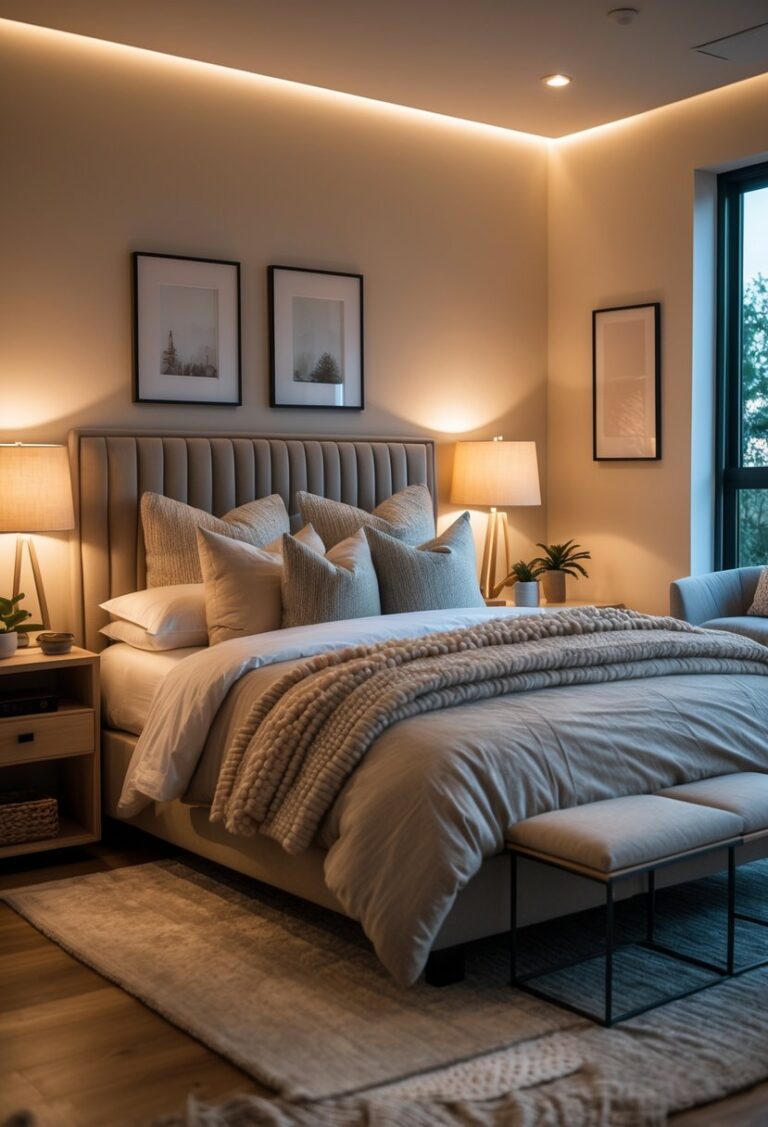
Recessed lighting fits neatly into the ceiling, keeping the room open and uncluttered. This is ideal for tiny bedrooms where space is limited. It provides even, ambient light without taking up visual space like hanging or table lamps. Using dimmable LED recessed lights allows for flexible lighting that can be bright or soft.
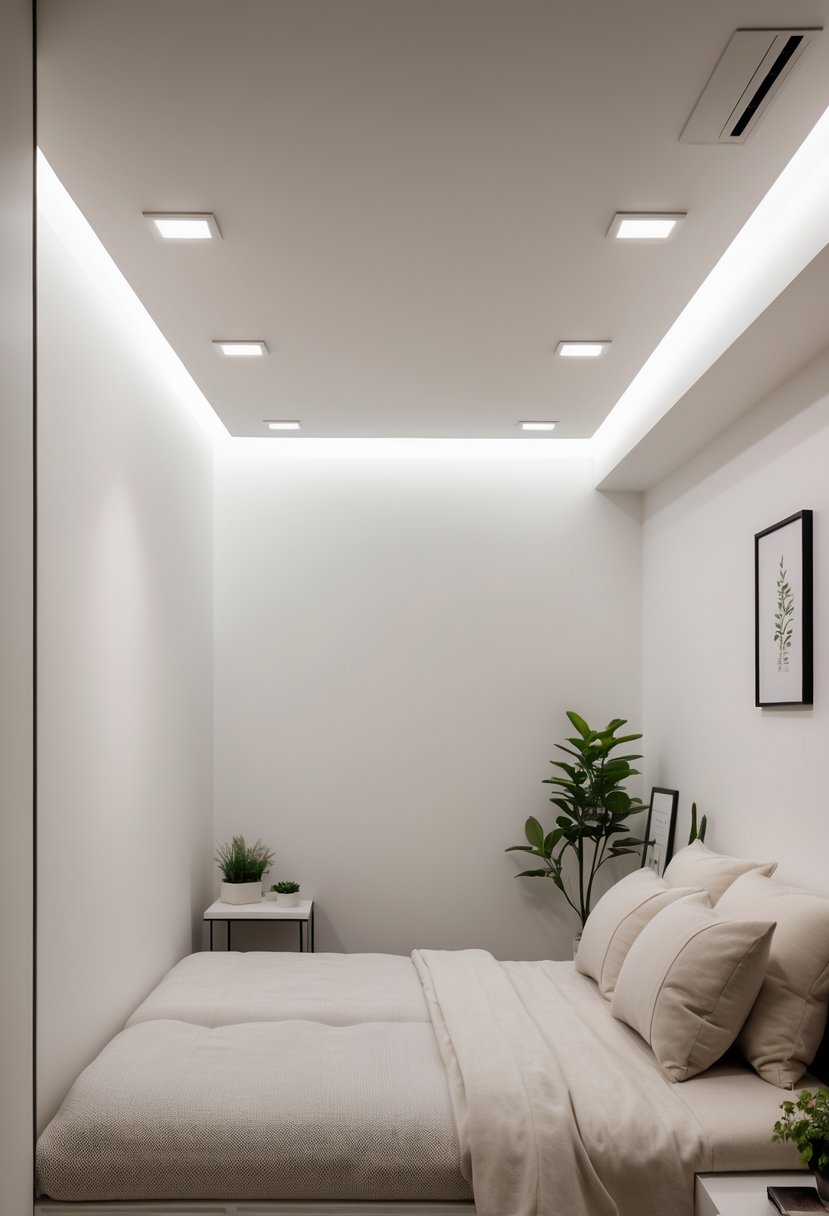
They can be placed in a grid pattern to cover the room evenly or angled for task lighting over a bed or desk.
15. Use Curtains Instead Of Blinds For A Softer Look:
Curtains add a gentle texture to a room that blinds often lack. They create a warm, inviting feel, which works well in small bedrooms. Sheer or light fabrics let in natural light while still offering privacy. This helps the room feel bigger and less closed in.
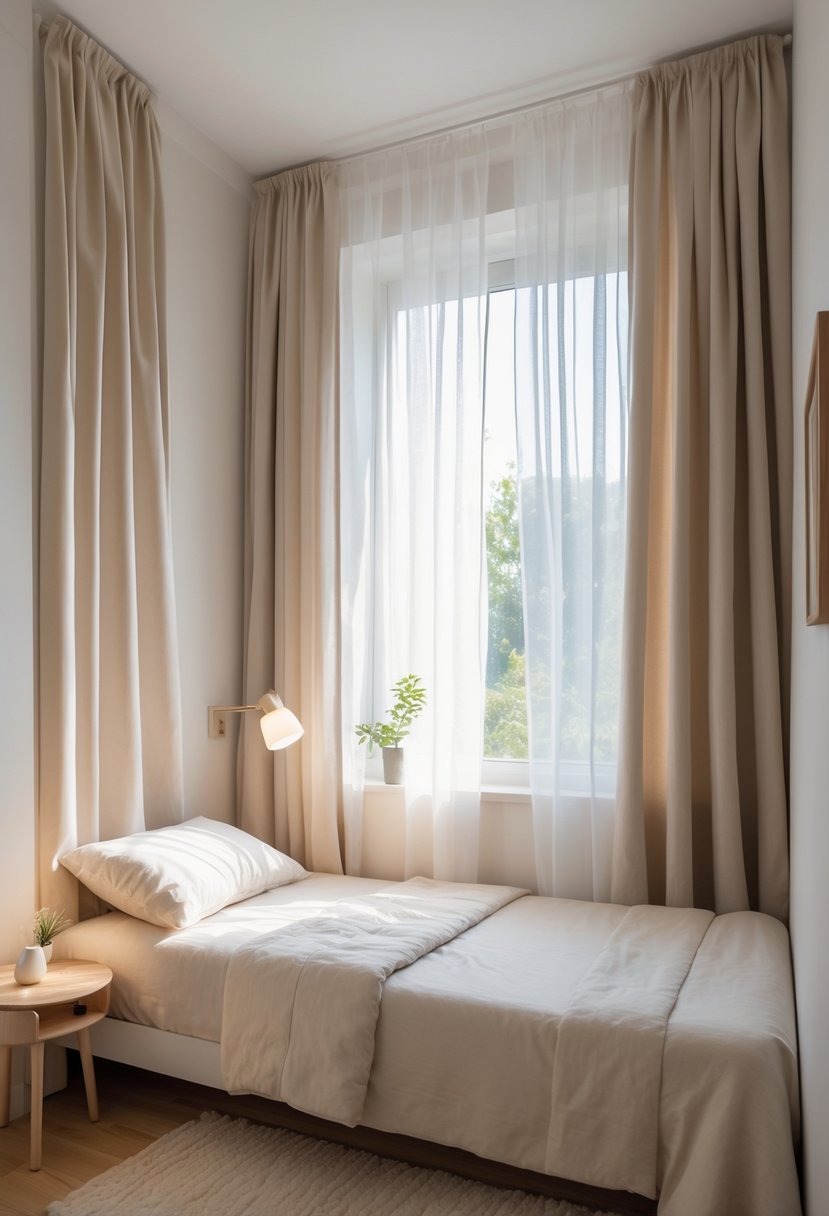
Curtains come in many styles and colors, making it easier to match the room’s decor. They also absorb sound better than hard blinds.
16. Create A Gallery Wall With Small Artwork To Add Personality:
A gallery wall with small artwork can make a tiny bedroom feel unique. It uses limited wall space but adds color and style. Choosing small frames allows for more flexibility in tight areas. Grouping artwork or photos creates a focused display that shows personal taste.

Small gallery walls work well in narrow spots, like above a desk or between doorways. They add charm without crowding the room.