The Dream Bathroom Problem Wall Fix: What to Do With That Awkward, Empty Wall
You know that wall—just inside the bathroom door, it’s the first thing you notice: paint peeling, drywall feeling soft, or a patch that never quite disappears. You want a solution that actually holds up, not just another slap-on fix that’ll peel off when the next wave of steam hits. This guide digs into how to honestly assess what’s wrong, pick materials that’ll last, and finish repairs so the wall looks like it’s always belonged there.
We’ll go over finding the source of the damage, choosing the right tools, and walking through steps for cutting out bad drywall, patching or replacing, and matching texture and paint. Expect some practical advice on drying things out, checking for mold, and easy habits to keep the wall solid in a humid bathroom.
Keep this handy as you work; the article breaks everything down into doable steps and covers worries about budget, project size, and when it’s time to just call in a pro.
Identifying and Assessing the Bathroom ‘Problem Wall’:
It’s worth taking a slow, careful look before you start tearing things up. Scan for visible clues, think about what might be causing them, and test for mold or deeper issues before you settle on a plan of attack.
Signs of Water and Moisture Damage:
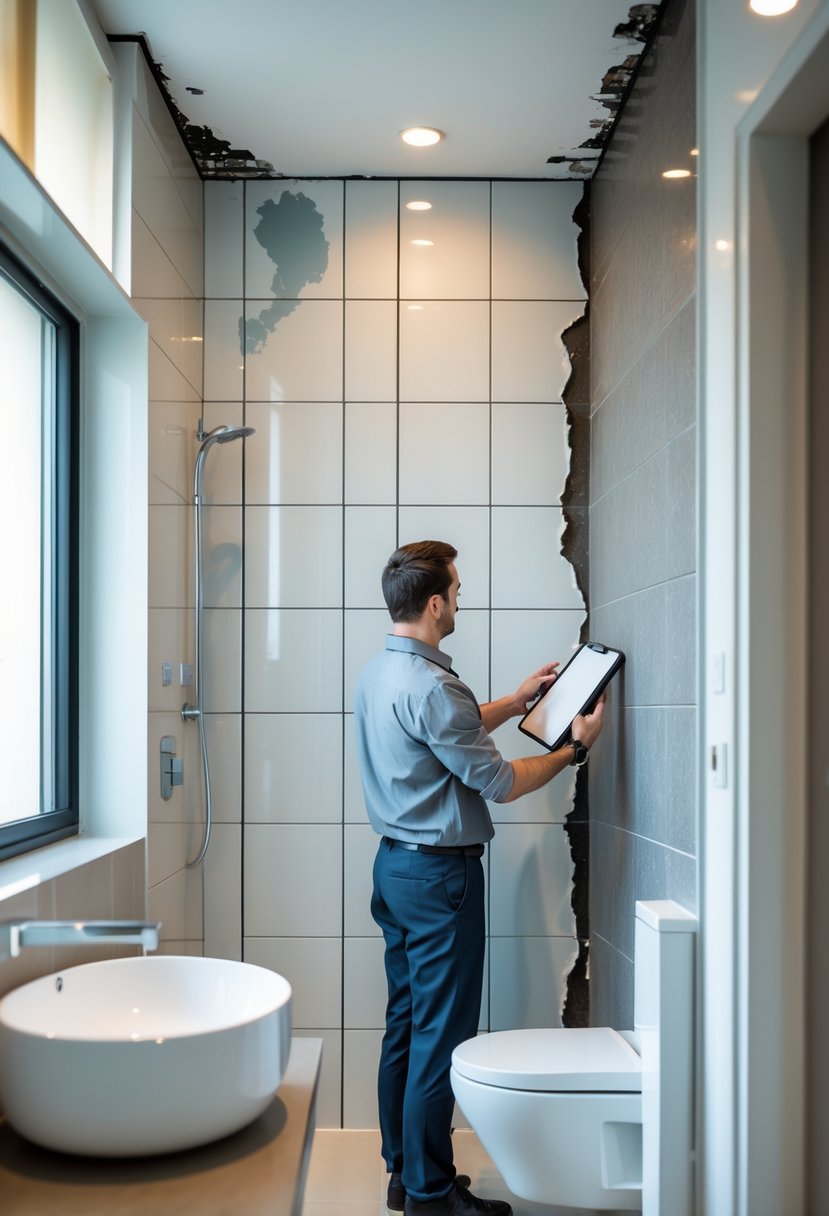
Look for weird yellow or brown stains, usually spreading out from showers or sinks. Paint or wallpaper might bubble or flake where water’s gotten behind it.
Give the area a poke—if the drywall feels mushy or the edges crumble, that gypsum’s toast. A lingering musty odor is a dead giveaway for hidden moisture or mold.
Check around grout lines and fixtures. If grout is cracked or caulk is missing near tubs and shower doors, water’s probably sneaking in. Flip on the exhaust fan—if it barely moves any air, humidity’s probably making things worse.
Common Causes of Wall Problems:
Hidden plumbing leaks are classic culprits. Even a slow drip from a supply line or drain can soak the wall long before you see anything.
Failed seals around tubs or sinks let water get in. Cracked grout or missing caulk? Water will find a way through.
Poor ventilation is another big one. If the fan’s too small, clogged, or vents into the attic, that damp air just hangs around. That’s how you end up with soggy drywall and loose tiles after a while.
How to Inspect for Mold and Structural Concerns?
Look for black, green, or fuzzy spots on drywall, baseboards, and behind trim. Tiny patches can usually be scrubbed, but if the moldy area’s bigger than a dinner plate, it’s time to call in the pros.
Use a screwdriver or awl to poke at studs and drywall edges. If the wood feels soft or the drywall tears instead of snapping, there’s probably rot or water damage that needs to go.
If you can’t see behind the wall, run the shower and listen for drips or watch for new stains. Hold a tissue up to the exhaust fan—if it won’t stick, the fan is probably underpowered or needs fixing.
Essential Tools, Materials, and Preparation:
Here’s what you’ll want on hand to tear out bad drywall, stop leaks, and get a smooth, moisture-resistant wall. We’ll cover setting up your space, supplies for patching, and some basic safety and ventilation tips.
Preparing the Workspace for Repairs:
Clear the area and cover everything with plastic sheeting and drop cloths. Get towels, rugs, and toiletries out of the way; tape plastic over the vanity and toilet. Throw a drop cloth down to catch messes and dust.
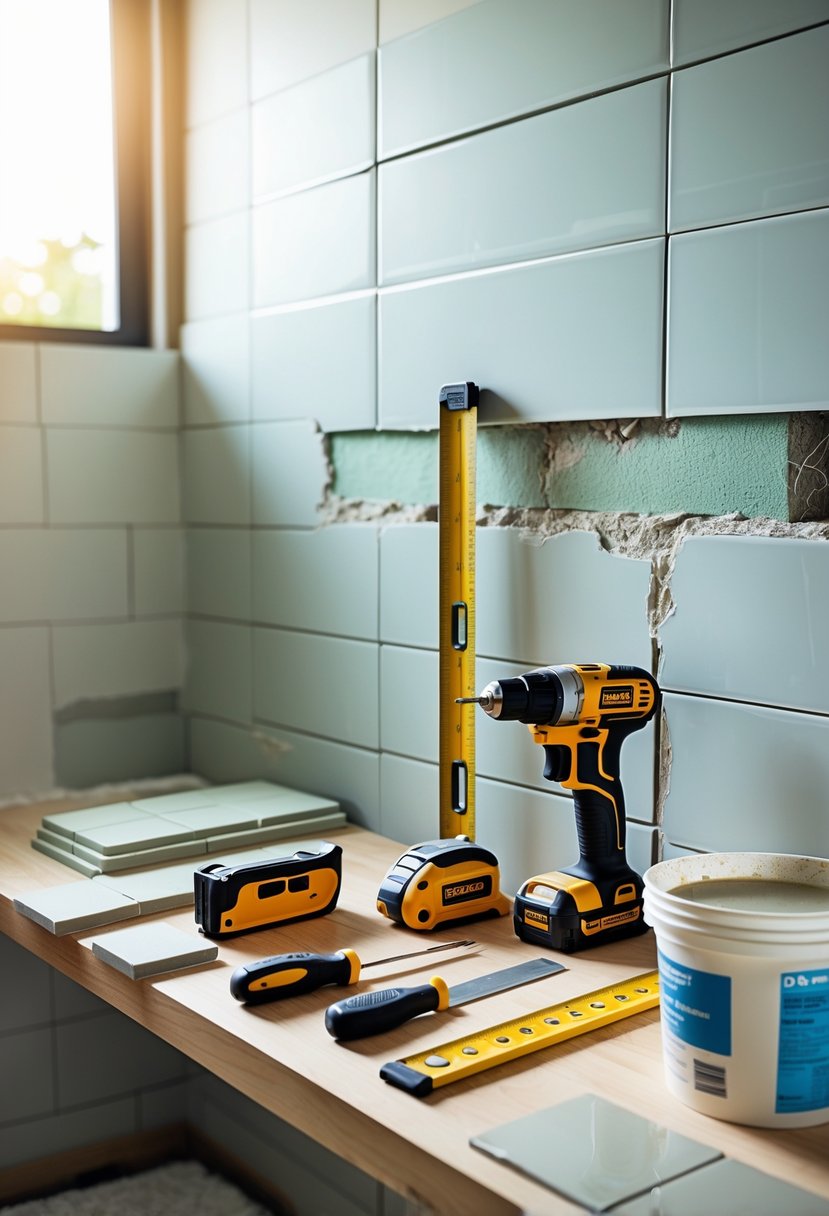
Expose the damaged wall by pulling off loose drywall, trim, and caulk. A utility knife and pry bar work best for clean edges. Keep a bin or trash bag close for nails and scraps so you’re not constantly walking back and forth.
Set up your tools and materials within reach. A clamp-on work light helps you see into those dark wall cavities. Have a vacuum or dust extractor ready to keep things tidy and to help joint compound dry faster.
Gathering the Right Supplies for Wall Fixes:
Pick up drywall sheets or patch panels that fit your hole, drywall screws, and a wood cleat if you’re patching a bigger spot. For seams, grab paper or fiberglass drywall tape.
For finishing, you’ll want both all-purpose and lightweight joint compound. A 6–10 inch taping knife, a 12–14 inch finishing knife, and maybe a corner trowel will make life easier. Sanding blocks and 120–220 grit sandpaper are your friends for smoothing things out.
In wet spots, use cement board or moisture-resistant drywall—especially around showers. Don’t forget mold-resistant primer and semi-gloss or satin bathroom paint. Keep a tube of silicone caulk, plumber’s putty, and a caulk gun handy for sealing seams and fixtures.
Safety and Ventilation in Bathroom Projects:
Ventilation is non-negotiable when sanding, painting, or working with joint compound. Run the exhaust fan while you work and for a day or two after painting. If the fan stinks, use a window fan or portable blower to get the air moving out.
Wear an N95 or P100 mask for sanding, safety glasses, and work gloves. Knee pads help if you’re on the floor a while, and hearing protection is smart if you’re using power tools.
If you spot mold or find an active leak, shut off the water and consider calling someone in. Always use mold-resistant materials and primer after you’ve fixed any leaks, just to be safe.
Step-By-Step Solutions for Fixing the Problem Wall:
Here’s where we get into the nitty-gritty: quick patches for small dings, cutting out and replacing bad drywall, dealing with moisture or mold, and making the repair blend in. We’ll mention the tools and timing you’ll need for each step.
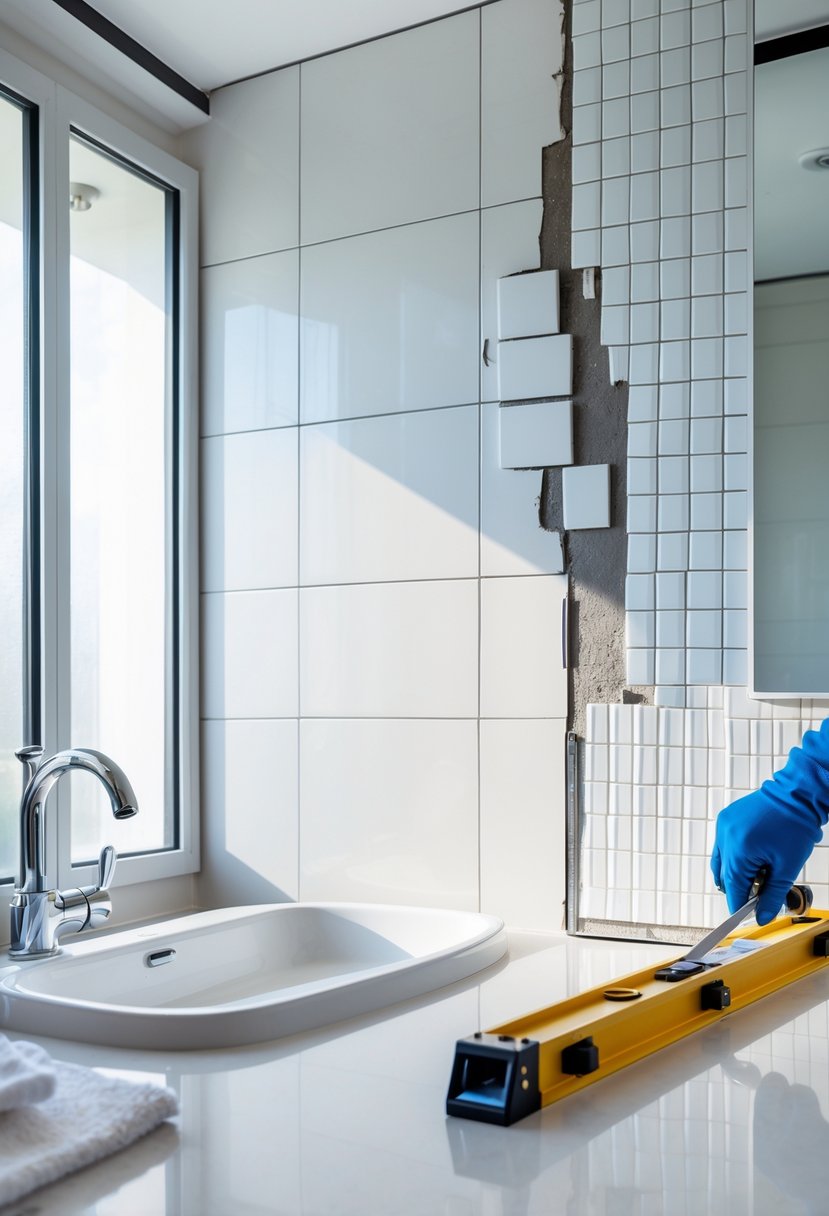
Repairing Small Holes and Dents:
Start by brushing away loose paint and dust from the hole or dent. For anything under about half an inch, use pre-mixed joint compound or a lightweight patching compound. Press it in with a putty knife, smoothing as you go.
Let each coat dry—usually a few hours for lightweight stuff, longer for regular mud. Sand lightly between coats with 120–220 grit sandpaper to knock down any ridges. Finish with a final skim coat feathered out a couple inches past the patch.
Hit the patched area with a stain-blocking primer before painting. That keeps the spot from flashing through. For shallow dents, sometimes a little spot sanding, a skim of compound, and primer is all you need.
Replacing Damaged Drywall Sections:
Draw a neat square or rectangle around the bad spot with a level and pencil. Cut it out with a utility knife or drywall saw. Measure and cut a new piece to fit snugly.
If the edges aren’t supported, screw in a wood backing behind the hole. Fasten the patch in place with drywall screws every 8–12 inches. Tape the seams with fiberglass or paper tape.
Apply joint compound in three coats: a thin one over the tape, a wider second coat, then a final feathered coat. Sand between coats. Use joint compound for all the filling and finishing—it’s what gives you that smooth wall.
Prime the whole repaired area before painting. If the wall had texture, try to match it while the last coat is still wet using a brush, roller, or spray texture.
Treating Water Damage and Mold:
First things first: stop the leak—turn off valves, fix seals, or get a plumber if it’s hidden. Pull out any soft or bulging drywall (it’ll usually crumble).
Dry the area out with fans and a dehumidifier for a couple days. If you see mold, scrub non-porous surfaces with a bleach solution or EPA-approved cleaner (wear gloves and a mask). Anything porous and moldy—like insulation or paper-faced drywall—should go in the trash.
Replace what you removed with moisture-resistant drywall if it’s near the shower. Use mold-resistant joint compound if you can find it. Seal everything up with silicone caulk around fixtures so water can’t sneak back in.
Blending and Smoothing for a Seamless Finish:
Once the last coat of joint compound is dry, wipe the area down with a damp sponge to clear off dust. If you spot any flaws, do a quick skim coat and sand again. Finer sandpaper helps for the final pass.
Feather the edges out wide so the patch disappears. If your wall’s textured, match the pattern before the compound dries. Prime the whole repaired area so the paint goes on evenly.
Stick with the original paint’s sheen and brand if you can. Two thin coats of paint, with full drying in between, will help the repair vanish into the rest of the wall.
Finishing Touches: Priming, Painting, and Preventive Care:
The goal now is to make your repair blend in, hold up against moisture, and stay clean. Good priming, a moisture-resistant paint, and steady airflow will keep stains and damage away longer.
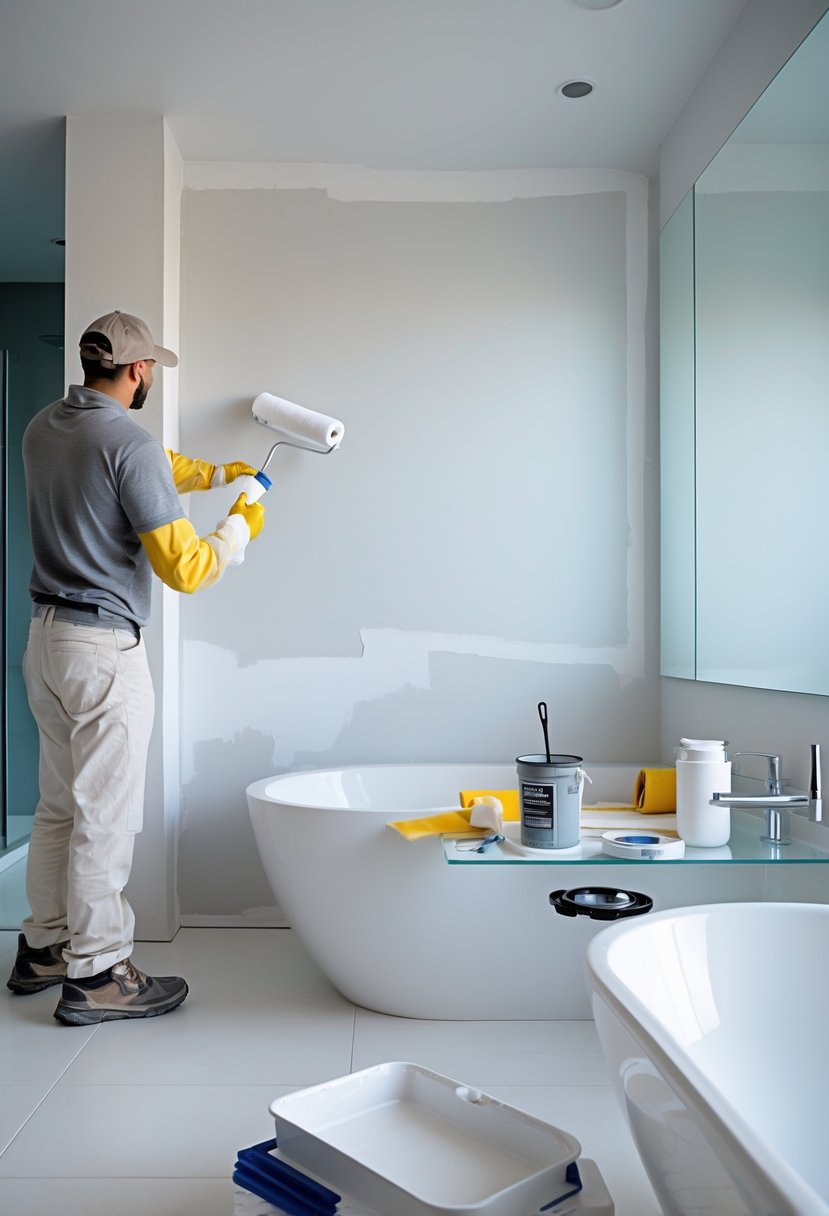
How to Prime and Paint Like a Pro?
Start by sanding your patch smooth with 150–220 grit and wiping off the dust. Prime the spot with a stain-blocking drywall primer, feathering it out 6–8 inches past the patch to help it blend.
If possible, use the same Sherwin‑Williams Emerald paint you started with. For best results: one coat of primer, then two thin topcoats. Use a 3/8–1/2″ nap roller for textured walls and a nylon brush for trim. Try to keep a wet edge and don’t press too hard, or you’ll get lap marks.
Let primer dry per the label—usually an hour or so—before painting. Match the sheen to the rest of the wall so your patch doesn’t stand out. Wash your brushes and rollers as soon as you’re done; they’ll last longer that way.
Choosing Moisture-Resistant Finishes:
If you’re painting a bathroom, don’t just grab any old can—go for paint that’s actually formulated for bath spaces. Look for “bath” or “kitchen & bath” on the label, and check if it mentions mildew resistance or extra moisture durability. It really does make a difference.
Sheen isn’t just about looks: satin or semi-gloss holds up better on walls that get splashed or wiped down a lot. Flat paint hides little dings, sure, but it’ll soak up water and stain faster than you’d expect. If you’re just touching up a small, already-painted patch, a paint-and-primer-in-one is fine. Otherwise, yeah, use a separate primer—it’s worth it for sticking power and blocking stains.
Dealing with walls that get hit by water over and over? Consider tossing in a mildew-resistant additive, or just grab a paint that’s made for high-humidity areas. And honestly, keep a small can of your final color and sheen tucked away for quick touch-ups later. You’ll thank yourself.
Ventilation and Ongoing Maintenance Strategies:
Bathrooms need more than a tiny fan humming in the corner. Upgrade or install an exhaust fan that’s actually sized for your space (CFM = room area × 1.1, or just check the manufacturer’s chart). Run it during showers and leave it on for a good 20–30 minutes after. It’s not just for comfort—it really helps keep mildew at bay.
Take a look at your caulk and grout every six months or so. If you spot cracks or gaps, reseal with silicone caulk. Try to wipe up splashes within a day or two, and give the walls a gentle clean every month—nothing fancy, just mild detergent to keep soap scum and stains from building up.
For the long haul, keep the air moving with a door gap or vent, and maybe even a dehumidifier if your bathroom is always muggy. If you keep seeing the same wet spots, don’t ignore them—chronic stains can mean you’ve got a plumbing or fan problem that needs fixing.
Frequently Asked Questions:
Let’s break down some common bathroom wall headaches and what you can actually do about them. From tile repair to peeling paint, water damage fixes that don’t mean gutting your whole wall, and how to seal up those annoying leaks around fixtures—here’s what works.
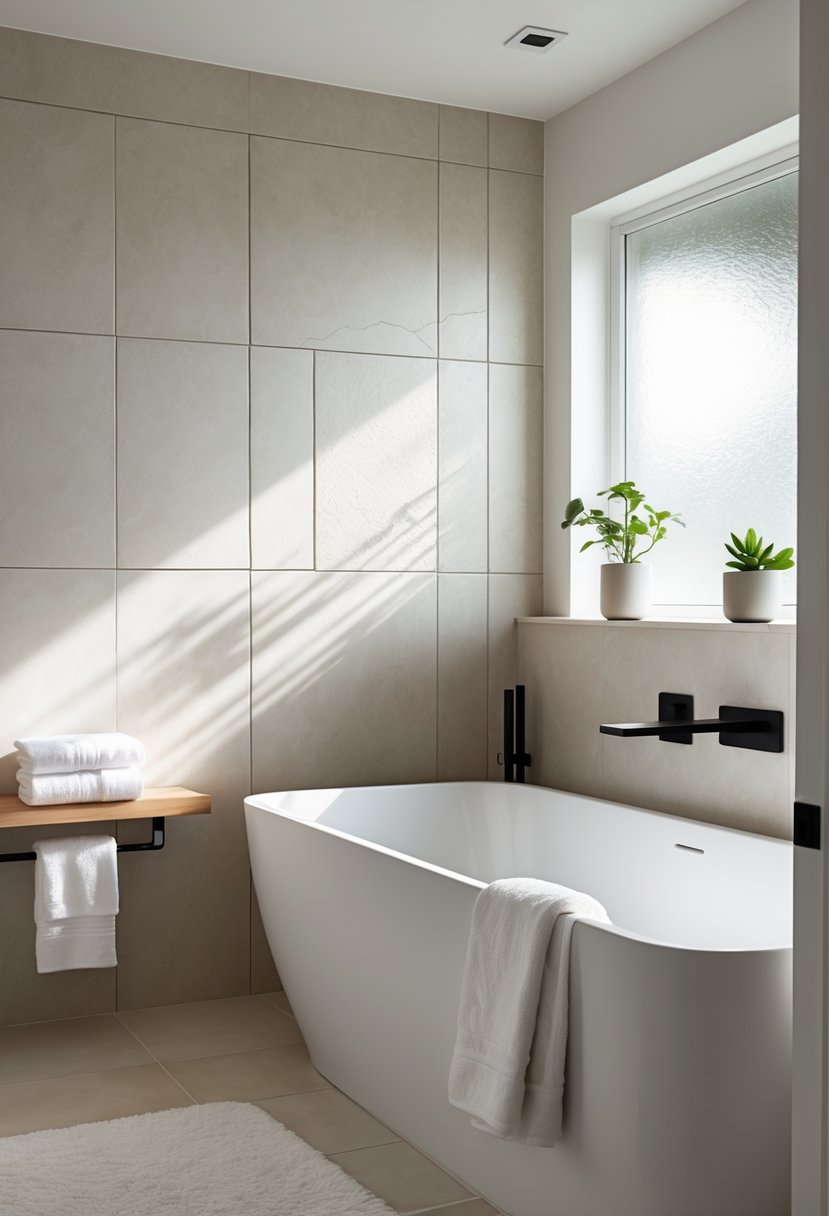
What are effective solutions for repairing cracked tiles on a bathroom wall?
If you’ve got a single cracked tile, start by removing the grout around it with a grout saw, then gently pry the tile out. Clean up the space, spread on some thinset mortar, pop in a matching tile, and grout once it’s set. Not exactly rocket science, but do take your time.
If there’s a bunch of cracked tiles or the wall behind them feels mushy, you’ll need to take out all the damaged tiles and check the backing. Replace any soggy backerboard with cement-board, use thinset, re-tile, and grout. Matching the tile and grout color goes a long way for a seamless look.
For tiny hairline cracks where you can’t swap the tile, a dab of epoxy or clear silicone will buy you some time and keep water out—just don’t treat it as a forever fix.
What is the best method to fix peeling paint in a humid bathroom environment?
First, scrape off any loose paint and sand the edges so they’re not rough. Clean the spot with a mildew cleaner or diluted bleach, rinse, and let it dry—completely. No shortcuts here.
Prime the area with a mold-resistant primer made for bathrooms. Then finish with a solid 100% acrylic or silicone-modified bathroom paint that specifically says it’s moisture-resistant.
And don’t forget about airflow. If your exhaust fan is weak or missing, get that sorted out. Good ventilation is the best way to keep fresh paint from peeling all over again.
Can you address water damage in a bathroom without removing wall tiles?
Sometimes, yeah. If the issue is just surface-level—maybe the grout or caulk is the problem—you can replace the grout, re-caulk with mildew-resistant silicone, and dry things out with fans or a dehumidifier.
But if water’s gotten into the drywall or backerboard behind the tiles, you’re looking at tile removal to see what’s going on. Covering up mushy or moldy walls just means bigger headaches later.
If you’ve got a moisture meter, use it to check behind the tiles. Catching leaks early can sometimes mean a simple fix, but if there’s structural or mold damage, those tiles have to come off.
How do you seal gaps between bathroom wall fixtures to prevent water intrusion?
Start by scraping away any old caulk—yeah, it’s a pain, but a utility knife or a proper remover tool makes it manageable. Wipe the area down with rubbing alcohol, and give it time to dry. Patience here pays off.
Pick a good 100% silicone or silicone-polymer caulk (look for one that says it’s for bathrooms). Squeeze out a steady bead along the gap, then smooth it out—some folks use a caulk tool, but honestly, a wet finger works just fine. Don’t rush the drying; let it cure as long as the label says, even if you’re tempted to speed things up.
Focus on the spaces around fixtures, pipes, and any trim where water likes to sneak in. Every couple of years, or if you spot cracks or peeling, it’s probably time to touch things up again.