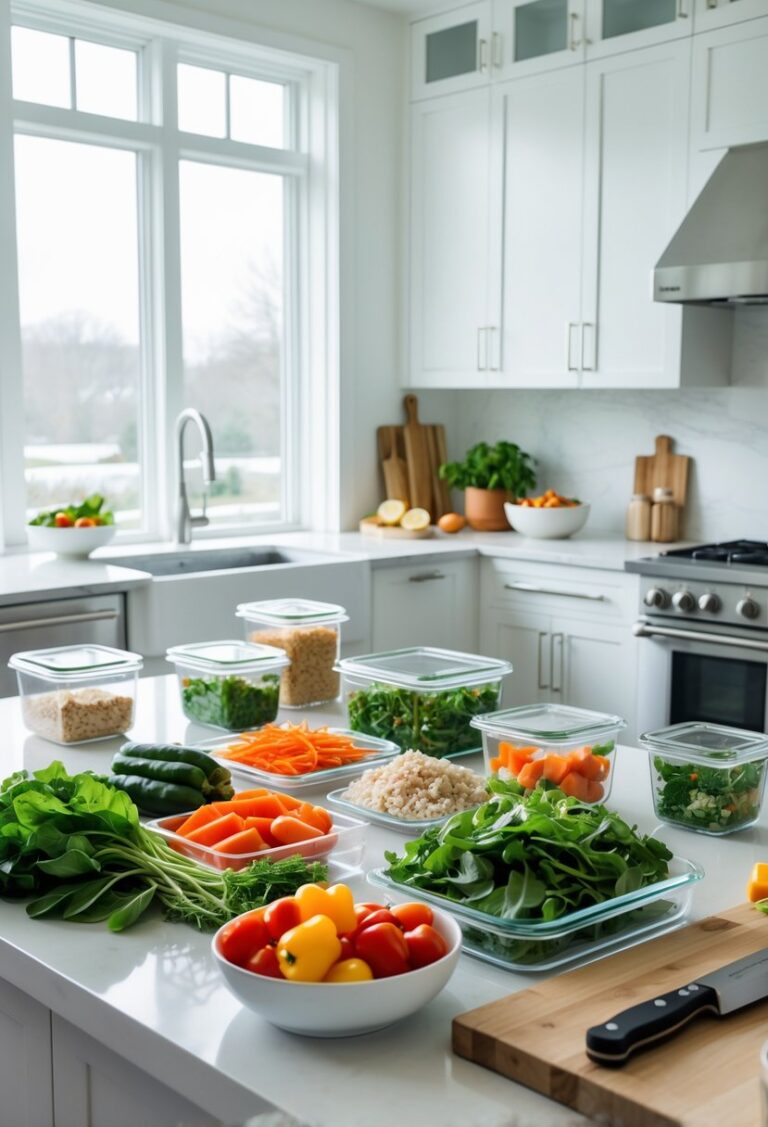
Future-Proof Your Kitchen: 14+ Sustainable Design Ideas for a Beautiful & Eco-Friendly Heart of the Home
Turns out, making your kitchen a little gentler on the planet doesn’t mean you have to sacrifice style or practicality. Here are some real-world ideas—nothing too wild—that can help you cut waste, save energy, and maybe even breathe a bit easier in your cooking space.
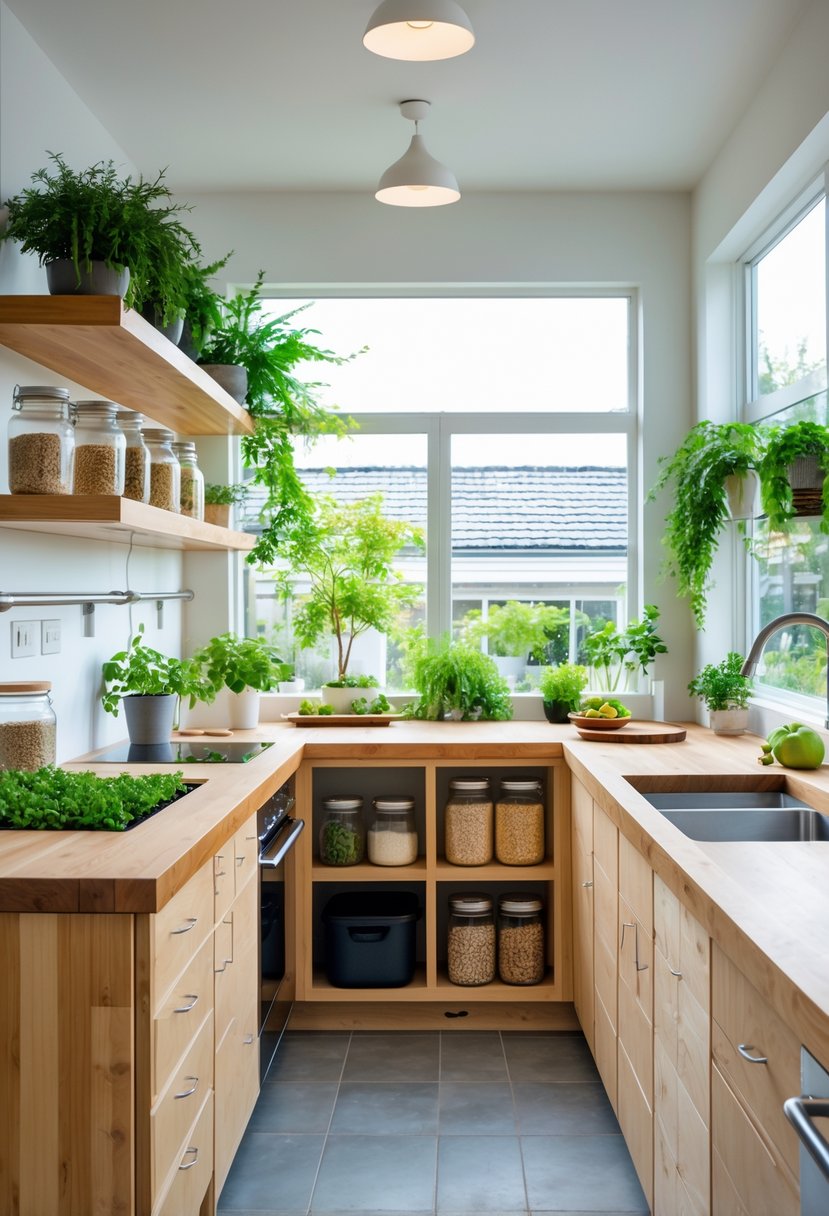
Find straightforward, tried-and-true ways to swap out materials, pick smarter appliances, or just tweak a few habits. You don’t have to compromise on looks or utility to lower your kitchen’s impact.
1. Use Energy-Efficient LED Lighting Throughout The Kitchen:
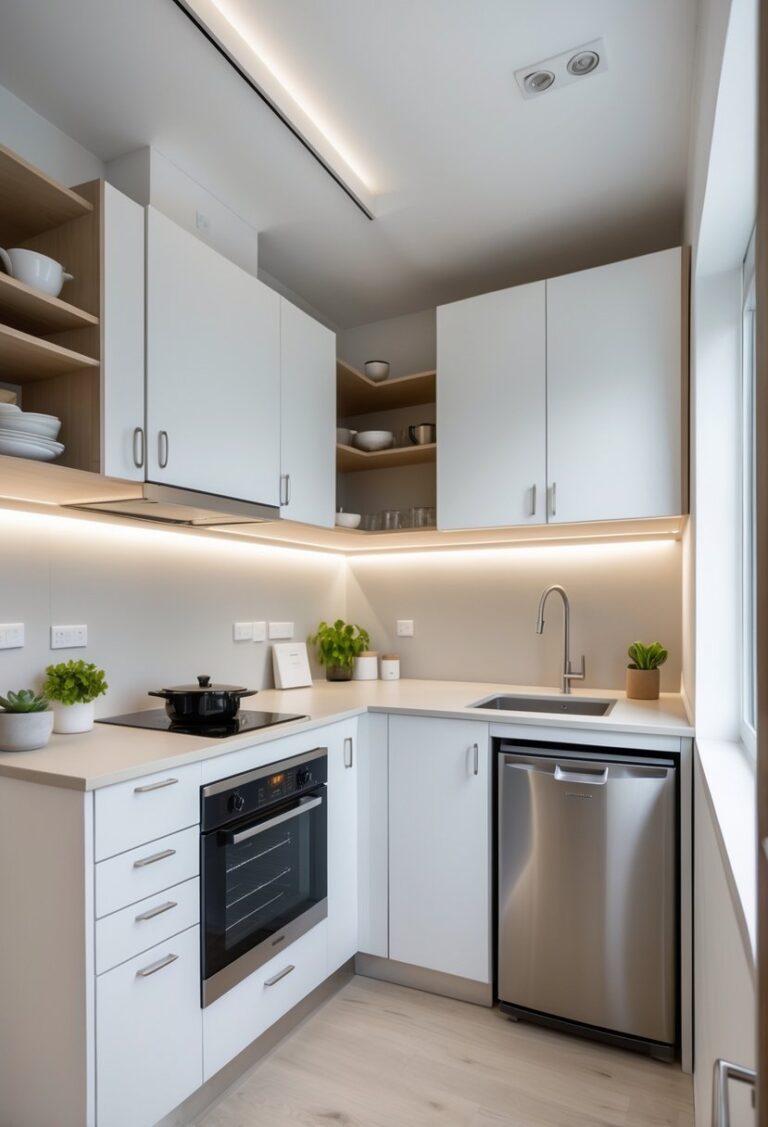
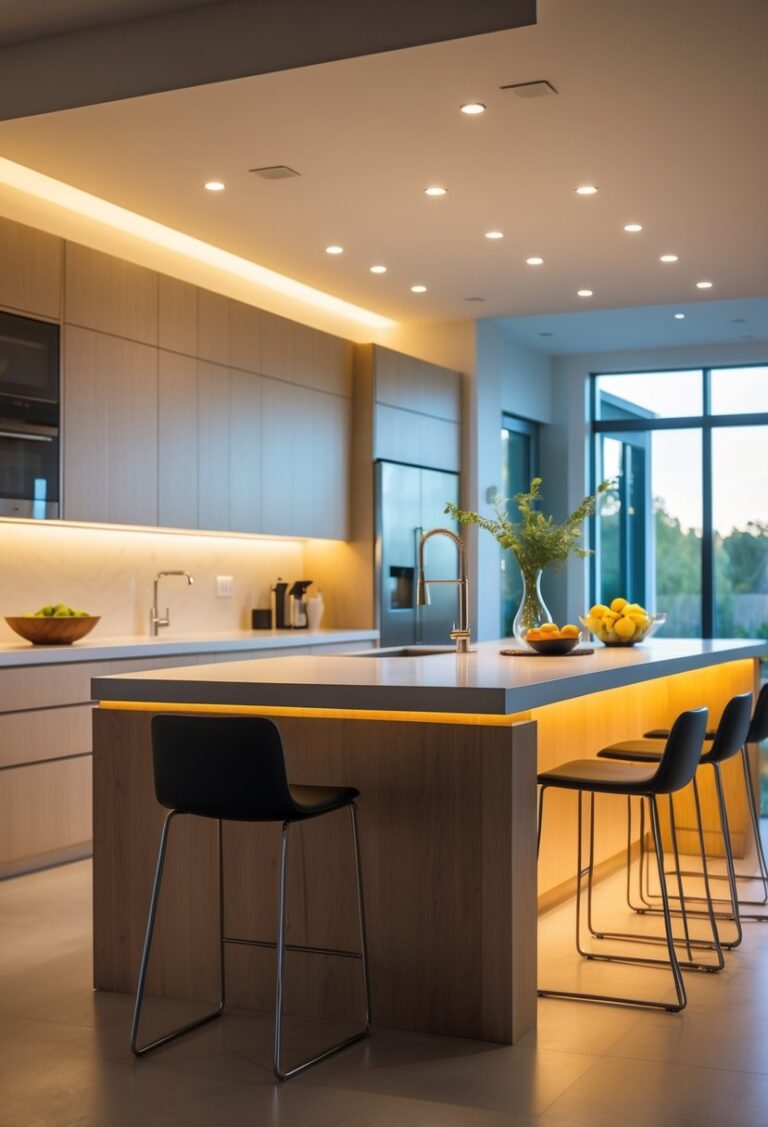
Honestly, swapping every bulb for LEDs is one of those “why didn’t I do this sooner?” moves. They use way less energy and last for ages, so you’re not up on a ladder every few months.
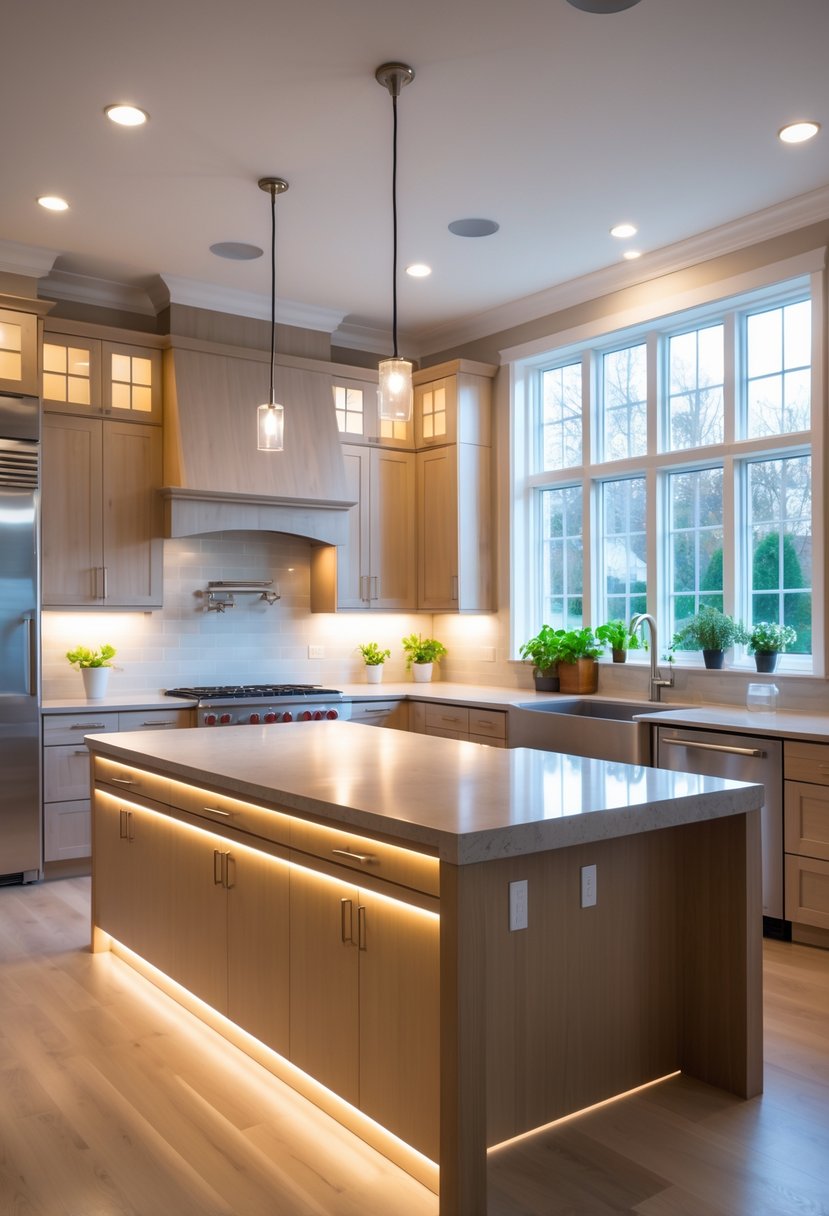
Stick LEDs over counters and sinks where you actually need to see what you’re doing. Dimmers are a nice touch, too—sometimes you just don’t want that full blast.
2. Install Low-Flow Faucets To Conserve Water:
Low-flow faucets are a sneaky upgrade. They mix in air or just limit the water, so you’re not wasting gallons every time you rinse a plate.
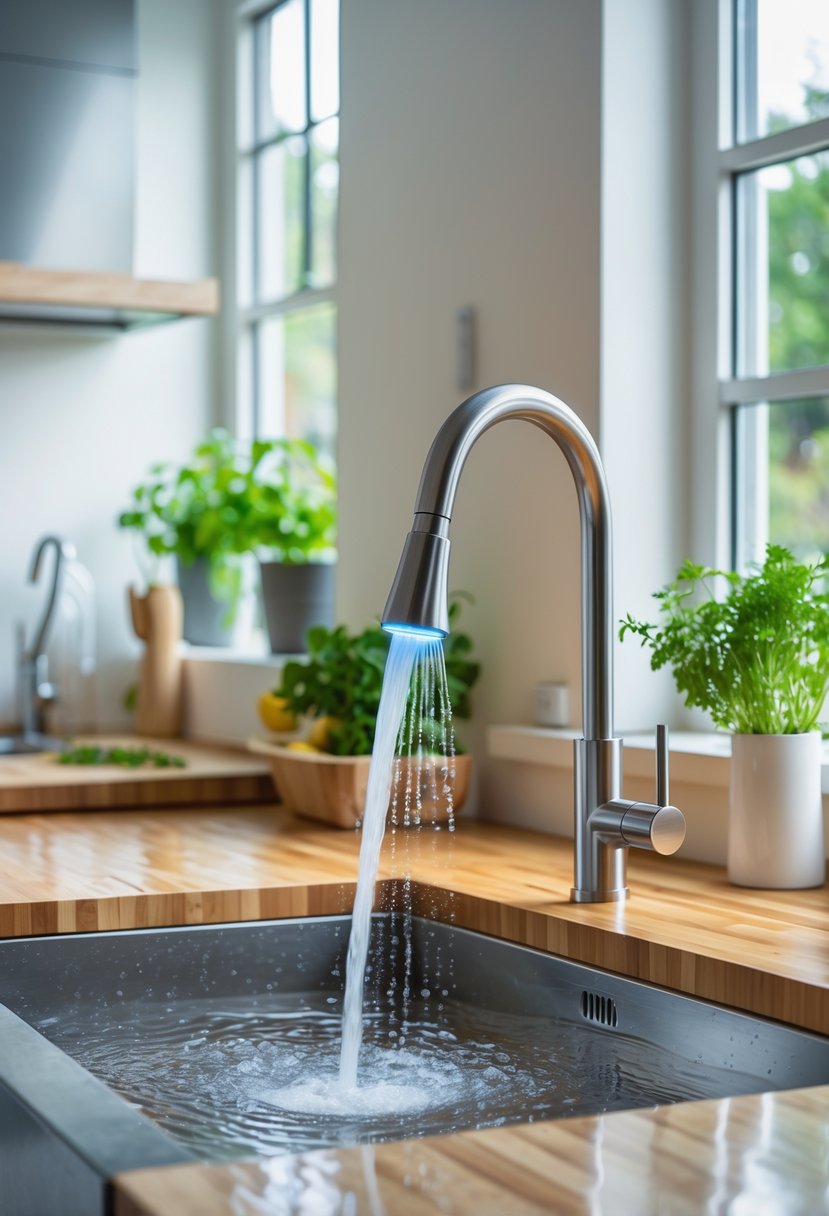
Most models keep the water pressure feeling normal and come in plenty of sleek styles—some even have touchless features, which feels a bit futuristic. Installation’s usually a breeze, and you’ll notice the difference on your water bill.
3. Choose Recycled Glass Countertops:
Countertops made from recycled glass—think old bottles and jars—get mixed into a cement or resin base. The result? Less waste, fewer raw materials, and a look that can go subtle or totally bold. Check out these colorful patterns if you want something a bit different.
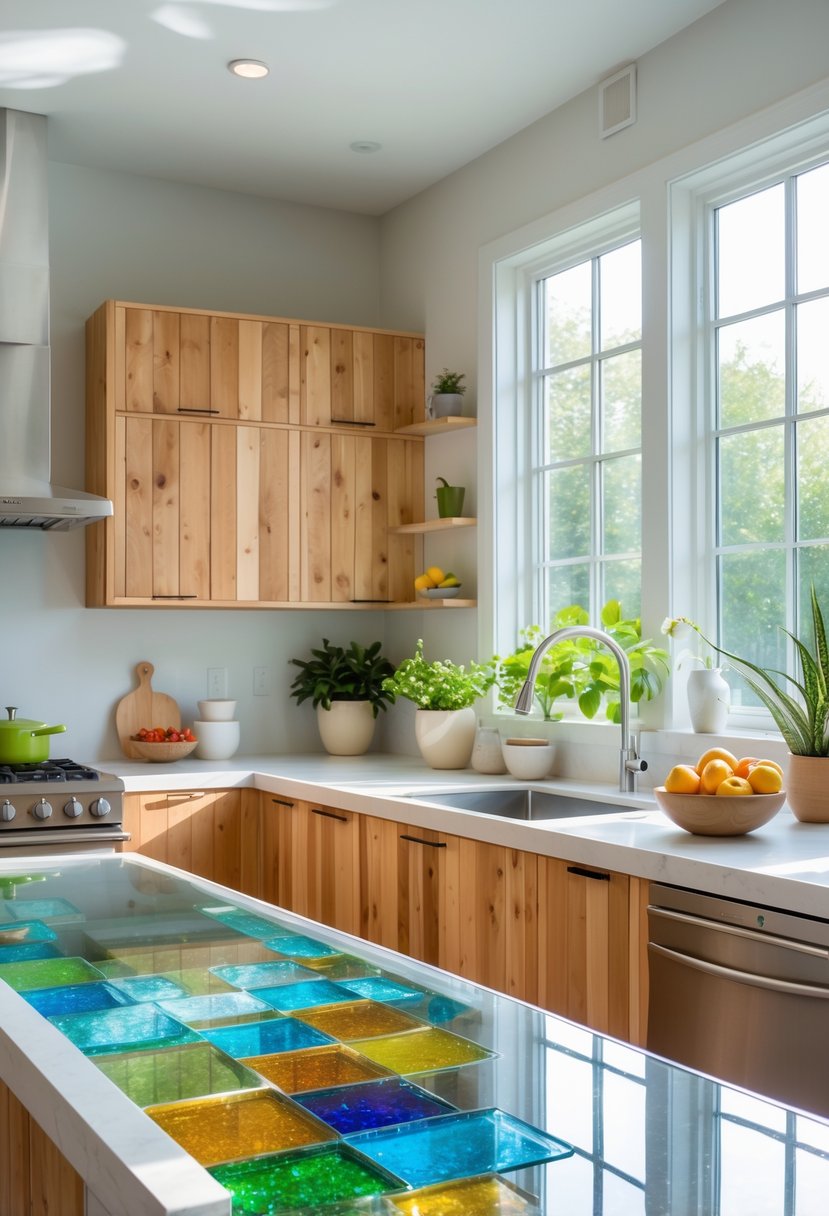
They’re tough and, if you seal them right, won’t stain easily. You get that sustainable badge without losing any style points.
4. Opt For Sustainably Sourced Bamboo Cabinetry:
Bamboo cabinets are a solid pick—literally. Bamboo grows fast, looks warm and natural, and works in a bunch of kitchen styles.
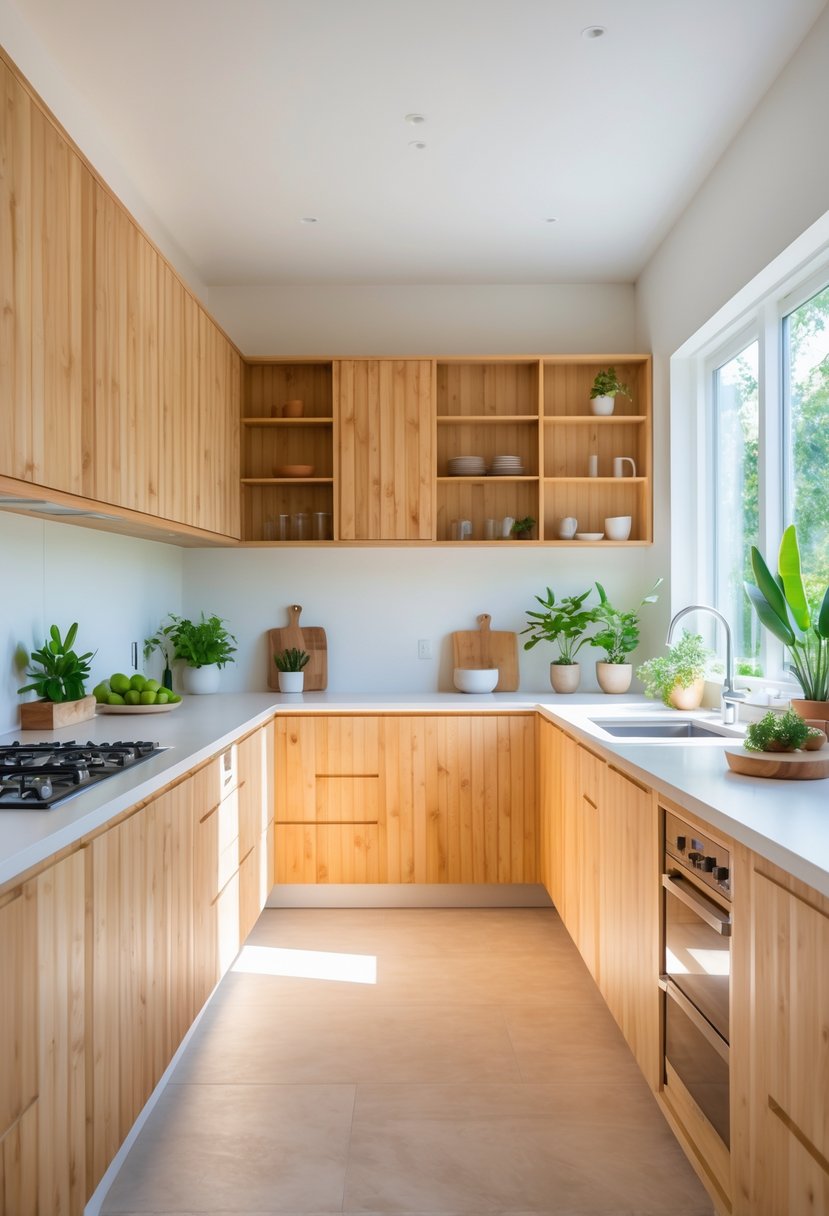
Just make sure you’re getting bamboo that’s certified for sustainable harvesting. Look for finishes and hardware that’ll hold up, so you’re not dealing with repairs in a year or two.
5. Incorporate Energy Star Rated Appliances:
Energy Star appliances are worth the hype. They’re tested for efficiency, so you’re not just taking a brand’s word for it.
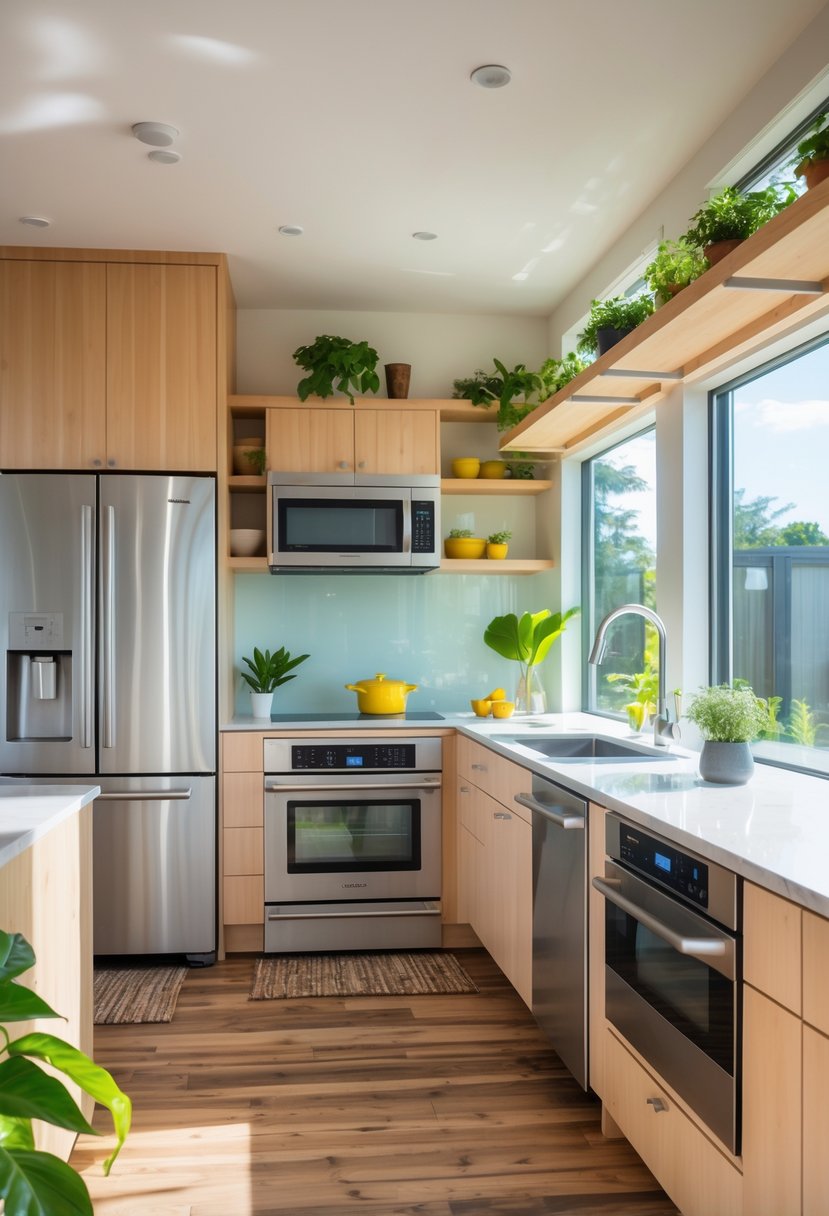
If you’re upgrading, go for certified fridges, dishwashers, and ovens—they use less electricity and water. Sure, they might cost a bit more upfront, but the savings add up.
Keep them running well with regular tune-ups. And yeah, little things like only running full loads or not cranking the fridge too cold actually help.
6. Use Reclaimed Wood For Shelving And Furniture:
Reclaimed wood just has more character—no two pieces are the same. Shelves, islands, tables… it all works. Plus, you’re giving old wood a second life instead of sending it to the dump.
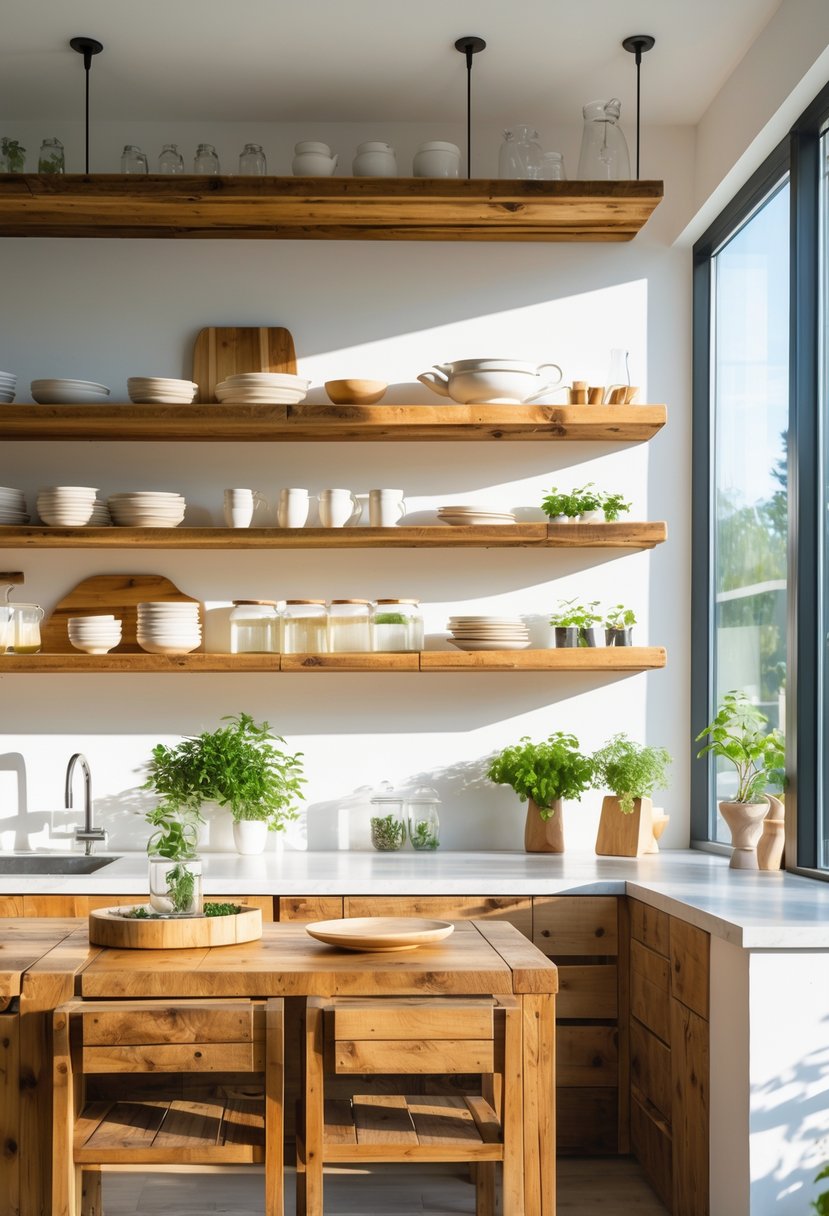
Mix it with metal or stone if you want that modern-rustic vibe. Just make sure the wood’s clean and properly sealed; nobody wants a surprise splinter or bug.
7. Pick Non-Toxic, Low-VOC Paint For Walls And Cabinets:
Low-VOC or zero-VOC paints are a must if you care about air quality. Those fumes from regular paint? No thanks.
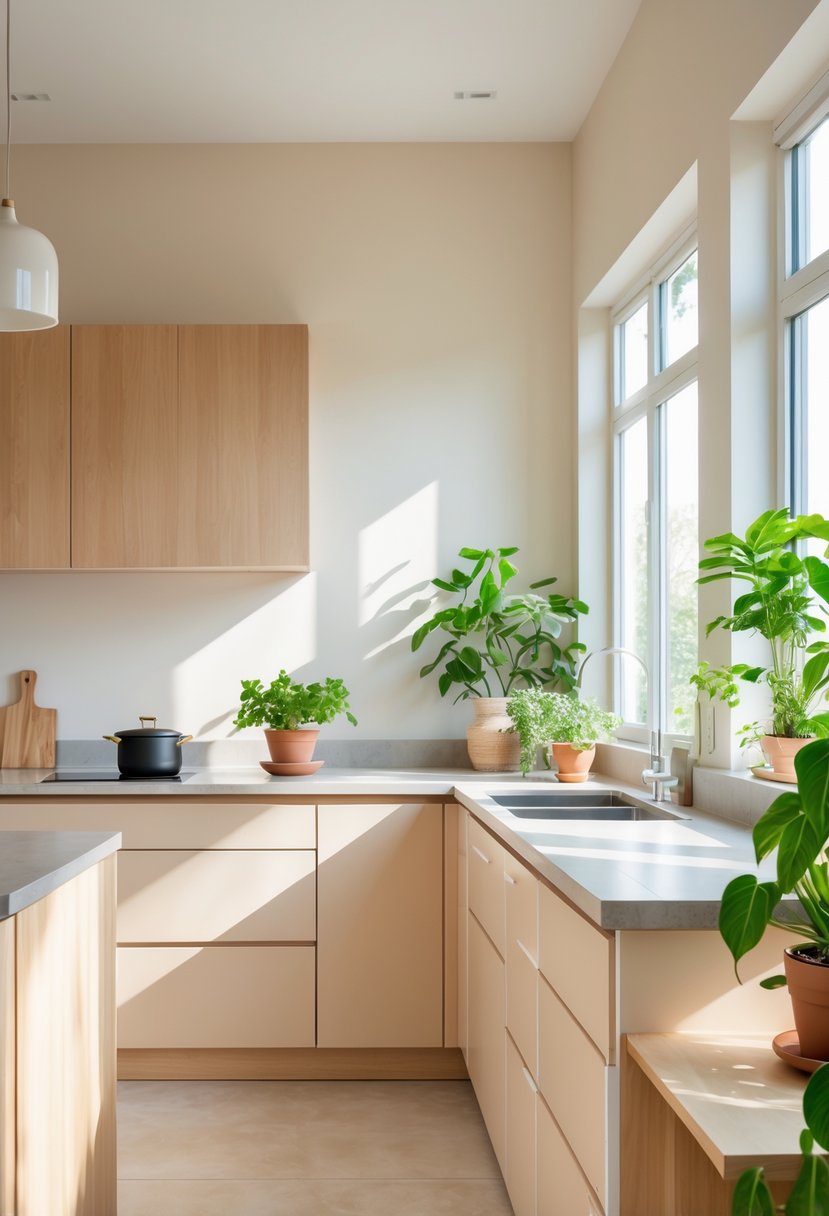
Check for certifications and scan the label—there are plenty of eco-friendly options now that don’t skimp on color or durability.
Paint on a breezy day and let everything dry out before you move stuff back in. It’s a small thing, but it makes a difference.
8. Install A Composting System For Organic Waste:
Keeping a countertop pail for food scraps makes composting way less of a hassle. Toss in peels, coffee grounds, whatever—and then dump it into your main bin outside or use a small indoor composter if you’re tight on space.
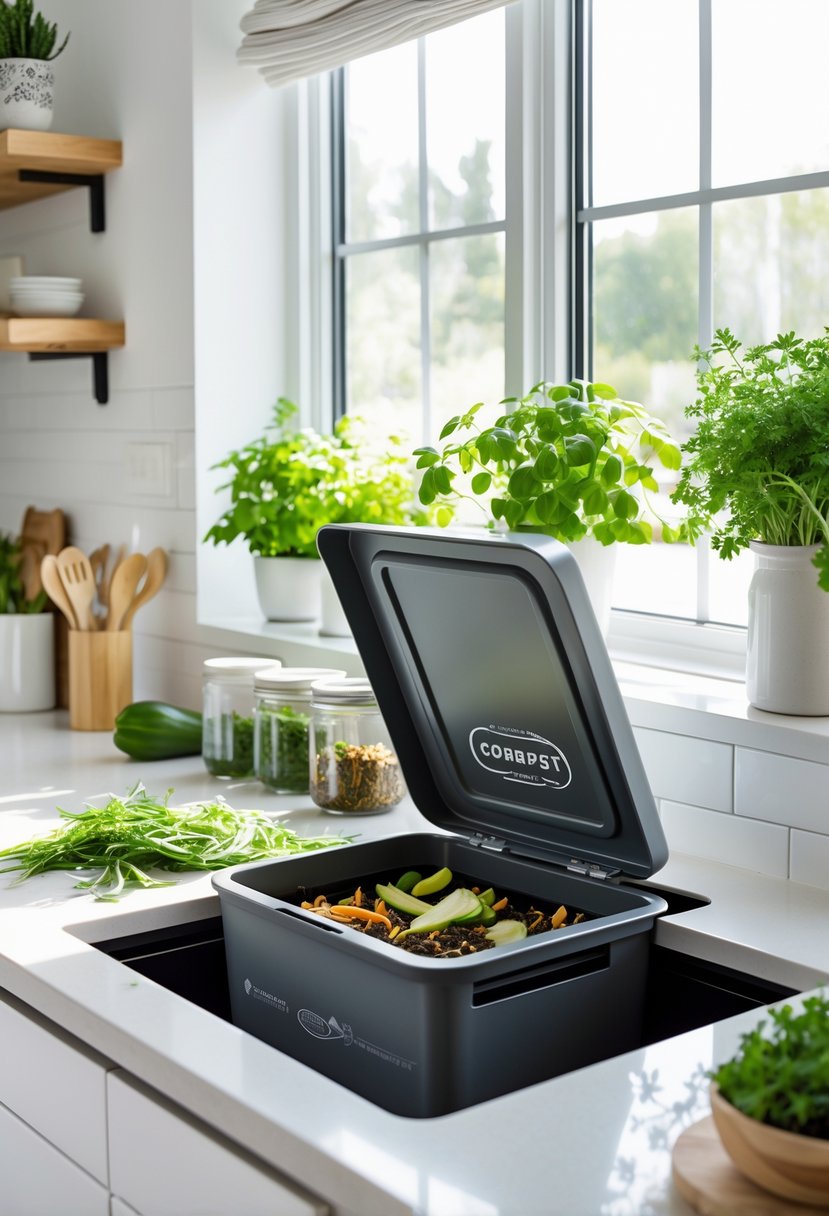
Composting cuts down on trash and gives you something good for the garden. Just balance your greens and browns, keep it turned, and don’t let it dry out. Once you get in the habit, it’s easy.
9. Select Natural Stone Flooring With High Durability:
Natural stone floors—like slate or granite—are tough, and they look great. They handle spills and traffic better than softer stones, and with the right sealant, you won’t be scrubbing stains all the time.
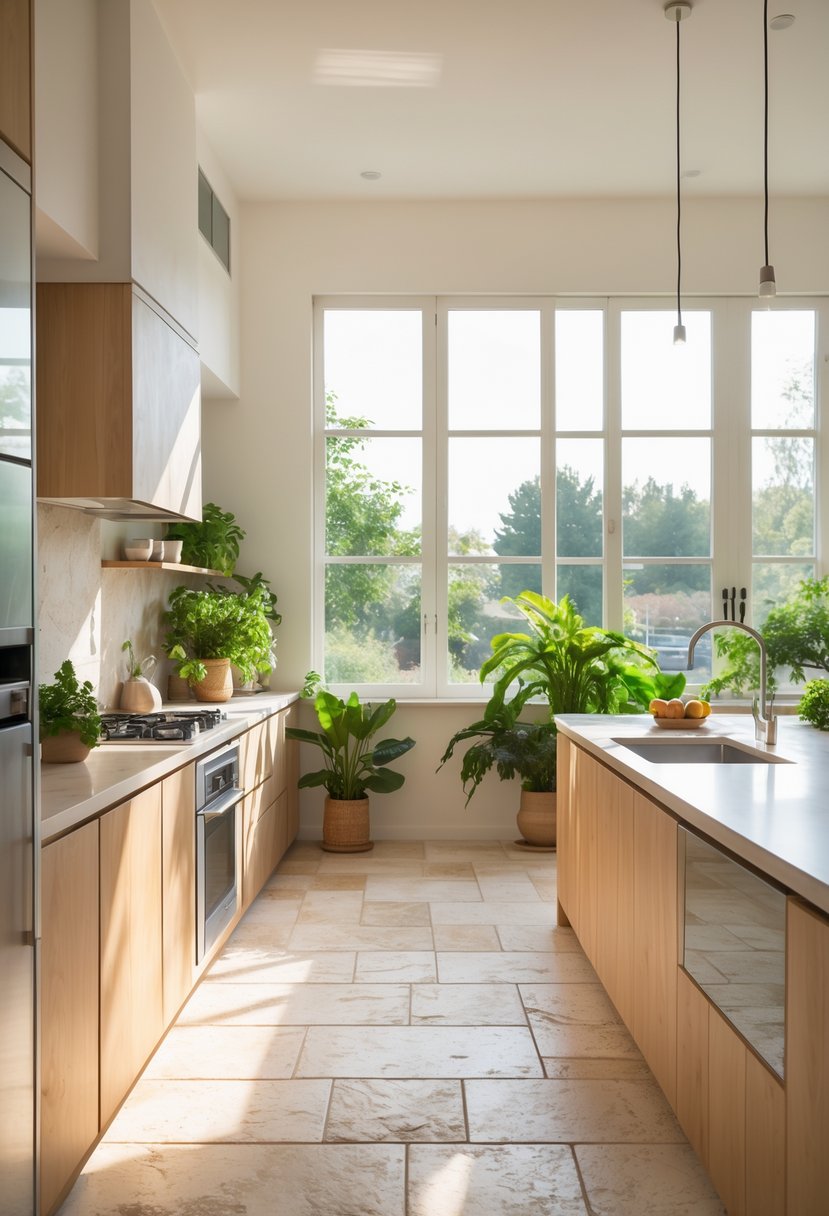
Just check how hard and porous the stone is before you buy. The right pick means fewer repairs down the line, which is better for your wallet and the planet.
10. Integrate A Water Filtration System To Reduce Bottled Water Use:
A decent filtration system at the sink cuts out the need for bottled water. It’s cleaner, cheaper, and you’re not hauling plastic jugs home every week.

Look for filters that last a while—ceramic or carbon are good bets. Whether you go for a single tap filter or a whole-house setup depends on your needs.
Filtered water means less plastic waste. Just remember to swap out filters on schedule so you’re not drinking mystery water.
11. Add Plenty Of Indoor Plants To Improve Air Quality:
You can’t really go wrong with more plants. Snake plants, spider plants, even herbs—they all help clean the air and add a little life to the kitchen. Plus, they look nice.
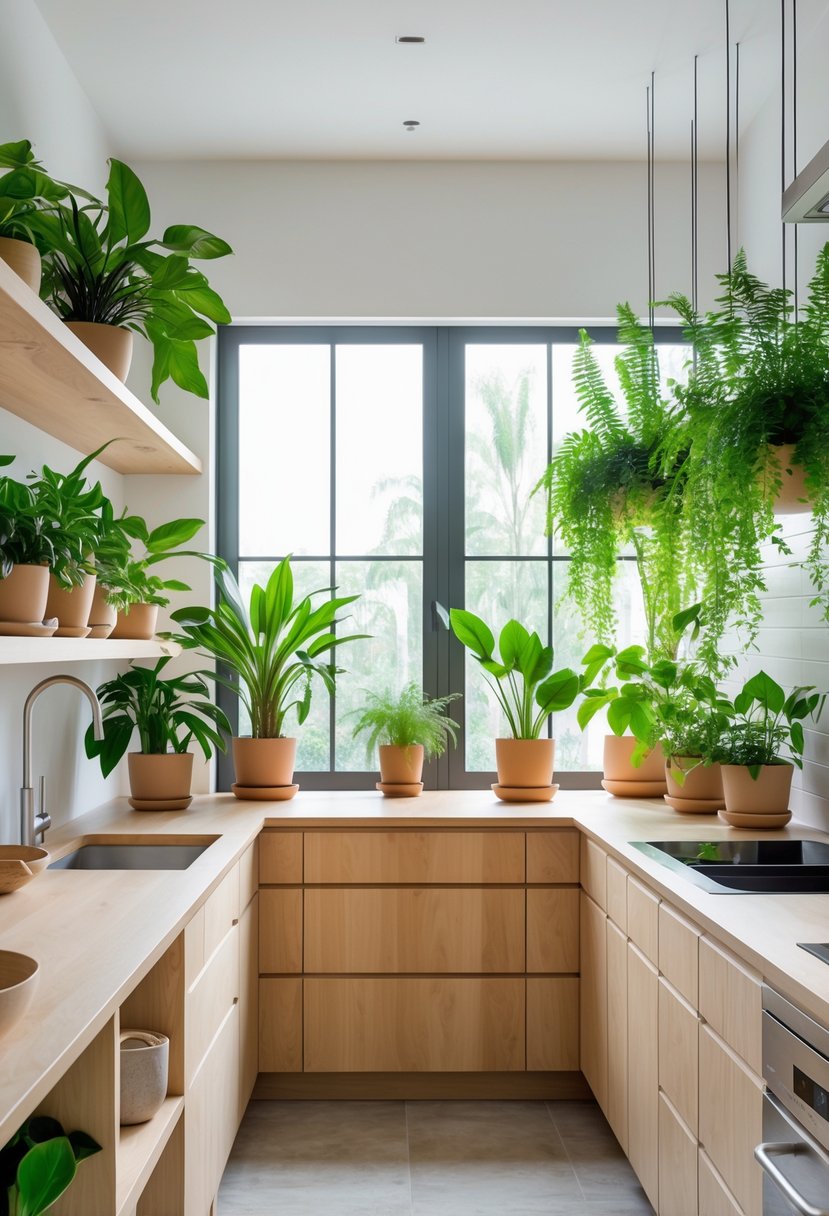
Put them where they’ll get some sun—windowsills, shelves, or hang a few. Water when you remember, snip off dead leaves, and you’re set.
12. Use Solar Panels To Power Kitchen Appliances:
If you’ve got the budget and the roof space, solar panels can actually make a dent in your electric bill. Powering the kitchen with sunlight? That’s pretty cool.
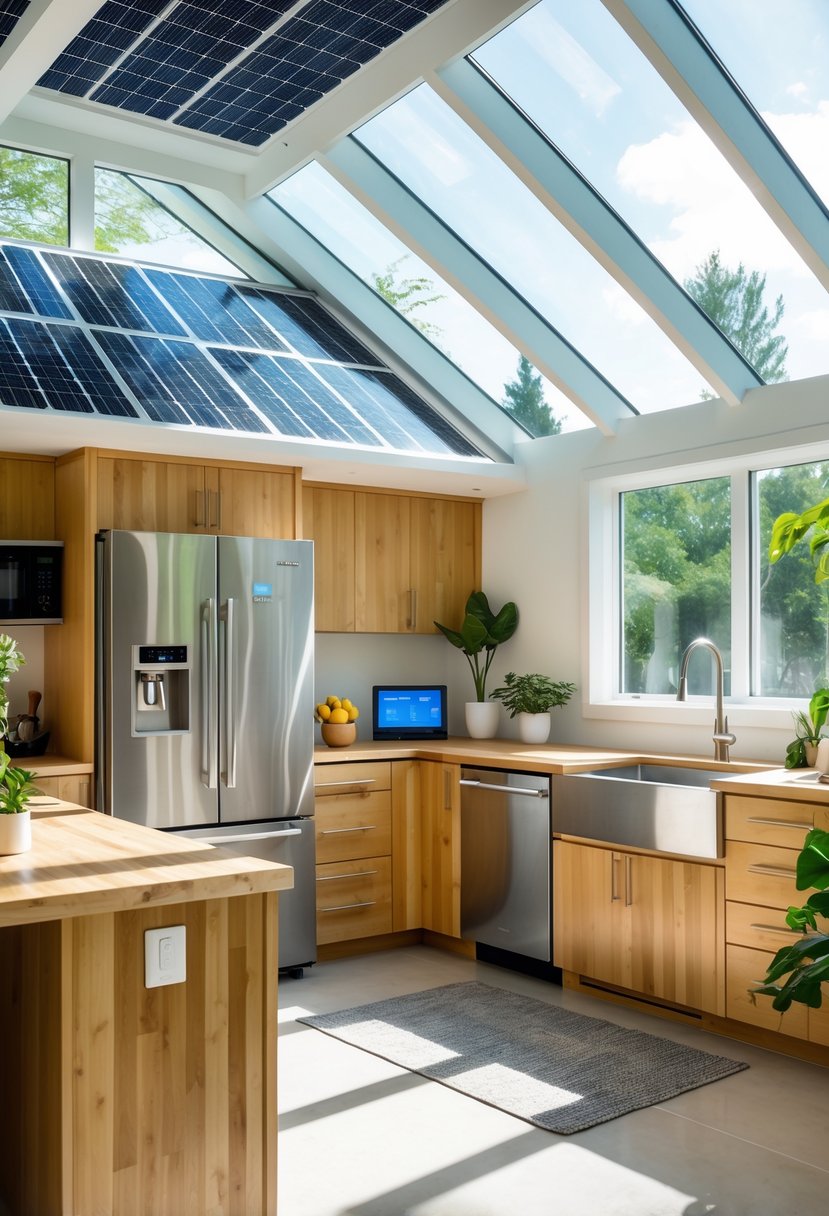
Pair your setup with a good inverter and maybe a battery, so you’re covered at night or during outages. It’s not a small project, but it pays off if you stick with it.
13. Choose Biodegradable Or Recyclable Kitchenware:
Swapping in biodegradable plates or bamboo utensils is a super easy switch. They break down faster if they ever end up in the trash.
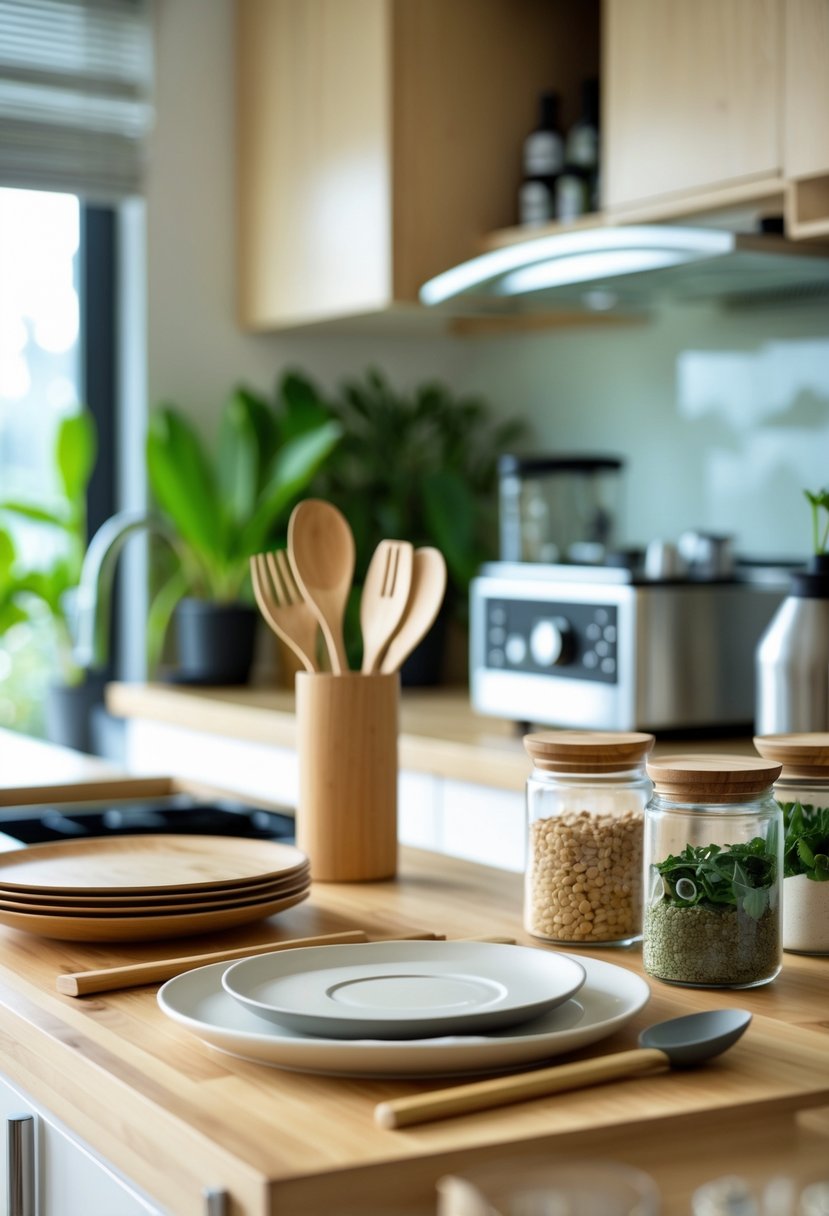
I’m also a fan of glass and stainless steel—they last forever and don’t end up in the landfill after a year. Just double-check those recycling symbols or compost claims, because not everything labeled “eco” really is.
14. Implement Smart Thermostats To Optimize Energy Use:
With sensors and customizable schedules, smart thermostats quietly keep kitchen temps in check—no need to babysit the settings. They’ll dial things back when nobody’s around, so you’re not heating or cooling an empty room (which always feels like such a waste, doesn’t it?).
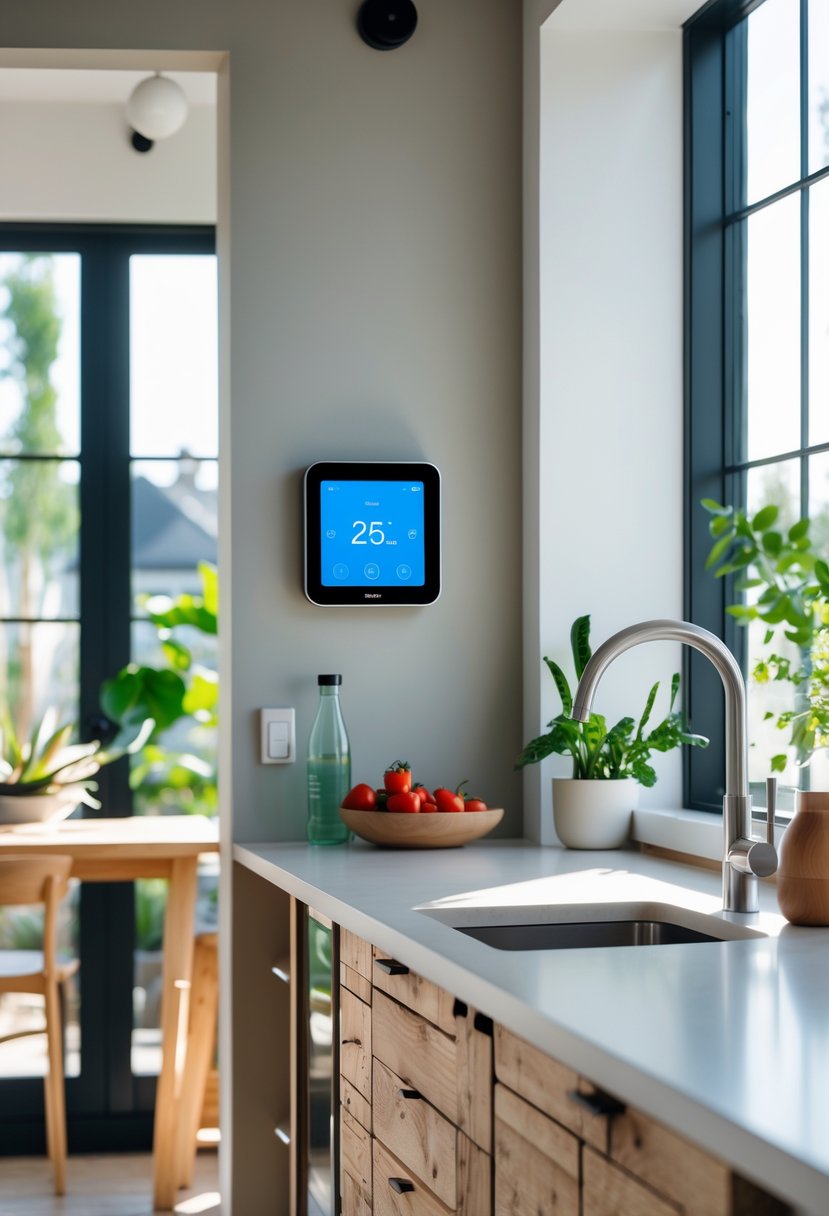
Some can even sync up with other gadgets—maybe a vent, maybe an exhaust fan—so the whole system works together for a more comfortable space. Oh, and a lot of these thermostats let you tweak things from your phone or check out energy reports if you’re curious about where you might save a little extra.