Maximize Your Space: Genius Small Bathroom Design Ideas That Feel Big & Beautiful
You can get a functional, stylish bathroom—no sledgehammer required—by leaning into smart layouts, compact fixtures, and sneaky storage. Sometimes, all it takes is a floating vanity, a frameless glass shower, or some vertical shelves to make a cramped space feel calm and a bit more open.
Let’s get into practical strategies, space-saving fixtures, new materials and trends, and style ideas that actually make a small bathroom work—and look—better. There are quick wins if you want to try something today, plus options whether you’re on a shoestring or planning a big remodel.
Essential Small Bathroom Design Strategies:
It’s all about smart layout, the right fixtures, and good color. A small bathroom benefits from clear walking paths, vertical storage, and surfaces that bounce light around.

Optimal Layouts for Small Spaces:
Galley-style bathrooms work for narrow rooms—shower and toilet on one side, a slim vanity on the other, keeping a clear aisle down the middle. It’s practical and usually meets code, so you don’t have to stress about clearances.
Corner sinks, or wall-mounted options, free up precious floor space. A corner sink near the door is clever; a wall-mounted sink leaves room for a laundry basket or storage underneath. Try to keep fixtures lined up so plumbing stays simple (and cheaper).
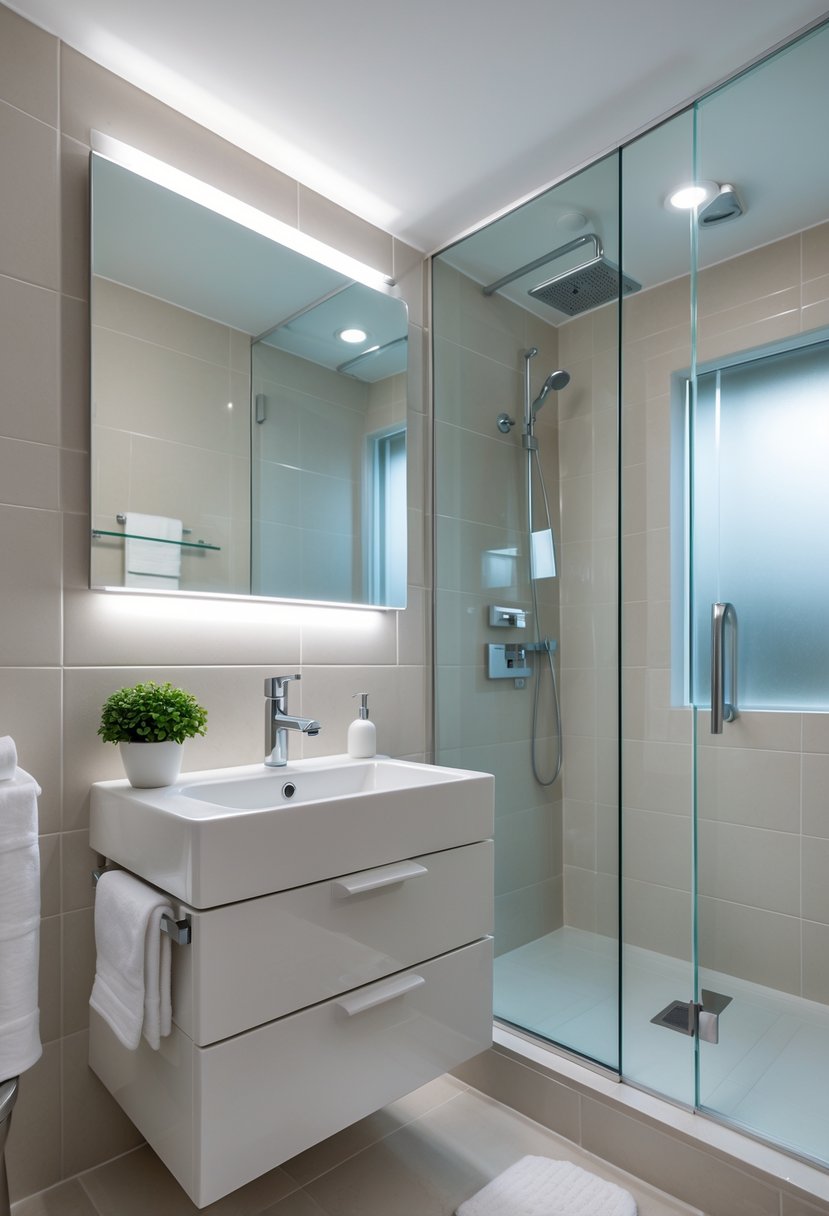
If a tub isn’t happening, go for a walk-in shower with a low curb. Frameless glass keeps the room from feeling boxed in and lets light travel. Double-check door swings and clearances before you commit to any fixture—trust me, it matters.
Must-Have Fixtures and Features:
Opt for compact fixtures that actually fit. Wall-mounted toilets save space and are easier to clean around. Narrow vanities—think under 24 inches—give you storage without hogging the room.
Frameless glass doors or panels keep things feeling open. Add recessed niches in the shower for shampoo and soap. Above the sink, a slimline or recessed medicine cabinet works wonders for hiding clutter.
Go vertical: tall cabinets, shelves above the toilet, hooks behind the door. Single-lever faucets and low-profile drains keep counters less chaotic. If you can hide the pipes, do it—it looks way cleaner.
Choosing the Right Color Palette:
Light neutrals make a small bathroom feel bigger. Pale creams, soft grays, and cool whites on the walls open things up. For the floor, a slightly darker tile hides dirt but keeps the vibe bright.
Add contrast, but don’t overdo it—a single accent wall, a band of patterned tile, or a dark vanity is plenty. Mirrors (even a whole wall of mirror) add depth and bounce light. High-gloss paint or glossy tile can help, but mix in some matte for interest.
Mix up your materials: glass, metal, polished stone feel lighter than heavy wood. Stick with larger tiles and tight grout lines to avoid that busy, choppy look.
Smart Space-Saving Solutions:
Here’s where you focus on freeing up the floor, keeping your stuff handy, and making the room feel bigger—mostly by keeping sight lines open and using built-in storage. Think floating fixtures, vertical storage, and anything that doesn’t hog visual space.
Floating and Wall-Mounted Vanities:
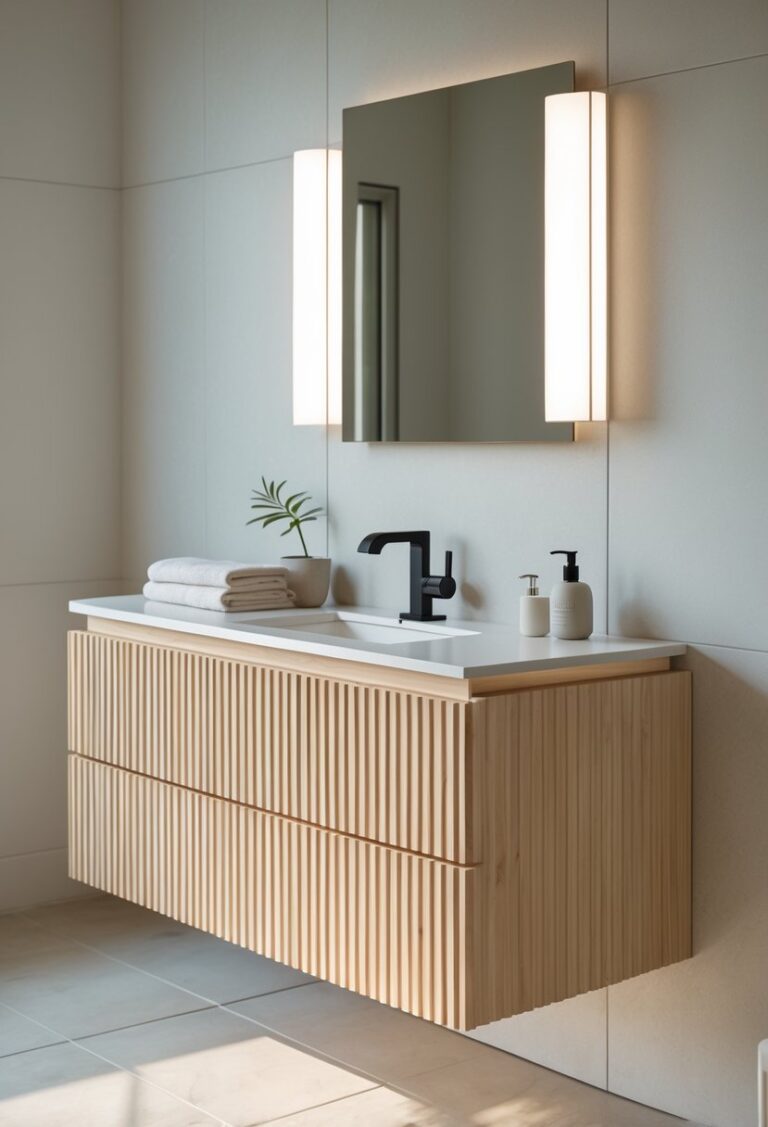
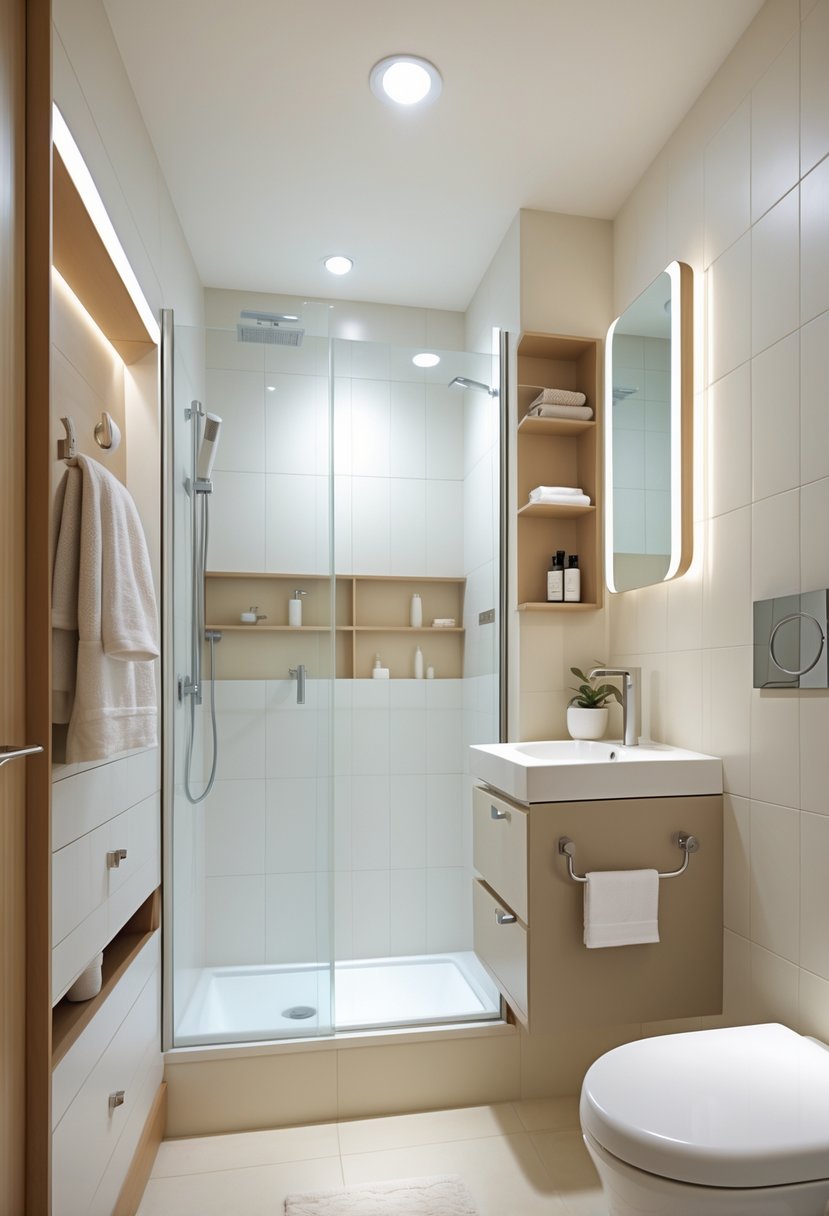
Floating vanities or wall-mounted sinks are a game changer for cleaning and for feeling like you have more space. A floating vanity with shallow drawers stashes your stuff but keeps the floor visible, which tricks the eye into thinking the room’s bigger than it is.
Just make sure it’s anchored to studs or a reinforced wall. For narrow bathrooms, 14–18 inches deep is plenty for a vanity. Wall-mounted sinks shine in powder rooms or tight corners—especially if you can tuck them into a weird wall angle.
Full-extension drawers or slim pull-out trays are handy for tiny items. Water-resistant finishes on the bottom help with splashes. If you can, hide the plumbing in the wall for a cleaner look.
Clever Storage and Organization:
Use vertical storage: tall cabinets, shelves over the toilet, or even hanging baskets. Open shelves above the toilet or a mirrored, recessed medicine cabinet keep daily stuff close without eating up floor space.
Try grouping things by use—grooming in the vanity, towels up high, cleaning stuff down low in a closed cabinet. Labeled baskets or clear bins help corral the little stuff.
Hooks and rails behind the door are underrated for towels and robes. Magnetic strips inside cabinet doors are genius for tweezers and bobby pins. Adjustable shelves make it easier to work around plumbing and keep things flexible.
Space-Expanding Shower Ideas:
A glass shower panel or frameless door keeps the room from feeling chopped up. If you’re tight on space, a single fixed glass panel for a walk-in shower needs less room than a swinging door and looks sleek.
Linear drains and a curbless entry make the floor feel seamless and let you play with tile patterns. If you don’t need a tub, swap it for a glass enclosure or even a wet-room style shower for more space and better flow.
Corner showers or neo-angle enclosures work in narrow bathrooms. Keep shower fixtures compact—a slim valve, wall-mounted soap niches, and a recessed shelf keep things tidy inside.
Integrated Shelving and Niches:
Recessed shower niches are a lifesaver for keeping bottles out of the way. A 12–18 inch wide niche fits most bottles and soap; stack them if you need more storage without crowding the shower.
Try one niche near knee height for heavy bottles, another at eye level for daily stuff. Tiling inside the niche to match the shower helps it blend in.
Above the toilet or behind the sink, shallow recessed shelves are great for small items or a bit of decor. Tight corners? A corner shelf or built-in niche can use that awkward space without eating up floor area.
Material and Design Trends:
Materials now are all about balancing light, texture, and durability to help small spaces feel bigger and cleaner. Tiles and finishes that reflect light or have subtle patterns can really make a difference, and they’ve got to stand up to moisture.
Popular Tile Patterns and Surfaces:
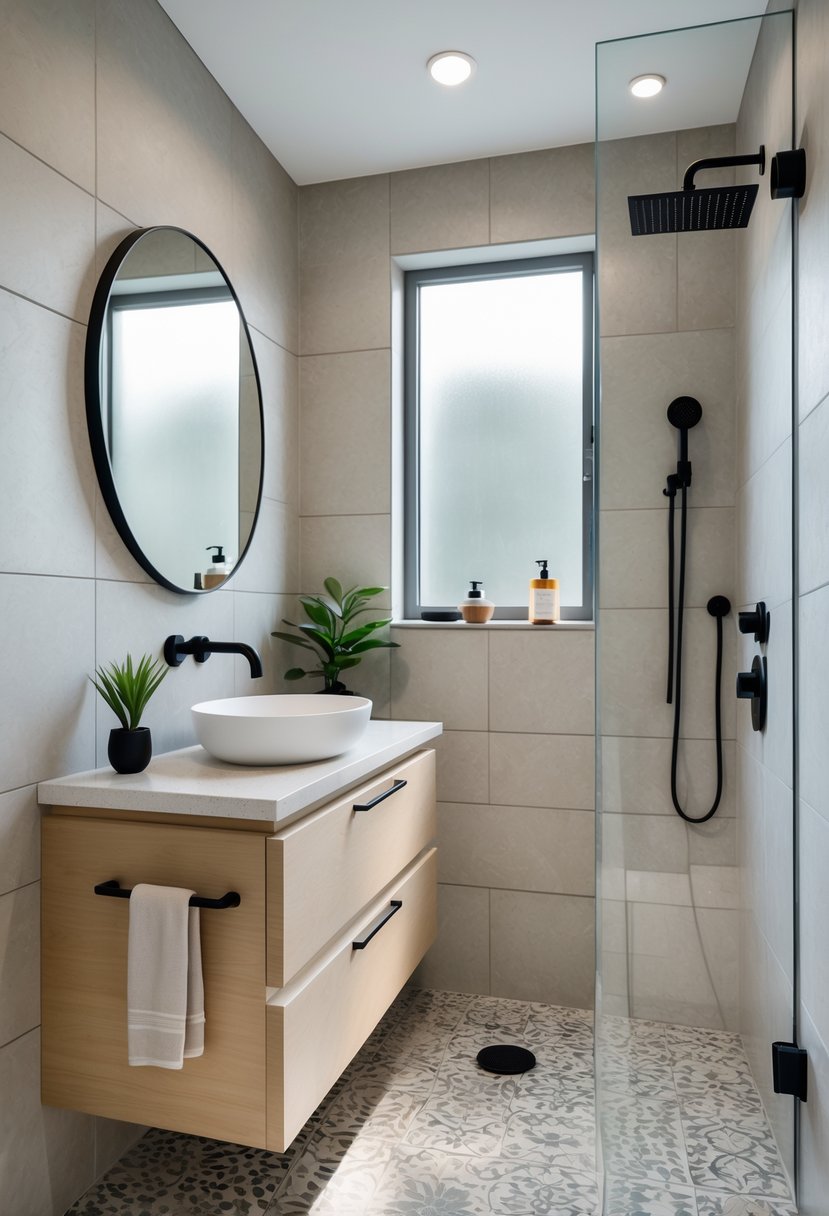
Marble tile is still a favorite for a bright, upscale vibe. Large-format marble or marble-look porcelain on the walls means fewer grout lines and a taller feel. Hex tiles add interest to floors without making them feel busy.
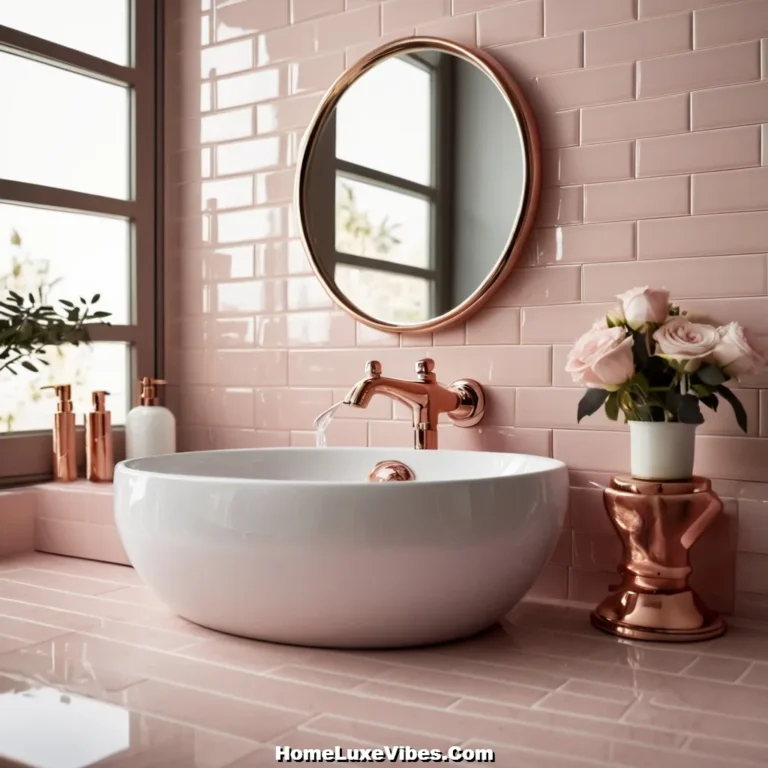
White subway tile isn’t going anywhere—great for backsplashes and showers. Try laying it vertically for height or in a stacked pattern for a modern twist. Penny tile and mosaics work nicely for shower floors and niches—they’re grippy and follow curves easily.
Terrazzo floors are tough, hide water spots, and pair well with neutrals. If you love a patterned floor, cement tiles are bold, but keep other materials simple so the room doesn’t feel crowded.
Accent Walls and Finishes:
An accent wall can ground a bathroom without adding clutter. Try a matte plaster panel, marble slab, or a strip of patterned cement tile behind the vanity or tub. A vertical mosaic tile strip in the shower niche adds depth and storage without interrupting the flow.
Finishes matter: matte hides water spots and glare, glossy or polished surfaces bounce light around. Stick to one bold texture per wall—say, a marble slab or patterned tile—then keep the rest simple. Tight grout lines and matching grout color make the walls feel seamless.
Stylish Hardware and Accents:
Hardware brings it all together and needs to stand up to moisture. Matte black gives crisp contrast against white tile or pale marble—looks sharp on faucets, shower frames, and towel bars if you’re into that modern, graphic look.
Brass is warmer and pairs nicely with terrazzo or wood vanities. Satin or brushed brass hides fingerprints and water spots, which is a nice perk. Go for slim handles and wall-mounted faucets to save counter space in a small bath.
If you want to mix metals, keep it minimal—one main finish for plumbing, another for small touches like mirror frames. Use matching hooks, recessed niches, or slim shelves to tie it all together.
Inspirational Small Bathroom Styles:
Here are some ways to use color, fixtures, and storage to help a small bathroom feel bigger and work better. Each style has a clear visual focus and simple construction—no need to overcomplicate things.
Contemporary Bathroom Ideas:
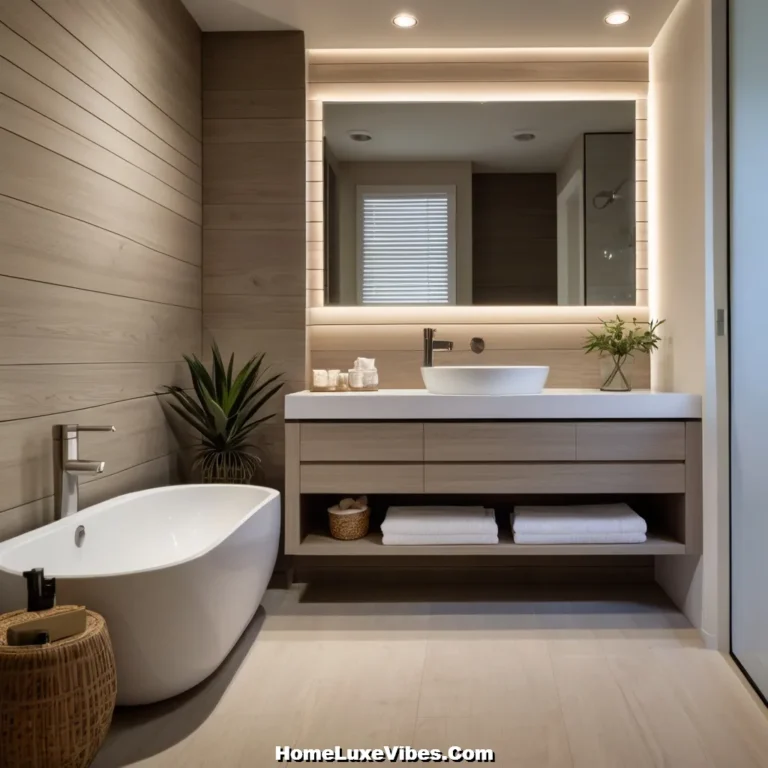
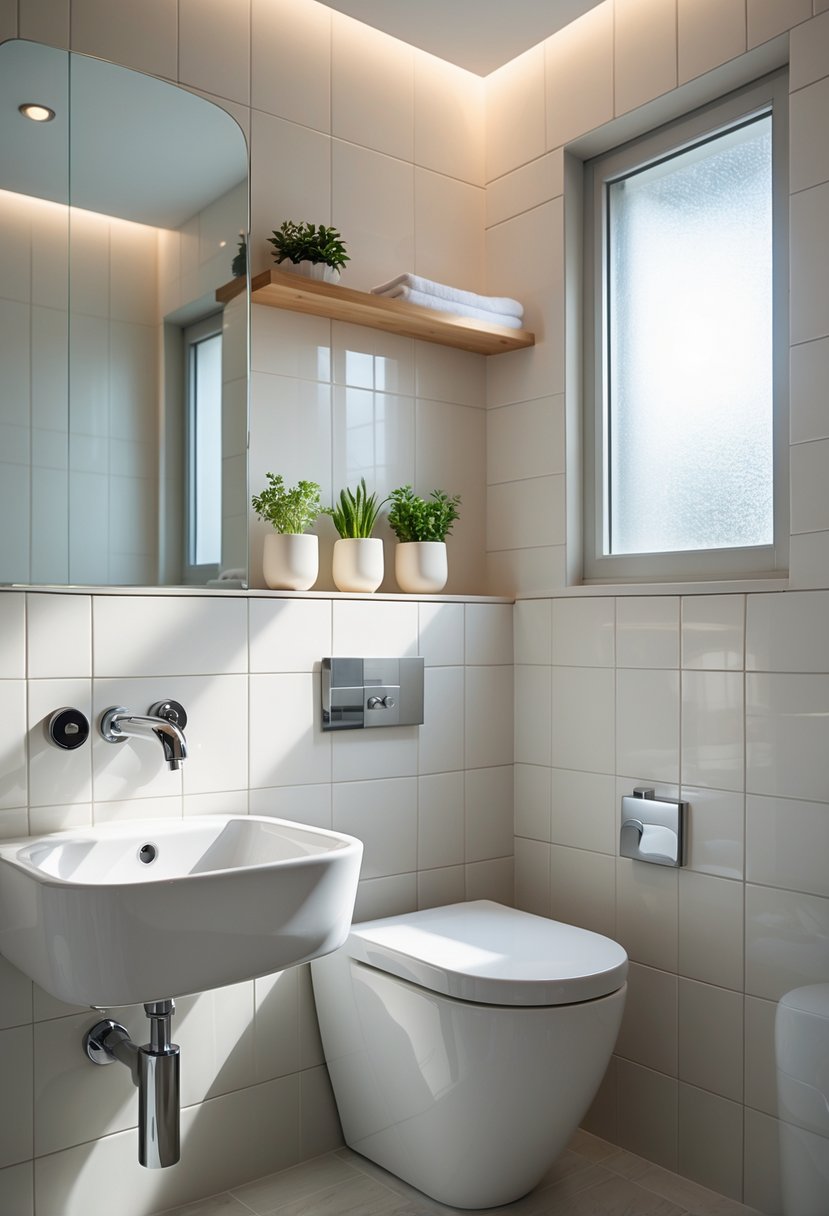
Contemporary bathrooms are all about clean lines and open sightlines—less clutter, more calm. Wall-mounted fixtures, a floating wood vanity, and big tiles make the floor look unbroken. Every choice is about freeing up space and keeping things streamlined.
Lighting’s a big deal: slim LED sconces or mirrors with integrated lights give you bright, even light without the bulk. Storage stays sleek too—shallow medicine cabinets or recessed shelves keep things handy but out of sight. A frameless glass shower keeps the room feeling open and airy.
Keep color palettes simple: two or three tones max. Warm gray or soft white as a base, plus maybe a pop of matte black or a deep blue vanity for contrast. Stick with materials that are easy to clean and don’t need constant grout scrubbing—life’s too short for that.
Scandinavian Influences:
Scandinavian bathrooms are all about light, simplicity, and that unmistakable natural texture—honestly, it just makes small rooms feel so much more open. You’ll usually see pale walls and light wood vanities that bounce light around and keep things bright. A compact wood vanity with open shelving or a slim, closed cabinet adds a little warmth and storage, but doesn’t make the room feel crowded.
Textiles and accessories? Pretty minimal. Maybe just a woven rug, a towel ladder, and some understated chrome or brass fixtures. There’s no clutter, just the basics. If you’re lucky enough to have natural light, go for translucent shades or a frosted window—privacy stays, but all that daylight pours in.
Honestly, modular storage is a lifesaver. Floating shelves and stackable baskets just tuck into those odd corners and you can move them if you change your mind. Matte white tiles, tight grout lines, and a little vessel sink on a narrow counter keep things looking neat, but not boring.
Timeless Wood and Vessel Vanities:
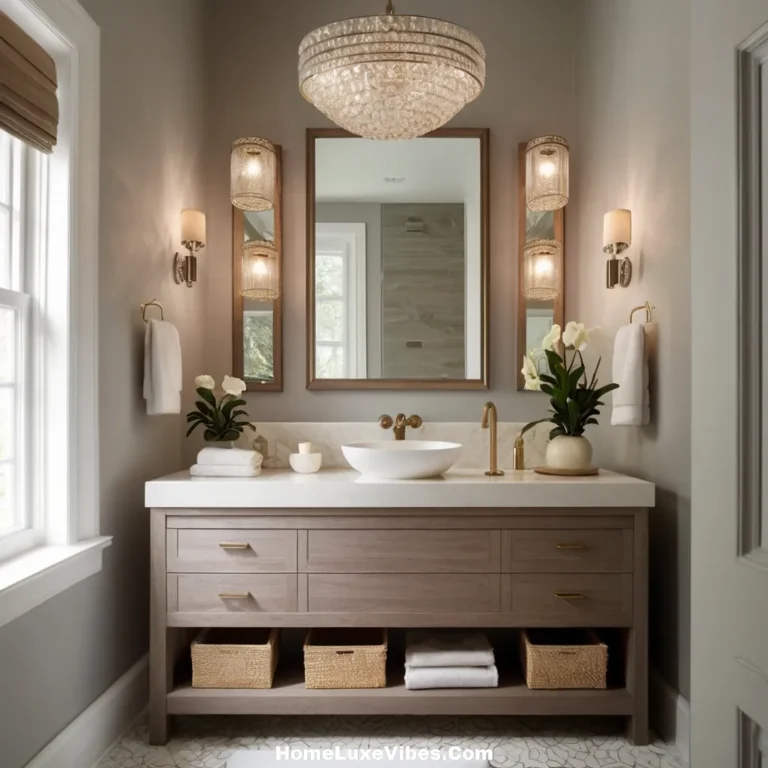
There’s something about wood vanities with vessel sinks—they just warm up a small bathroom and give it that handmade vibe. Floating vanities open up the floor, so you don’t feel boxed in. Vessel sinks perch on top, so you can use a slimmer cabinet and sneak in a basket or two underneath for storage (or just to hide the plumbing, let’s be real).
Go for a dense, water-resistant wood, or sealed plywood if you’re on a budget—nobody wants warped cabinets. Vessel sinks in porcelain or stone, whether square or round, become the star of the show. Just make sure your faucet lines up with the sink’s rim, or you’ll have water everywhere. For tight spaces, single-drawer vanities or ones with a slim shelf are a safe bet.
The hardware ties it all together—simple pulls, matte finishes, and not too much exposed plumbing so the wood and sink really stand out. A good seal and a small countertop overhang help protect the wood, so you’re not constantly stressing about water spots.
Frequently Asked Questions:
Here’s where you’ll find some straight-to-the-point answers about layout tricks, fixture picks, and tile choices that actually make a small bathroom work. No fluff—just the steps, measurements, and real-life trade-offs you’ll want to know.

How can I maximize space in a small bathroom layout?
If you can, swap in a pocket or sliding door and you’ll get back about 9 square feet you’d lose to a swinging door. Try lining up the sink and toilet on one wall, and maybe squeeze in a corner shower to keep the middle open.
Adding vertical storage (think tall cabinets or shelves above the toilet) can boost storage by as much as 30%. A wall-hung vanity keeps the floor visible, which somehow just makes everything feel bigger.
If you’re remodeling, try not to move the plumbing unless you absolutely have to—honestly, it gets expensive fast. Keeping things in the same spot saves a ton of hassle and money.
How can I select fixtures and fittings suitable for a small bathroom?
Look for compact fixtures: a 16–18 inch-wide sink, maybe a corner sink, or a slim 18–20 inch vanity—all solid choices for tight quarters. Toilets with round bowls or compact elongated bowls help save space, too.
If you’ve got the budget, wall-mounted faucets and toilets are awesome for freeing up floor space and making cleaning way easier. If not, standard fixtures work—just make sure they’re scaled to fit your room.
Multi-function pieces are your friend: mirrored medicine cabinets, recessed shower niches, and vanities with built-in storage all pull double duty without hogging space. Why not get more from what you already have?
What are the tips for choosing tiles in a small bathroom to enhance the sense of space?
Honestly, big tiles can be a game-changer. Something like a 12×24 or even bigger—those sizes tend to cut down on grout lines, which helps the floor and walls feel less chopped up and more open.
When it comes to color, lighter shades usually do the trick. Soft whites, gentle grays, maybe a beige if you’re into that—they bounce light around and keep things feeling airy. If you can, let the floor tile roll right into a curbless shower. That little move makes the whole space feel less interrupted.
Tile layout matters too. Laying them horizontally or even on a diagonal can sort of trick your eye into seeing a wider room. I’d say go easy on the wild patterns or tiny mosaics—save those for a niche or a little accent, otherwise things can feel pretty busy, fast.