Create Your Relaxing Bedroom Retreat: 7 Soothing Ideas for Better Sleep & Calm
Everyone wants a relaxing bedroom that instantly feels like a sigh of relief. This post dives into practical, doable tweaks—color, lighting, bedding, scents, and those little personal touches—to help your room actually become a calm retreat you’ll look forward to. Leaning into a soft color palette, layered lighting, and comfortable bedding really does make restful sleep and daily calm a whole lot more likely.
You’ll get ideas for picking soothing tones, arranging furniture for a peaceful flow, choosing bedding and textures that actually invite you to relax, and adding lighting, scents, and sound that help you wind down. The next sections break it all down into steps and quick little upgrades you can try right away.
Setting the Foundation: Calming Color Palette and Thoughtful Layout
Honestly, a peaceful bedroom starts with two things: colors that don’t shout at you and a layout that just feels easy. Pick soft, muted hues and place the bed for good flow—easy access to light and storage is a game changer.
Choosing a Calming Color Palette:
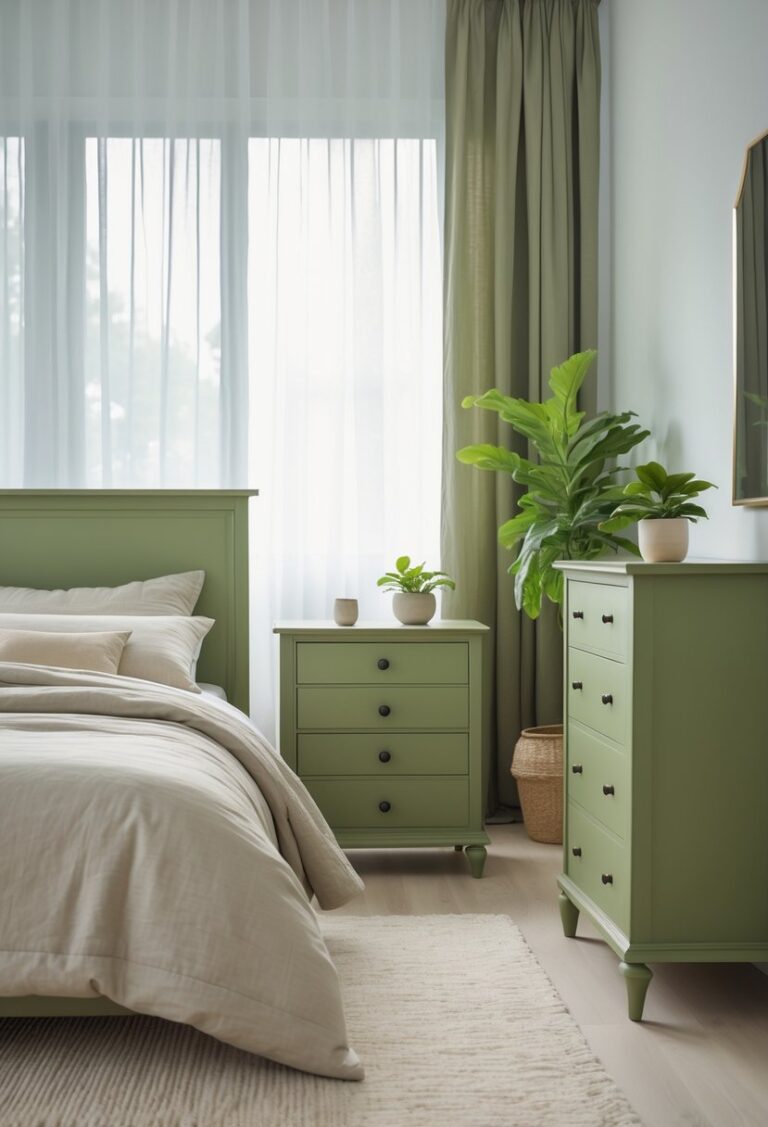
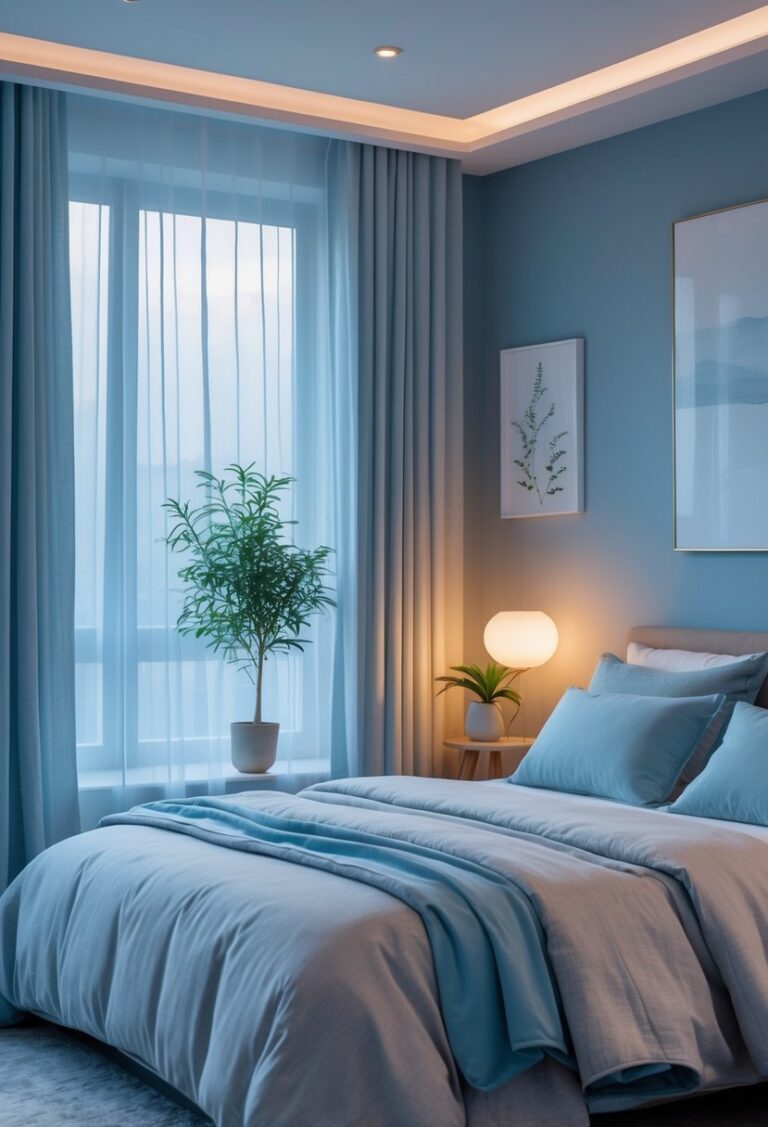
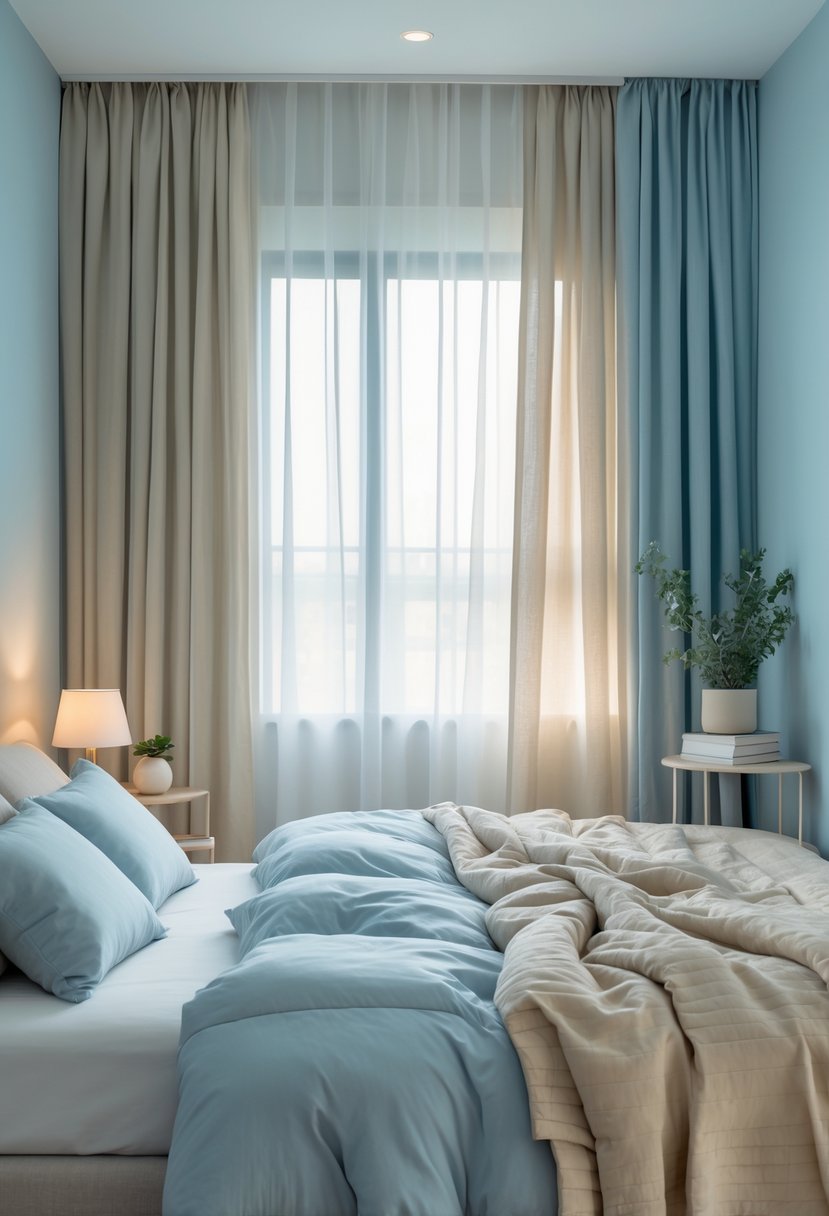
Go for colors that lower the visual “noise” and just help you breathe. Soft blues, sage greens, muted greys—they all work because they’re easy on the eyes and kind of mimic what you see outside. The 60-30-10 rule is a handy guide: 60% main wall color (soft neutral), 30% on bedding or curtains, and 10% for little pops of color in pillows or art. Keeps things balanced, not busy.
Try out paint swatches in both morning and evening light—it’s surprising how different they look. Matte or eggshell finishes help avoid glare. Skip super-bright or saturated colors for big surfaces; save those for small accents if you can’t resist.
Optimizing Bedroom Layout for Relaxation:
Place your bed so you can see the door, but don’t line it up straight with the doorway—it just feels better, trust me. Leave at least two feet (ideally a bit more) of open space around the bed so you’re not bumping into things.
If you can, create little zones: sleeping, dressing, maybe a small spot to read or just sit. Keep walkways clear and stash stuff in low-profile storage (under-bed drawers are a lifesaver). For lighting, layer it—a soft overhead dimmer and bedside lamps for reading. That way, you can go from bright to cozy in a snap.
Incorporating Earthy and Neutral Tones:
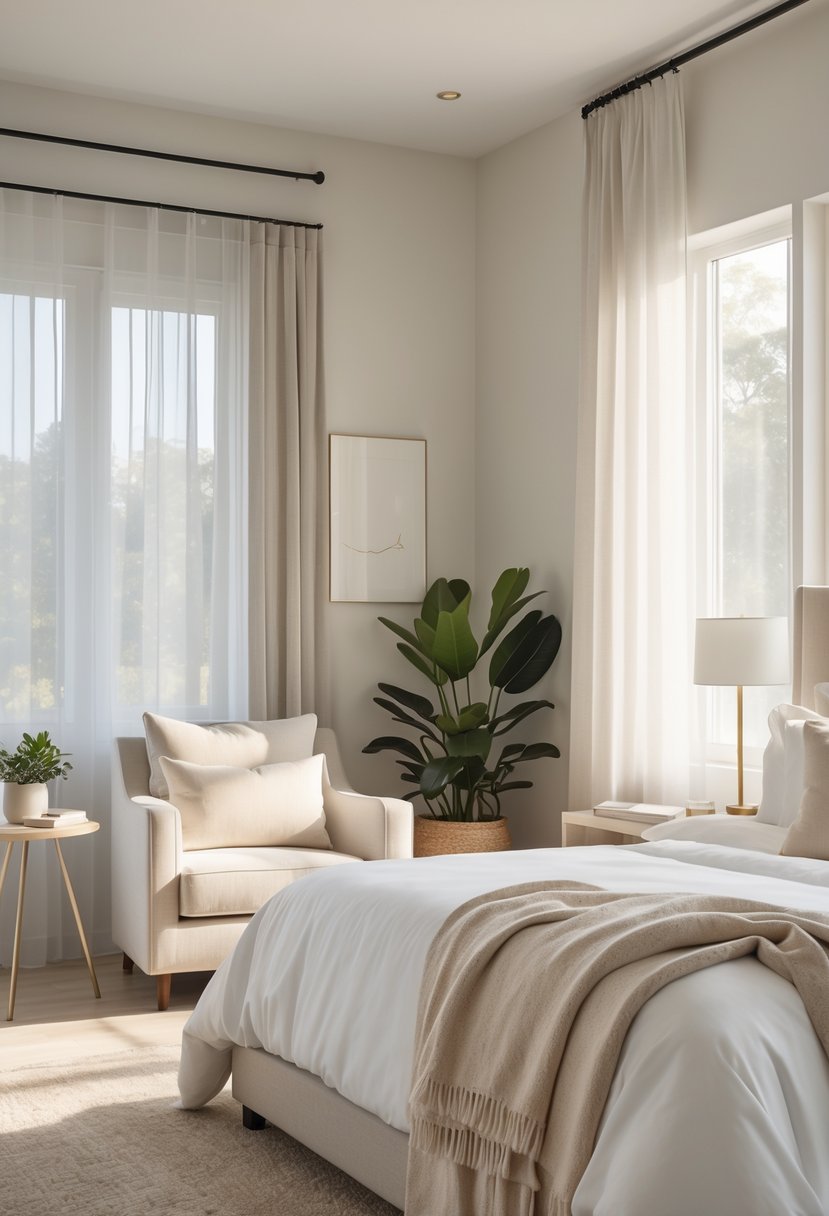
An earthy color palette just grounds everything and adds warmth without being overwhelming. Think clay, taupe, mocha, linen beige, creamy whites—these work for modern or rustic vibes and always feel calm and lived-in.
Bring in natural textures—linen bedding, jute rugs, wood nightstands—to keep the look soft and inviting. A few plants or a bit of pottery go a long way for organic contrast. When it comes to patterns, keep them subtle so the soothing colors stay front and center.
Creating Comfort: Luxurious Bedding and Soft Textures
Pick fabrics that feel good, layer for warmth and shape, and mix textures so the bed looks (and feels) inviting and calm.
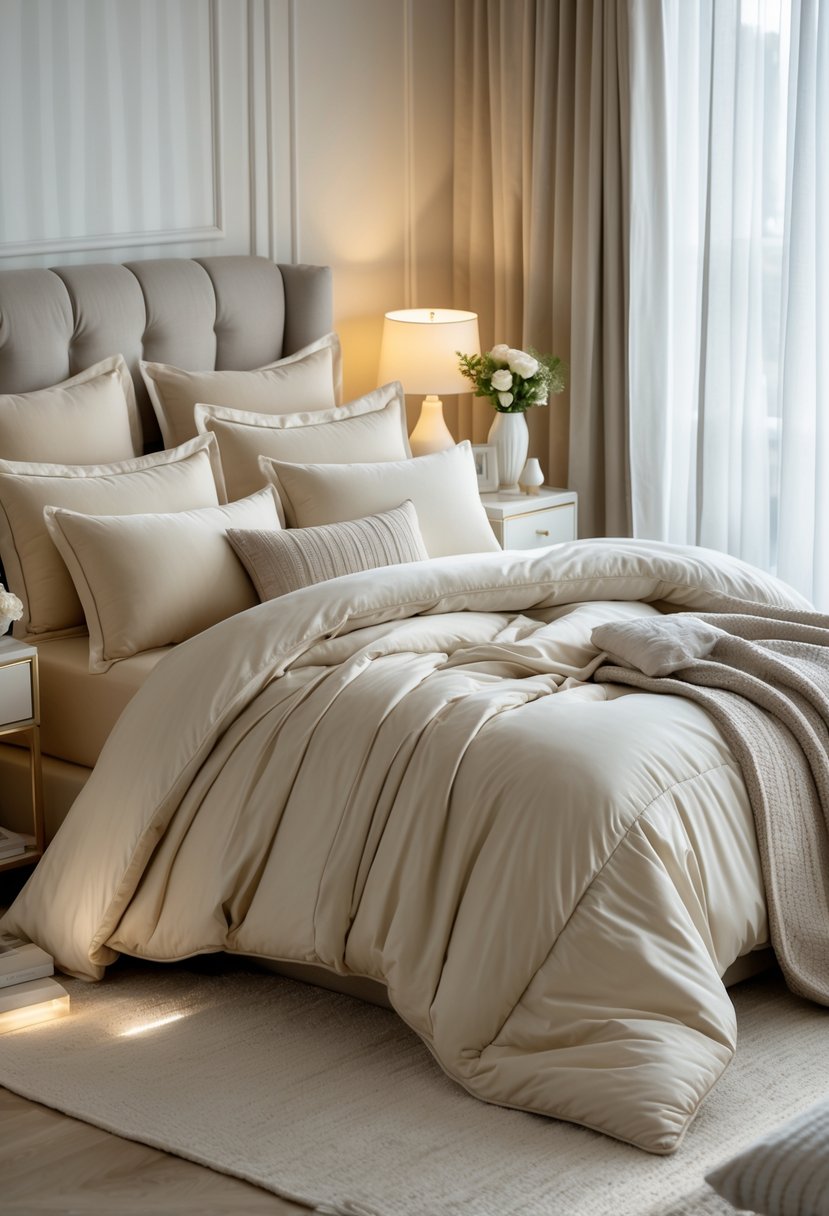
Selecting Comfortable Bedding and Breathable Fabrics:
Go for sheets that balance softness with breathability. High-quality cotton—long-staple like Egyptian or Pima—feels smooth and lets your skin breathe. If you run hot, linen sheets are kind of magic; they wick moisture and get softer over time. Percale is crisp and cool, while sateen is silkier but can feel warmer.
Honestly, thread count is less important than fiber quality. Check the label for what it’s actually made of. Natural fibers or blends with mostly cotton or linen are best. And, let’s be real, easy-care fabrics make laundry day less of a chore.
Layering Pillows, Throws, and Plush Textures:
Start with two solid sleeping pillows, then add a couple of euro shams for height, and toss on a few accent pillows in different sizes. Mix it up—velvet for a bit of shine, woven or embroidered for texture.
A chunky knit throw or woven blanket at the foot of the bed is both practical and makes things look cozy. Don’t fuss—drape the throw so it looks effortless. Plush touches, like a velvety lumbar pillow or a faux-fur cushion, create little moments of comfort.
Enhancing the Bed With Layered Bedding:
Here’s the order: fitted sheet, flat sheet, lightweight blanket, duvet or comforter, then a throw on top. A mid-weight blanket between sheets and the duvet gives you options if the temperature swings. Duvets with removable covers are just easier to keep clean.
Stick with soft, neutral bedding for the base, then layer in texture with throws and pillows. At least one washable layer (like a coverlet or throw) is smart for protecting your main bedding. Swap out heavier layers as the seasons change to stay comfy year-round.
Ambiance and Relaxation: Lighting, Scents, and Sounds
Getting the mood right is all about how you use light, scent, and sound. Gentle, warm lighting; subtle, sleep-friendly scents; and steady, low-level noise can really help your mind and body slow down.
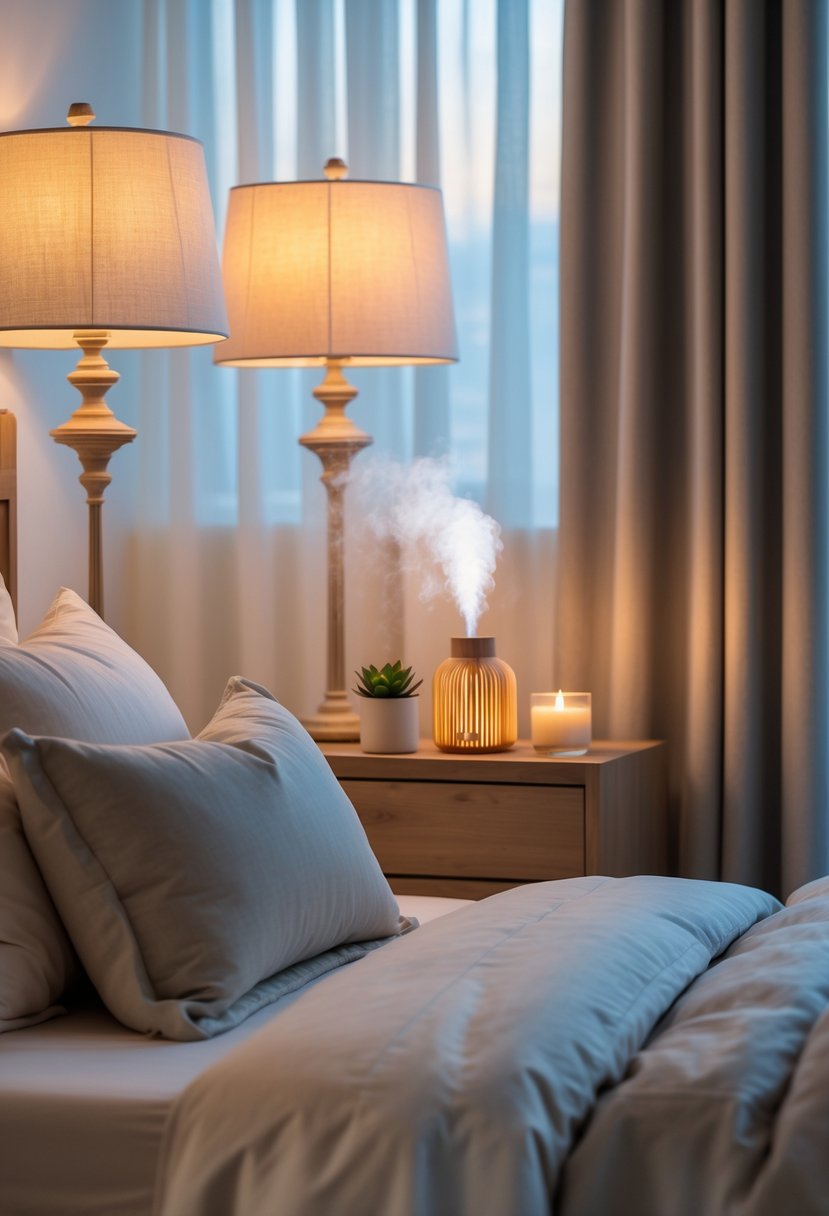
Utilizing Layered and Adjustable Lighting:
Start with warm ambient light. A dimmer on the main fixture lets you bring the brightness down at night. Soft bulbs (2700–3000K) set a cozy tone—no harsh blue glare.
Add bedside lamps or wall sconces for reading or winding down. If you’ve got the ceiling height, pendant lights over the nightstands look pretty cool too.
Mix up your lighting: overhead for the main glow, lamps or sconces for tasks, and maybe some fairy lights or a small accent lamp for a soft vibe. Keep at least two types on separate switches or plugs so you can tweak the mood. Fairy lights or a dim accent lamp are great for late-night unwinding.
Dimmable bulbs and smart controls are worth it if you want to set schedules or have a “wind down” preset. Makes life easier.
Incorporating Aromatherapy and Soothing Scents:
Stick with subtle scents and skip anything too strong at bedtime. A diffuser with a timer is perfect—keeps things gentle, not overpowering.
Lavender, chamomile, and cedarwood are classics for relaxing. Start with just a couple drops in the diffuser; only add more if you barely notice it. Swap oils now and then so you don’t get used to the same scent.
Set the diffuser on a nightstand or dresser, away from vents. Ceramic or ultrasonic ones are quiet and give a nice, even mist. For zero effort, lavender sachets or cedar blocks in drawers work too.
Crafting a Relaxing Sound Environment:
Consistent, gentle sound is the goal. White noise or sound machines—think rain, ocean, or soft static—help mask random noises and can keep your sleep deeper.
Keep the volume low—just enough to blend into the background. Face the device toward the bed but don’t put it right next to your head. Use a timer or let it run all night if you live somewhere noisy.
If you prefer music, try slow instrumental playlists or nature sounds. Avoid anything with big volume jumps. Pair sound with soft light and a hint of lavender for a calming atmosphere that actually works together.
Personal Touches and Serene Details:
It’s the little things that make a room feel like yours. Think: a cozy corner for reading, a plant or two, art you actually love, and storage that makes clutter disappear (or at least hide).

Adding a Cozy Reading Nook or Window Seat:
A little spot to read or just sit quietly goes a long way. Tuck a low bench or a chaise under a window, or beside the bed if you have the space. Layer a soft rug and throw for comfort and texture.
Pick cushions in natural fabrics—linen, cotton, whatever feels good. Pop in a slim floor lamp or wall sconce for light, and a floating shelf for your current reads and maybe a mug. Tight on space? A built-in bench with storage underneath keeps things tidy.
Warm wood tones for the seat or shelves help the nook feel grounded. A tiny side table is handy for a notebook or coffee. It’s a personal corner that feels intentional, not messy.
Enhancing Serenity With Plants and Natural Elements:
Plants really do make a difference—visually and for the air. A tall snake plant in the corner is super low-maintenance. Smaller ferns or peace lilies on shelves or nightstands add a gentle touch of green.
If light’s an issue, fake it with good faux greenery. Use woven baskets, clay pots, and wood accents to tie everything together. A macramé wall hanging or a little driftwood shelf adds a handmade, tactile feel.
Natural textiles—wool throws, cotton sheets, a jute runner—bring in warmth and texture. A few smooth stones or a wooden tray on the dresser are simple, peaceful touches that nod to nature.
Bringing in Calming Art and Meaningful Decor Items:
Go for artwork that relaxes the eye, not stuff that grabs all the attention. Think black-and-white landscapes, muted abstracts, or maybe just a simple line drawing above the bed. Thin frames and understated colors tend to blend better if you’re into a monochrome or neutral vibe.
Add a couple of meaningful decor pieces—maybe a framed photo, a small sculpture, or a favorite book on a floating shelf. Swap out a piece or two with the seasons so the room doesn’t get stale, but don’t overdo it. A bit of macramé by the window? That can soften things up and bring in some handmade charm.
Textiles matter just as much as art. A woven rug or textured throw can echo colors from your wall pieces. These little, intentional choices make the bedroom feel more personal and, honestly, a lot cozier.
Utilizing Smart Storage and Decluttering:
Smart storage is a lifesaver for keeping the bedroom peaceful. Built-in wardrobes or under-bed drawers are perfect for tucking away off-season clothes or extra linens. If you’re prone to clutter, a nightstand with a drawer—or even a hidden compartment—beats open shelving every time.
Floating shelves are handy for displaying a few favorite objects, plus they keep books off the floor (which is always a win). Labeled baskets in the closet help wrangle shoes and accessories. A slim storage bench at the end of the bed? That can be both a spot to sit and a place to hide blankets.
Try some one-touch routines: a single basket on the dresser for nightly odds and ends, a tray for jewelry, and a set place for the alarm clock. It’s a little discipline, but it really does make the bedroom feel like a retreat.
Frequently Asked Questions:
Here’s where you’ll find some practical steps for making your space more calming, plus specific color and lighting ideas that actually help you relax. The answers get straight to the point with real items and simple tweaks you can do right away.
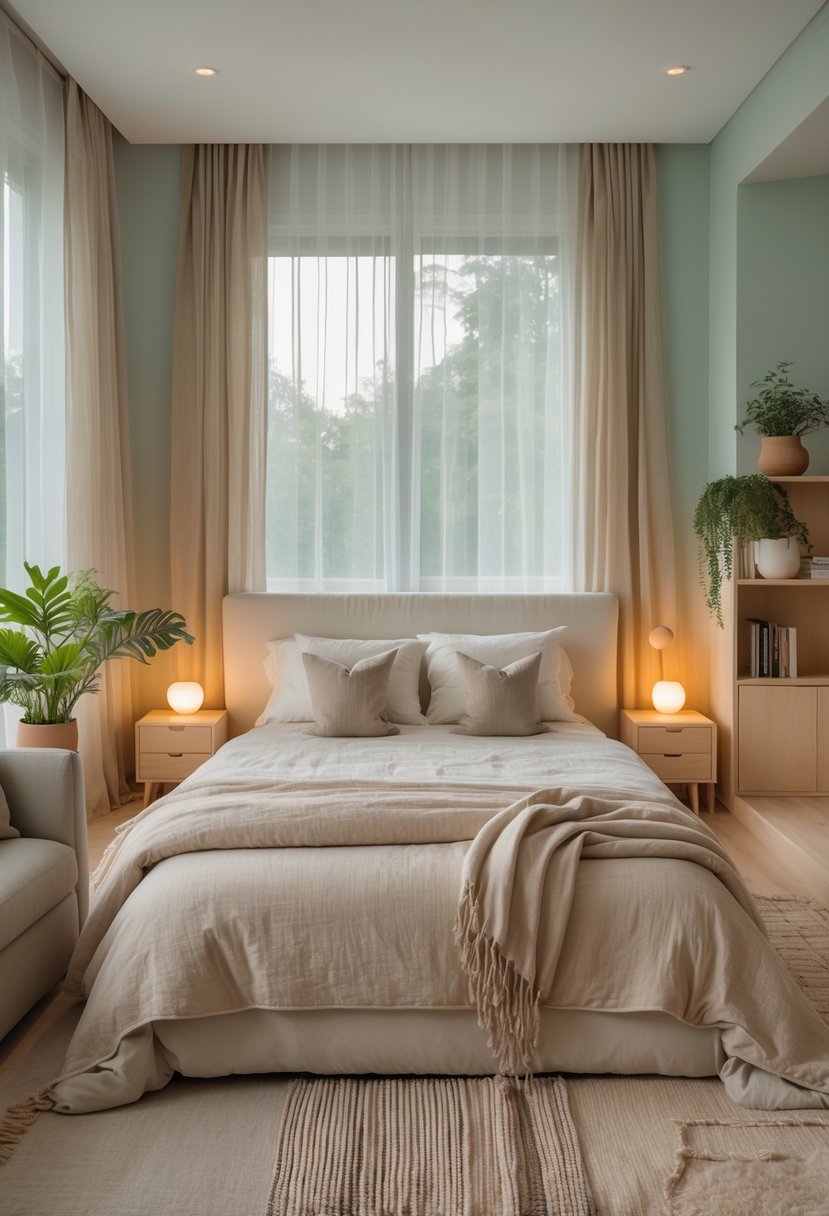
How can one create a calming atmosphere in a bedroom?
Start by clearing clutter and keeping surfaces mostly empty—visual chaos is just stressful. Even tiny daily habits, like making the bed or tossing clothes in the hamper, make a difference.
Add a couple of low-maintenance plants—snake plant or pothos are easy and bring in some green (and bonus: cleaner air). Personal touches are great, but stick to one or two shelves so things don’t feel crowded.
Choose bedding that breathes—linen in summer, a cotton duvet that works year-round. Layer in soft textiles and maybe a single cozy throw for comfort that doesn’t overwhelm the space.
What color palettes are recommended for a serene bedroom space?
Soft blues and muted greens are always solid choices—they just feel restful. Think pale blue or sage green if you want examples.
Warm neutrals like beige, soft taupe, or a gentle gray are calming for walls or bigger pieces of furniture. Save deeper shades—navy or charcoal—for smaller accents so things don’t get too heavy.
Want a bit of warmth? Try tiny touches of dusty rose or muted lavender. Just keep the bigger surfaces light to keep everything feeling open and peaceful.
What lighting should be considered for a relaxing bedroom environment?
Honestly, it’s all about layers. A dimmable overhead light sets the mood, but bedside lamps and maybe a subtle floor or wall fixture make a big difference. Dimmers are great—they let you ease into sleep instead of just flipping the switch off.
Go for warm bulbs, something in the 2700K to 3000K range. They just feel cozier than those harsh, cool whites. And really, it’s best to skip the bright, blue-heavy lights at night if you want your melatonin to do its thing.
If you’re into gadgets, smart bulbs or timers can help you wind down by gradually dimming the lights for you. For reading, a focused bedside lamp is perfect—you get enough light for your book without lighting up the whole place.