Modern Minimalist Living Room Ideas for Small Spaces That Feel Bigger
Creating a modern minimalist living room in a small space is really about making every inch count—choosing a few great pieces instead of cramming in more than you need. Simple furniture, clean lines, and smart storage can make a small living room feel open and stylish, without making it cold or uncomfortable.
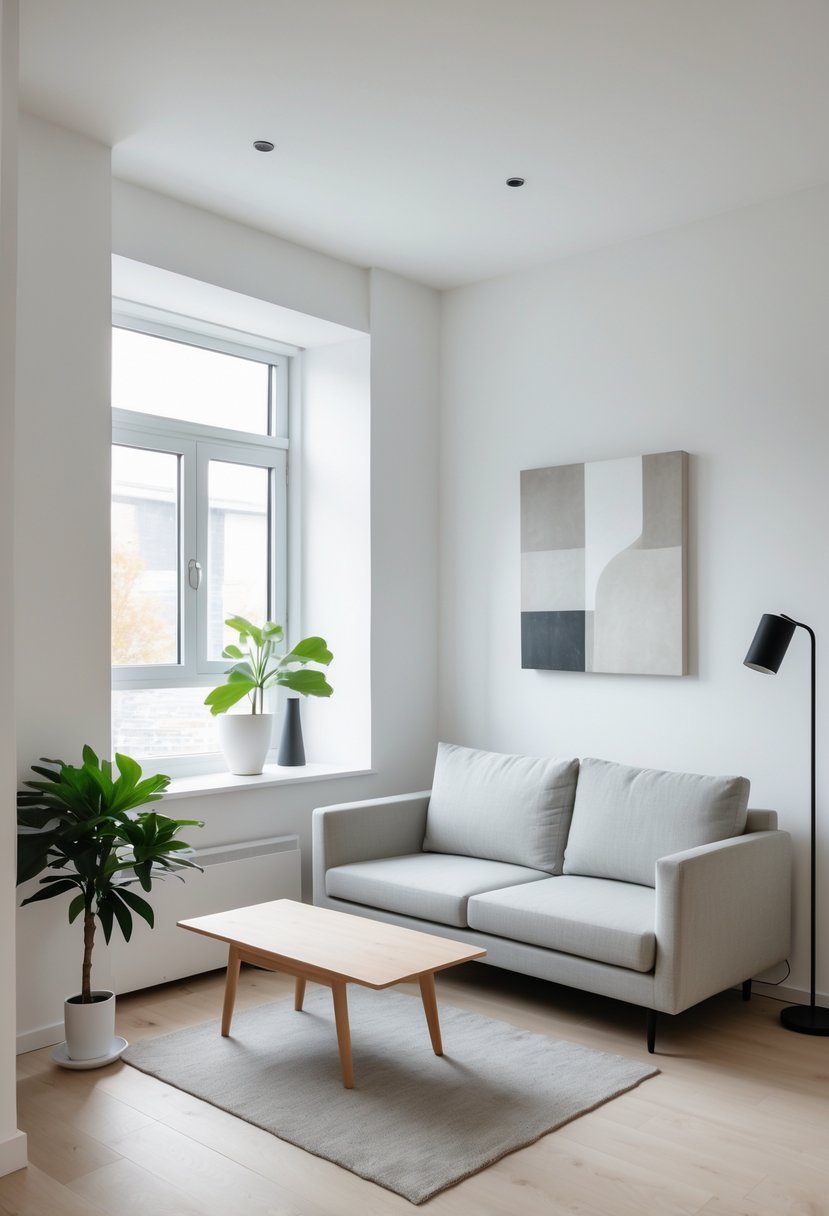
Minimalism doesn’t mean your space has to look empty or lifeless. It’s more about letting your personality show in subtle ways and keeping things flexible—think stackable stools or nesting tables that you can move around as needed. Those little tweaks help the room feel calm and welcoming, not stiff.
Mixing lighter colors, sleek decor, and furniture that pulls its weight keeps things from feeling cramped. Even the tiniest living rooms can pull off a modern and functional vibe with the right approach.
Modern Minimalist Living Room Fundamentals:
Getting a modern minimalist living room right in a small space depends on a few key moves. You want simple shapes, pared-back colors, good lighting, and an overall look that feels clean but still livable. When you strike that balance, the room just feels bigger, calmer, and way more useful.
Minimalist Aesthetic and Clean Lines:
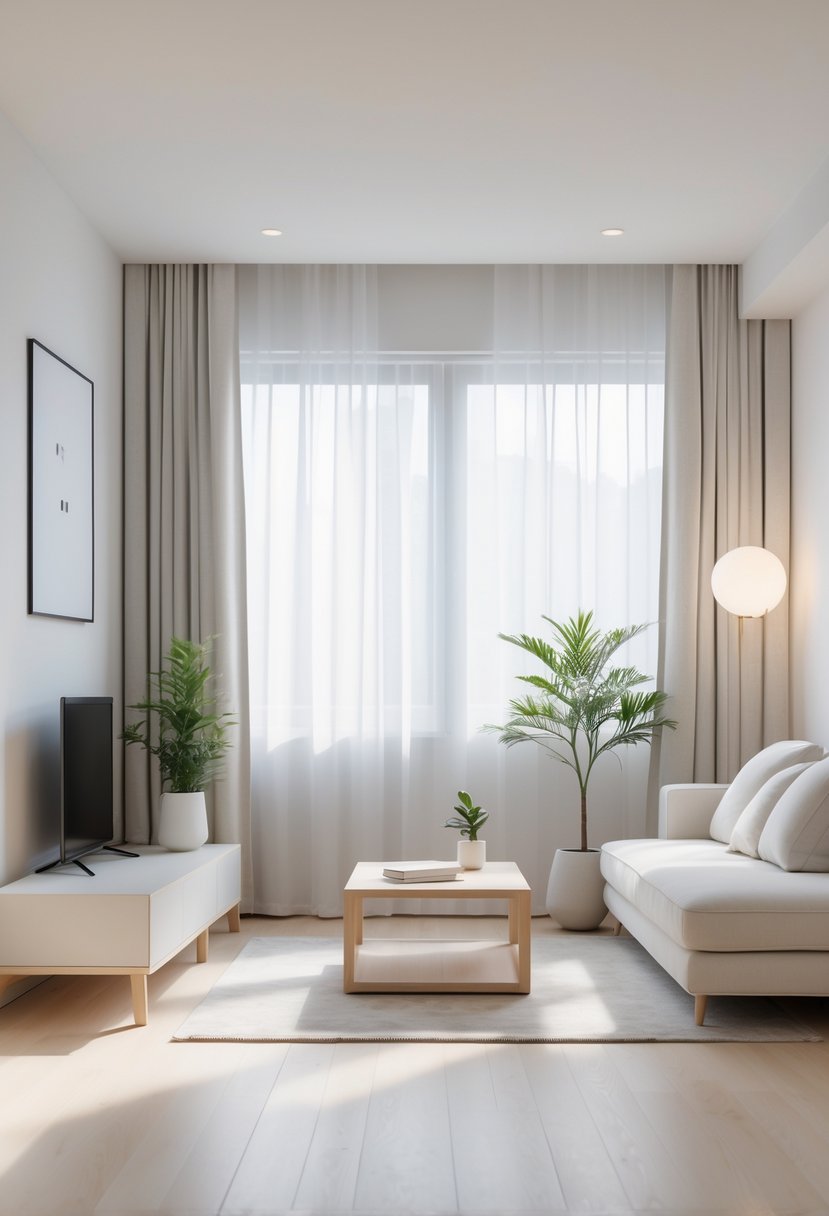
Minimalist living rooms lean on clean lines and unfussy shapes, which keeps your eyes from bouncing all over the place. Furniture with straight edges and smooth surfaces—like low sofas, skinny coffee tables, or floating shelves—helps the room breathe.
Decluttering is a big deal here. If it doesn’t have a purpose, it probably doesn’t belong. Skip the ornate details and heavy furniture that interrupts the flow. That way, the space stays organized and doesn’t close in on you. Minimalism isn’t about having nothing; it’s about being picky in a good way. Every piece should feel intentional, not just filling a gap.
Color Palettes and Monochrome Bases:
Neutrals are the backbone of a modern minimalist living room. Usually, you’ll see a base of whites, grays, beiges, or soft browns—colors that help the space feel calm and a bit more open. White walls are classic for a reason—they bounce light around and make things look bigger. Tiny shifts in color within that neutral palette add depth, so it’s not just a sea of sameness. And honestly, bold or loud colors tend to mess with the chill vibe.
Matching furniture and decor in similar shades keeps things looking put together. If you want a little more interest, work in different textures—a wool rug or a leather chair, maybe—to break things up without breaking the style.
Maximizing Natural Light and Airy Feel:
Natural light is your best friend in a minimalist living room. Big windows or glass doors are ideal, but even smaller windows can work if you don’t block them with furniture. You want to keep the light moving through the space, so skip heavy curtains and stick with sheers or nothing at all if you’re not worried about privacy. Open layouts help, too—no need for extra walls or chunky dividers. Less stuff means better airflow and a fresher feeling overall. When you combine that with sunlight, the room just feels bigger and more inviting, even if it’s not.
Smart Furniture and Space-Saving Solutions:
Picking the right furniture and storage is crucial in small minimalist living rooms. You want space-saving pieces that do their job without making the place feel crowded. Every item should earn its spot and fit that simple, unfussy look.
Low-Profile and Multi-Functional Furniture:
Low-profile furniture keeps things feeling open—think sofas with slim legs or lower backs. Curved edges can soften the look without adding bulk, so the room feels cozy but not cluttered. Multi-functional pieces are a lifesaver. Maybe your end table hides storage, or your sofa doubles as a guest bed. Coffee tables with secret compartments, ottomans that stash stuff inside—these are the kinds of things that help you stay organized without piling on more furniture.
Hidden and Built-In Storage Options:
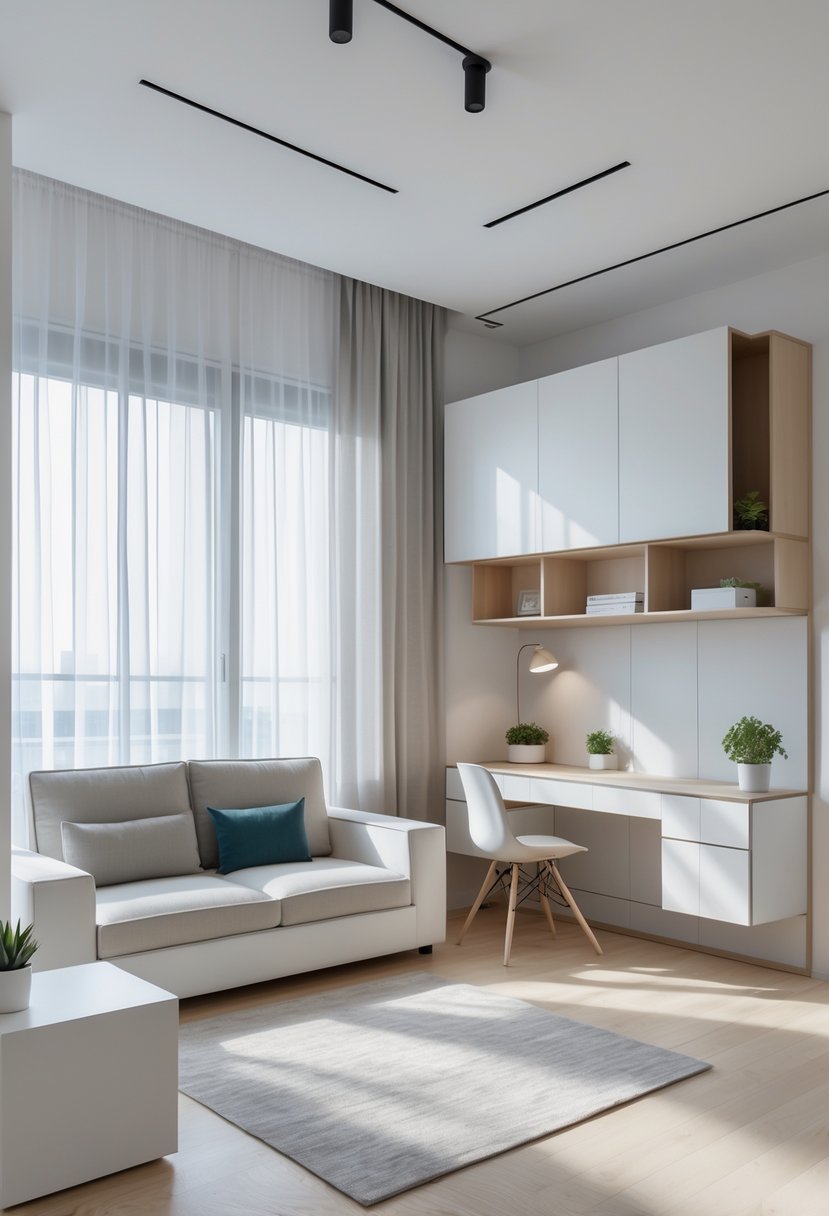
Hidden storage is a must for keeping things neat. Benches or sideboards with concealed compartments let you stash stuff out of sight but still close at hand. Built-ins are great for squeezing storage out of awkward corners or vertical space. Shelves tucked into walls or under benches mean you don’t need extra furniture. If you can go custom, even better—built-ins can blend right in with the room’s design and keep things looking seamless.
Floating Shelves and Wall-Mounted Features
Floating shelves are a go-to for adding storage without eating up floor space. They’re perfect for showing off decor or keeping daily essentials in reach but out of the way. Wall-mounted desks or side tables also help keep the floor clear, making the whole room feel bigger. Mixing floating shelves with other functional wall pieces keeps the look minimalist but still practical.
Accent Elements and Decor for Small Spaces:
Accents can totally change the feel of a small living room—if you pick them right. Lighting, mirrors, art, and plants all add style and depth, but you’ve got to be selective to keep things balanced.
Modern Lighting Fixtures and Floor Lamps:
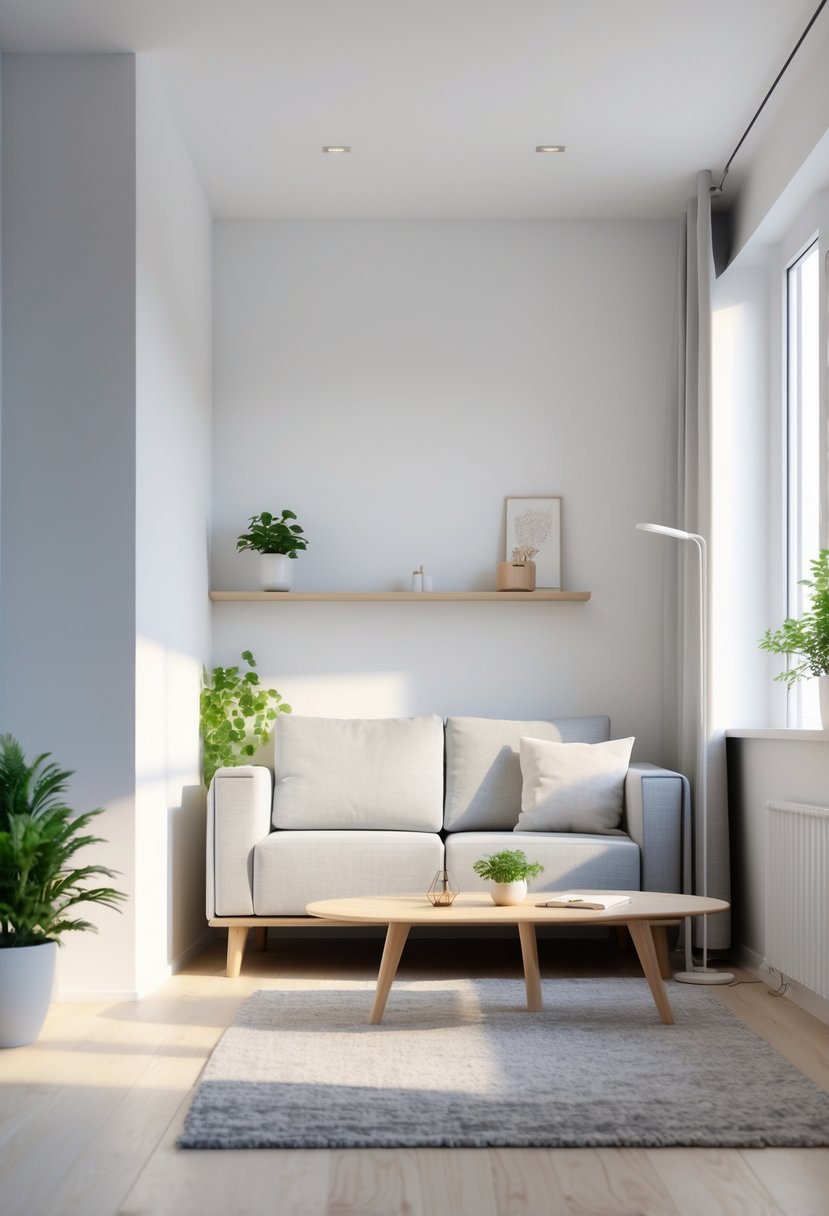
Good lighting is non-negotiable in a small room. Sleek, minimalist fixtures with clean lines look sharp and don’t add visual noise. A floor lamp can brighten up a dark corner and double as a statement piece, all without hogging space.
Look for lights with adjustable brightness and a slim profile. Pendants or wall-mounted lamps are handy for freeing up the floor. Warm white bulbs add a touch of coziness while keeping the overall feel fresh and modern. Lighting can also highlight your favorite chair or area rug. Floor lamps with skinny stems and simple shades work well with neutral rugs and throw pillows, creating little focal points without taking over.
Utilizing Mirrors and Reflective Surfaces:
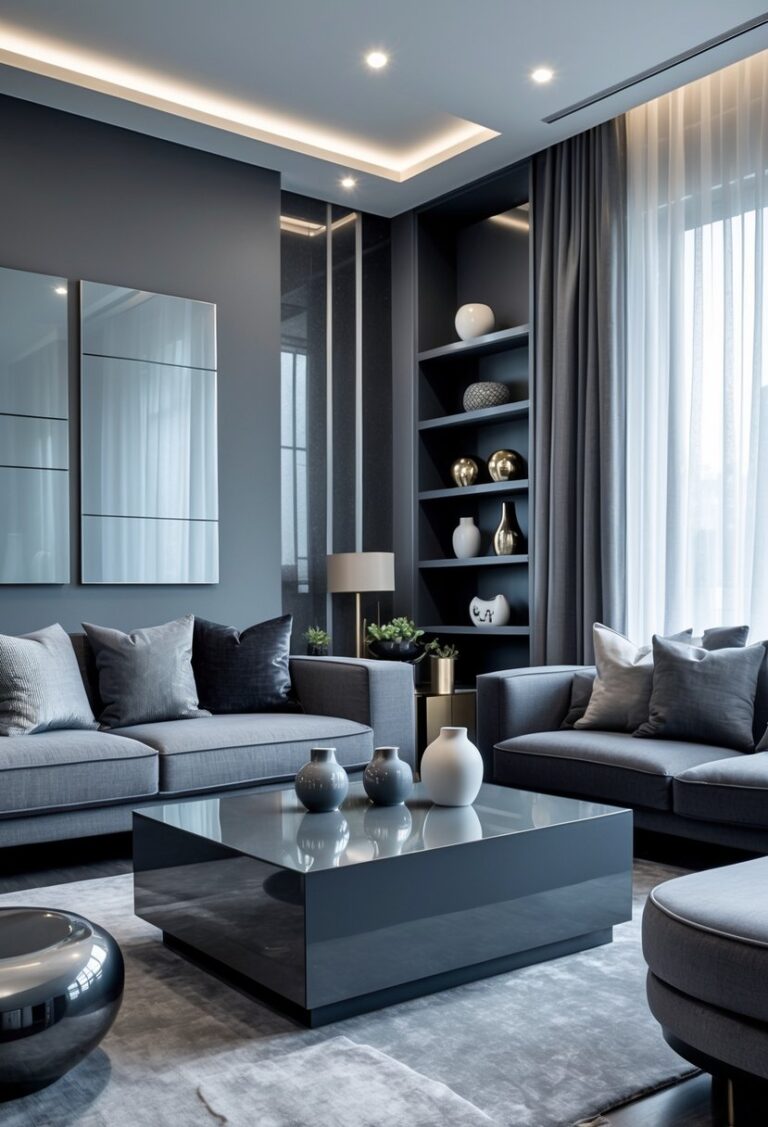
Mirrors are a classic trick for making spaces look bigger. A large statement mirror across from a window or lamp bounces light around and just opens things up. Frames in black, metallic, or wood keep the look modern. If you like a little more detail, a group of smaller mirrors in simple shapes adds depth without feeling heavy. Reflective surfaces like glass or metal tables and shelves help, too. Pair them with neutral window treatments—think sheers or linen—to let in the light and keep things from feeling boxed in.
Art, Gallery Walls, and Minimalist Accessories
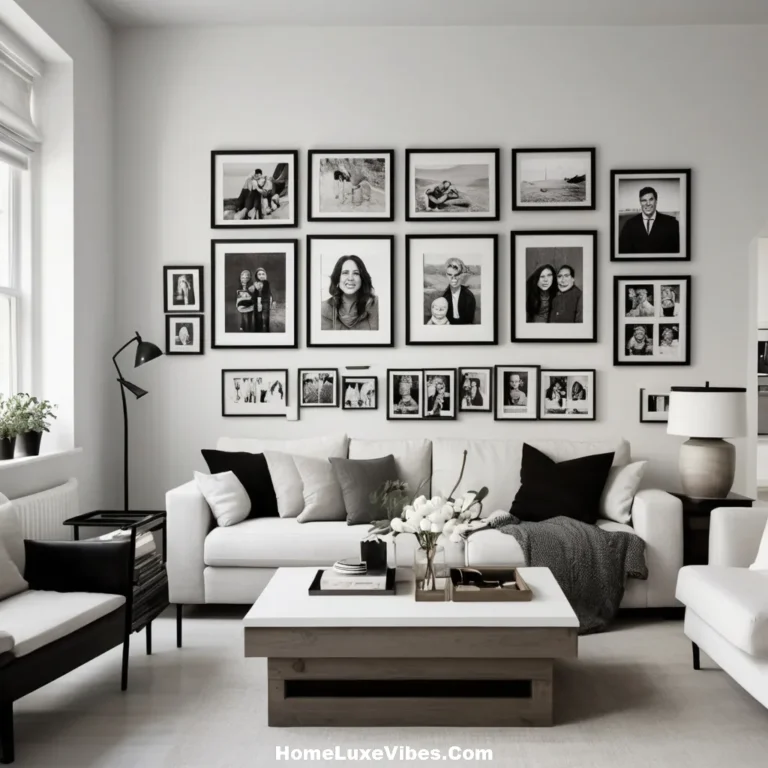
Art should be interesting but not overwhelming. Modern or minimalist pieces in neutral shades or the occasional bold accent color can show off your taste without making the room feel busy. Gallery walls work if you keep them focused—maybe around a mirror or a standout chair. Simple, matching frames help everything feel cohesive. Accessories like vases, bowls, or little sculptures in muted colors tie the whole look together. Stick with a limited palette—soft blues, greens, warm grays—so everything flows with the furniture and textiles.
Incorporating Plants and Green Accents
Plants bring life and texture, but you don’t want a jungle in a small space. Succulents, snake plants, or fiddle leaf figs are all good picks—they grow up, not out. Potted ferns or hanging planters add interest at different heights, so you get layers without crowding the floor. Go for modern pots in neutral or metallic finishes to keep things streamlined. Plants with natural materials—linen curtains, woven rugs—boost that calm, airy vibe. Plus, the greens add a splash of color that’s easy on the eyes.
Personalizing Your Modern Minimalist Living Room:
Making a modern minimalist living room feel personal takes a little care. Blending textures and styles keeps things from getting too cold or sterile, and natural materials can bring in just enough warmth and character.
Mixing Design Styles and Textural Elements
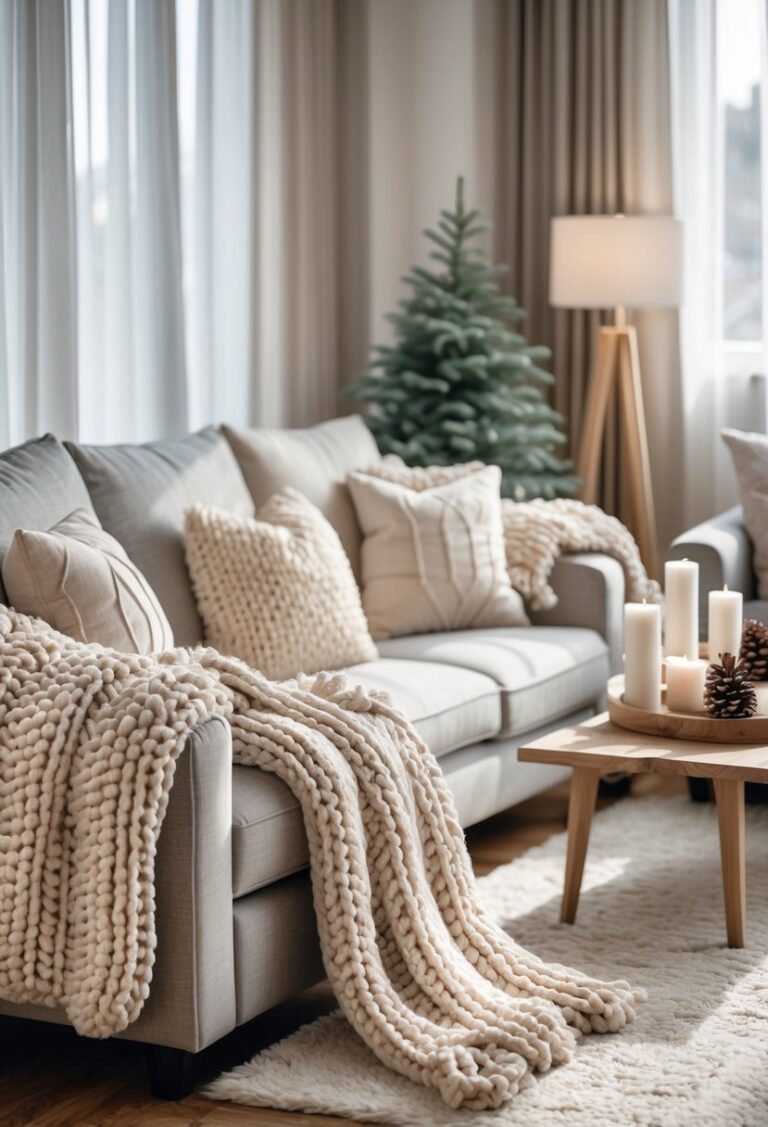
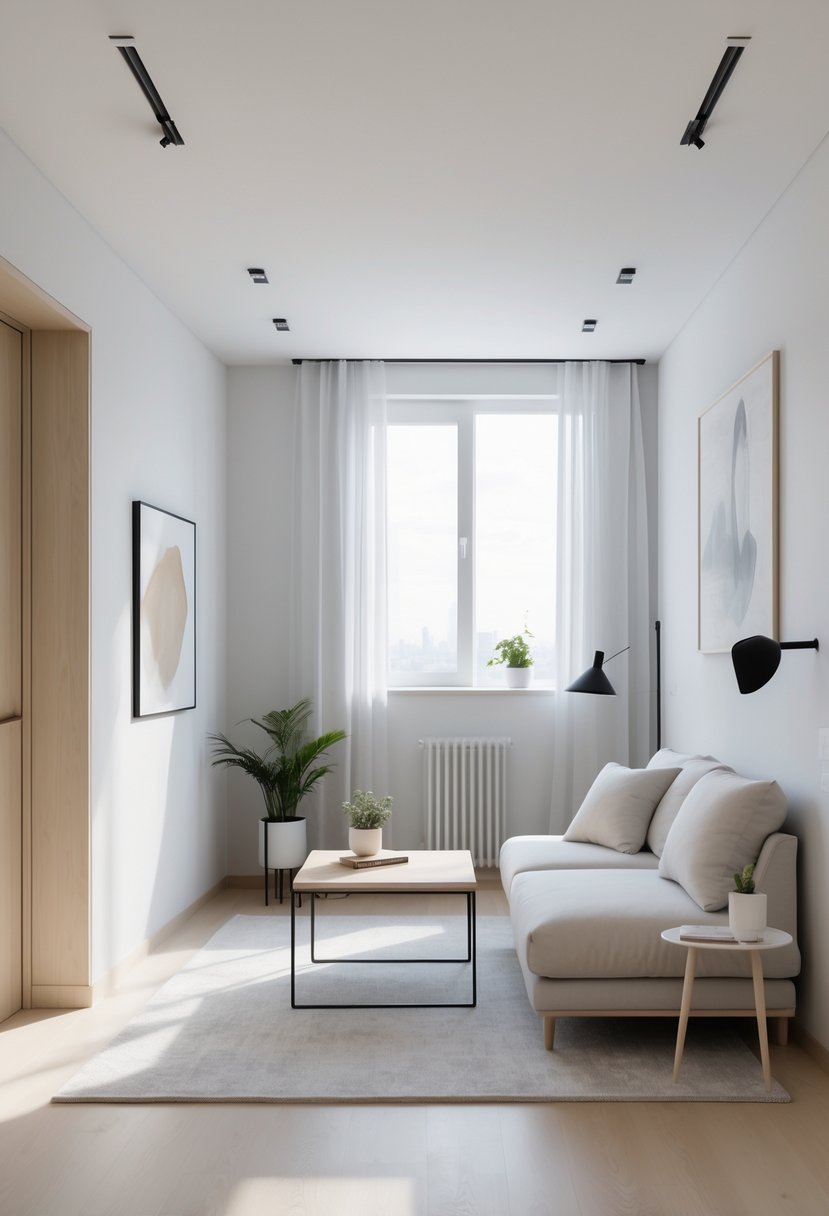
Mixing styles can make a minimalist space way more inviting. Midcentury modern furniture with a dash of Scandinavian? Sure, why not. Just keep those clean lines front and center. Upholstery in soft fabrics adds a cozy layer against smooth woods or metals. Bringing in textures—woven rugs, chunky throws, linen cushions—makes things interesting without overwhelming the eye. Light wood furniture works well with these, helping to balance out the harder surfaces.
Ideas for mixing styles and textures:
- Pair a midcentury chair with a Scandinavian coffee table
- Go for upholstery in earth tones like beige or warm gray
- Layer with rugs, pillows, or breezy curtains
- Stick to simple shapes and clean lines to keep the minimalist feel
It’s all about adding depth and personality, but still keeping things chill and tidy.
Incorporating Natural Materials and Wood Accents:
Natural materials add a ton of warmth and style to a minimalist living room. Light wood furniture or exposed beams bring in a bit of nature that softens the modern edge. These wood touches pair well with earth tones—muted greens, browns, beiges. If you’re into that Japanese minimalism or Scandi vibe, it’s a no-brainer. Clean-lined wood furniture fits right in and highlights the beauty of natural textures.
Consider other materials, too—exposed brick for a rustic touch, woven baskets for storage. They add richness without making things feel cluttered.
Ways to work in wood and natural materials:
| Material Type | Use Case Example |
|---|---|
| Light wood furniture | Coffee tables, chairs, shelving |
| Wood beams | Ceiling accents |
| Natural wood accents | Picture frames, bowls |
| Exposed brick walls | Accent walls |
Natural materials just make the space feel more balanced, warm, and still open—not weighed down.
Frequently Asked Questions:
A small living room can totally be stylish and practical. Picking furniture, colors, and decor with care helps keep things open and comfy.
How can I decorate my small living room in a modern minimalist style?
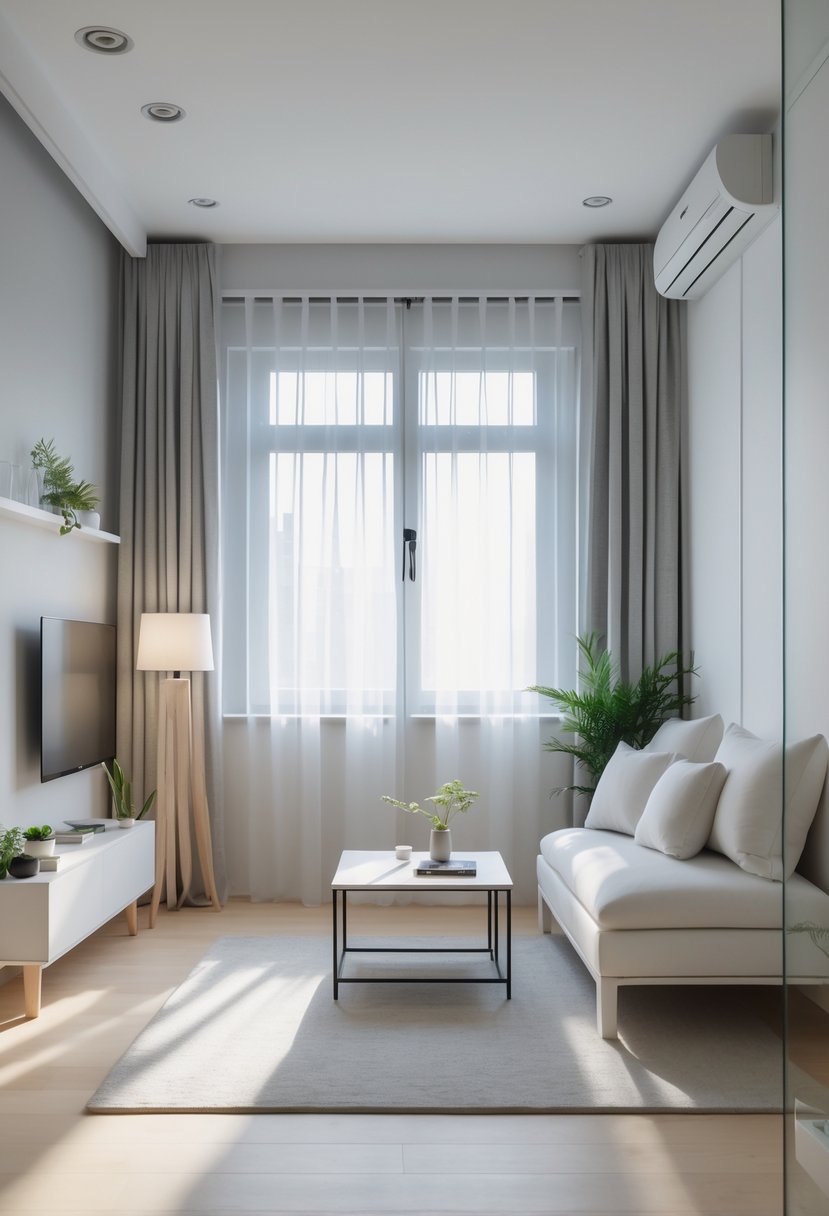
Go for simple, multipurpose furniture. Don’t overdo the decor—keep lines clean and layouts open so the room doesn’t feel boxed in.
What are some budget-friendly minimalist design tips for a compact living room?
Secondhand or DIY furniture can save you a lot. Stick with neutral colors, buy only what you need, and keep clutter at bay so you don’t have to spend on extra storage.
How can I incorporate a TV into a minimalist living room without cluttering the space?
Mount the TV on the wall to save space. Use hidden storage or sleek shelves to keep cables and gadgets out of sight.
Which color schemes are recommended for a minimalist living room in a small space?
Soft neutrals—whites, beiges, light grays—are your best bet. If you want a little color, muted greens or pastels keep things calm and not overwhelming.
What strategies can maximize the feeling of spaciousness in a minimalist living room?
Choose furniture with exposed legs for a lighter look. Mirrors and open shelving help bounce light around. Keep pathways clear and skip heavy, bulky stuff.
What minimalist wall decor options are suitable for small living rooms?
You might want to hang a couple of framed prints—nothing too busy—or maybe a sleek wall sculpture if that’s your thing. Floating shelves are handy too; they can show off a little plant or a stack of books, and you won’t lose any precious floor space. Honestly, it’s all about keeping things easy on the eyes and not crowding the room.