21 Kitchen Pantry Organization Hacks That Actually Work: Declutter for Good!
Let’s be honest—you want a pantry that actually helps you out, not one that looks like it belongs in a magazine. Start by tossing expired stuff and grouping similar foods so you can finally see what’s hiding in the back. Just a couple of smart swaps—clear containers, labeled baskets, and pull-out drawers—can make your pantry a whole lot easier to use and keep neat.
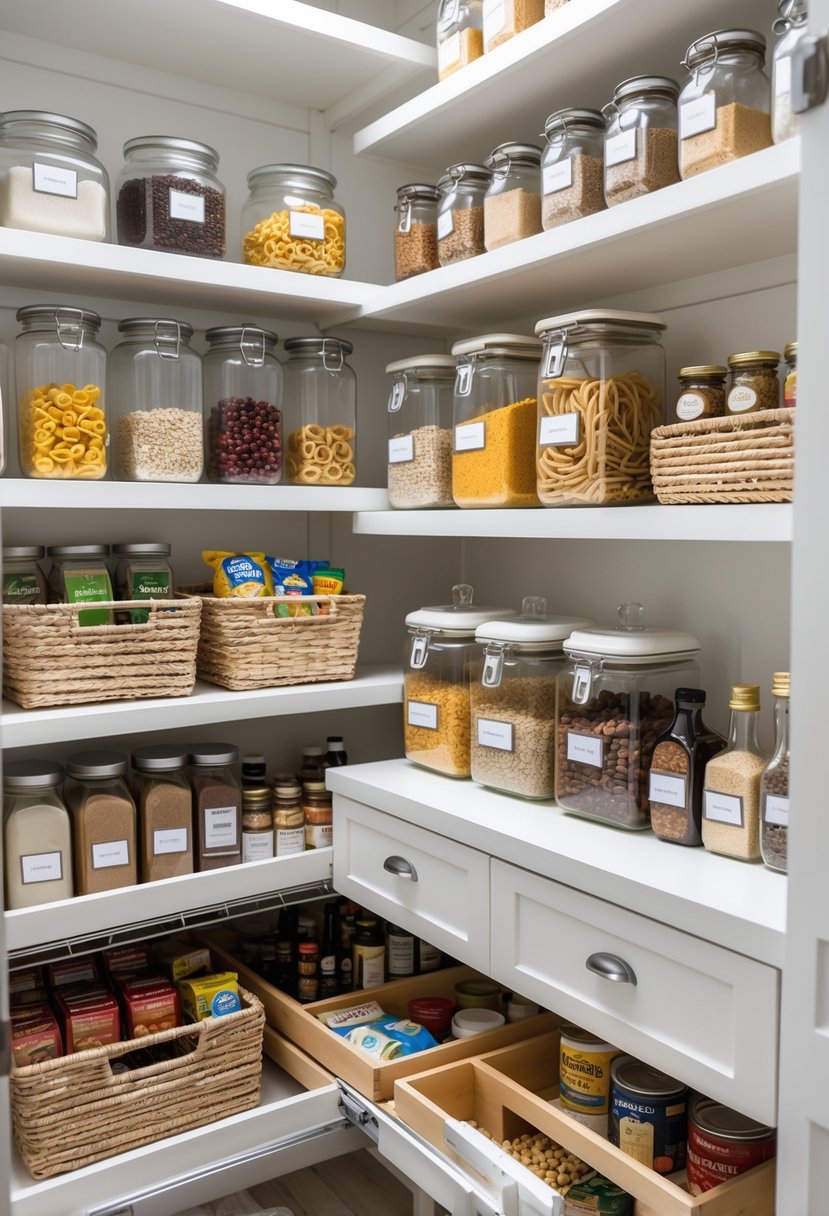
This post covers how to set up a pantry organization that actually works: quick decluttering moves, tricks for using every bit of space, some easy tools and DIY ideas, and simple upkeep tips to stop things from getting messy again. You’ll find down-to-earth ideas for pantries big and small, so finding ingredients or putting away groceries doesn’t have to be a chore.
Decluttering and Setting Up a Smart Pantry:
Pull everything out, check those dates (yes, even the stuff you forgot about), and group similar foods where you’ll actually use them. Labeled containers, shelf risers, and a simple zone plan help keep things visible and make sure you use up what you have before it’s too late.
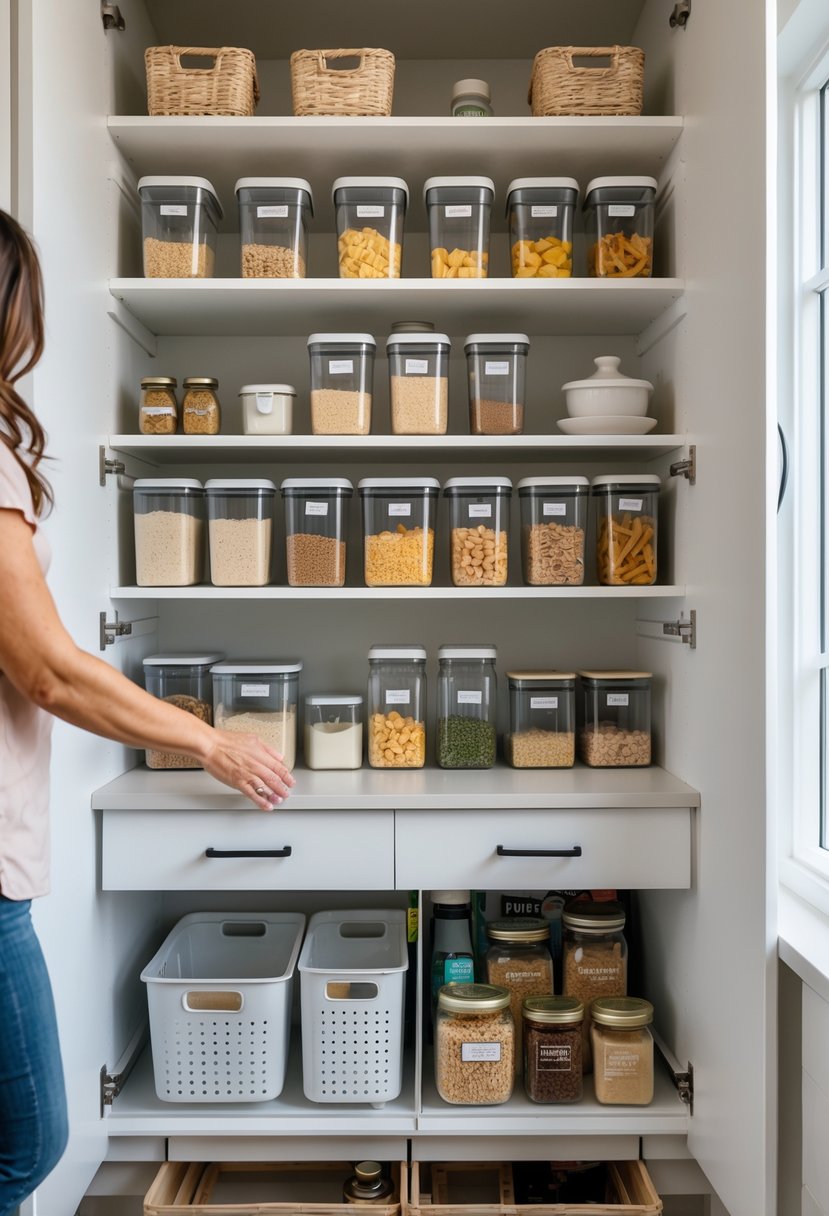
How to Declutter and Take Inventory?
Start by emptying the shelves and sorting items by type: baking, canned goods, snacks, breakfast, and bulk. Sniff oils or nuts—if they smell off or look iffy, out they go. Anything stale or suspicious? Just toss it.
Stick to the Keep / Toss / Donate system. Only hang on to what you’ll really use or what fits in with your usual meals. Unopened, still-good stuff? Donate it to a food bank—someone will thank you for it.
For inventory, jot down your staples and how much you actually have in a notebook or on your phone. Think flour, sugar, rice, canned tomatoes, oils. Update it after a grocery run. Label containers with what’s inside and when you opened it—future you will appreciate it.
Zoning and Categorizing Pantry Items:
Create clear zones for baking, cooking basics, breakfast, snacks, and bulk stuff. Everyday items? Keep those at eye level. Heavy things go down low, and the rarely-used bits can live up high.
Uniform, clear containers are a lifesaver for grains, pasta, and cereal. Group things together—spices in one basket, sauces on a lazy susan, cans on a tiered organizer. Label shelves with simple names like “Breakfast” or “Baking” so nobody has to guess where things go.
Have a little “use-first” spot for things about to expire. When you restock, put the new stuff behind the old so you’re not wasting food and your pantry inventory stays on track.
Designating Snack and Meal Prep Stations:
Set aside an easy-to-reach shelf or basket for grab-and-go snacks. Kids’ snacks go on a lower shelf so they can help themselves (and maybe stop bugging you). Clear bins make it obvious how much is left—no more accidental double-buys.
For meal-prep, stash staples for quick dinners—pasta, canned tomatoes, broth, oils, spices—all together. If there’s room, keep cutting boards and measuring cups nearby too.
Label each spot and keep matching tools there. A bin for lunchbox stuff (peanut butter, crackers, fruit snacks) can make mornings a little less frantic and keep the whole kitchen running smoother.
Maximizing Storage and Accessibility:
This part’s all about squeezing more into your pantry without turning it into a black hole. We’re talking vertical space, containers that actually fit and keep food fresh, and pull-out systems so nothing disappears in the back.
Utilizing Vertical Space and Shelf Risers:
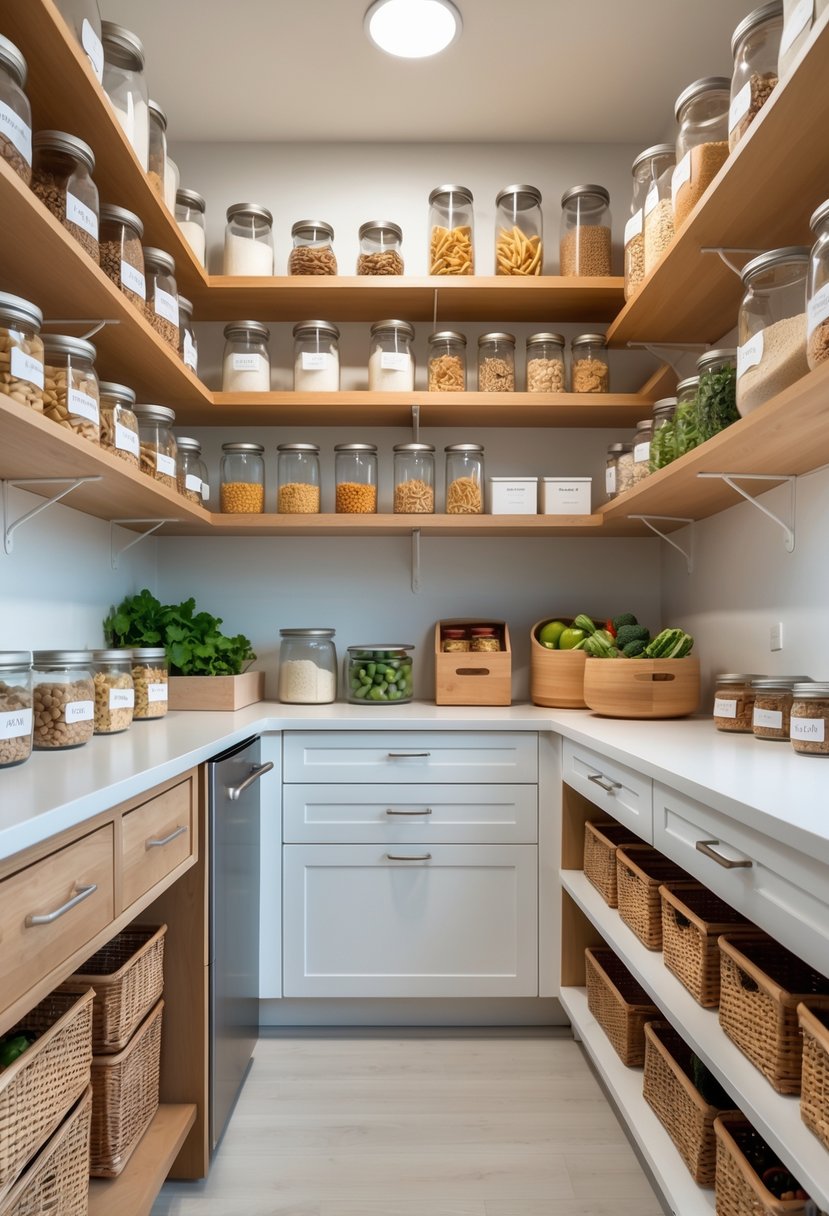
Measure your shelves and add risers or tiered shelving to get more layers in. Short items—spices, cans, little boxes—fit perfectly on risers so you can see everything and nothing gets buried.
Wall or door racks turn wasted space into bonus storage for bottles, snacks, or even produce. Open bins with handles work like drawers on deep shelves—no more digging around. Stackable wire baskets or clear bins keep things together and visible.
Try slim floating shelves in narrow spots for oils or little jars. Heavy stuff? Go for sturdy risers that can handle the load. A quick label on each tier keeps everyone in the loop.
Choosing the Right Food Storage Containers:
Pick containers that match your shelf depth and the way your pantry is set up. Airtight ones for grains, flour, and sugar help them last longer and keep bugs out. Clear, stackable containers make it easy to see what’s running low.
Square or rectangular containers beat round ones for saving space. Put labels on the short side so you can read them without moving things around. Small bins are handy for packets and single-serve snacks—no more random clutter.
Keep a couple of big containers for overflow—dog food, bulk rice, whatever you buy in giant bags. For stuff you use all the time, go for wide mouths and easy lids so you’re not fighting with them. Match the container size to what you’re storing: spices in small jars, cereal in mediums, big staples in the largest ones.
Integrating Pull-Out and Sliding Shelves:
Pull-out shelves or drawers on the lower levels make those deep spaces actually usable. Sliding shelves mean you can reach the back without unloading everything in front—less mess, less hassle.
Choose full-extension slides so drawers come all the way out and nothing hides. Drawer organizers or small bins inside pull-outs keep snacks, baking stuff, or cans separated. Heavy things? Make sure your slides are up to the job.
Wheeled trays or roll-out baskets on the floor are great for appliances or bulky packages. If you’re not into carpentry, look for pull-out liners or tension-mounted slides that don’t need much installation. Label the front of each pull-out so nobody has to guess where things go.
Clever Pantry Organization Hacks and Tools:
These tools aren’t just about saving space—they seriously speed up meal prep and help you find what you need. Door-mounted racks, open shelves, dedicated spice storage, and clear labeling can turn even the messiest pantry into something that works.
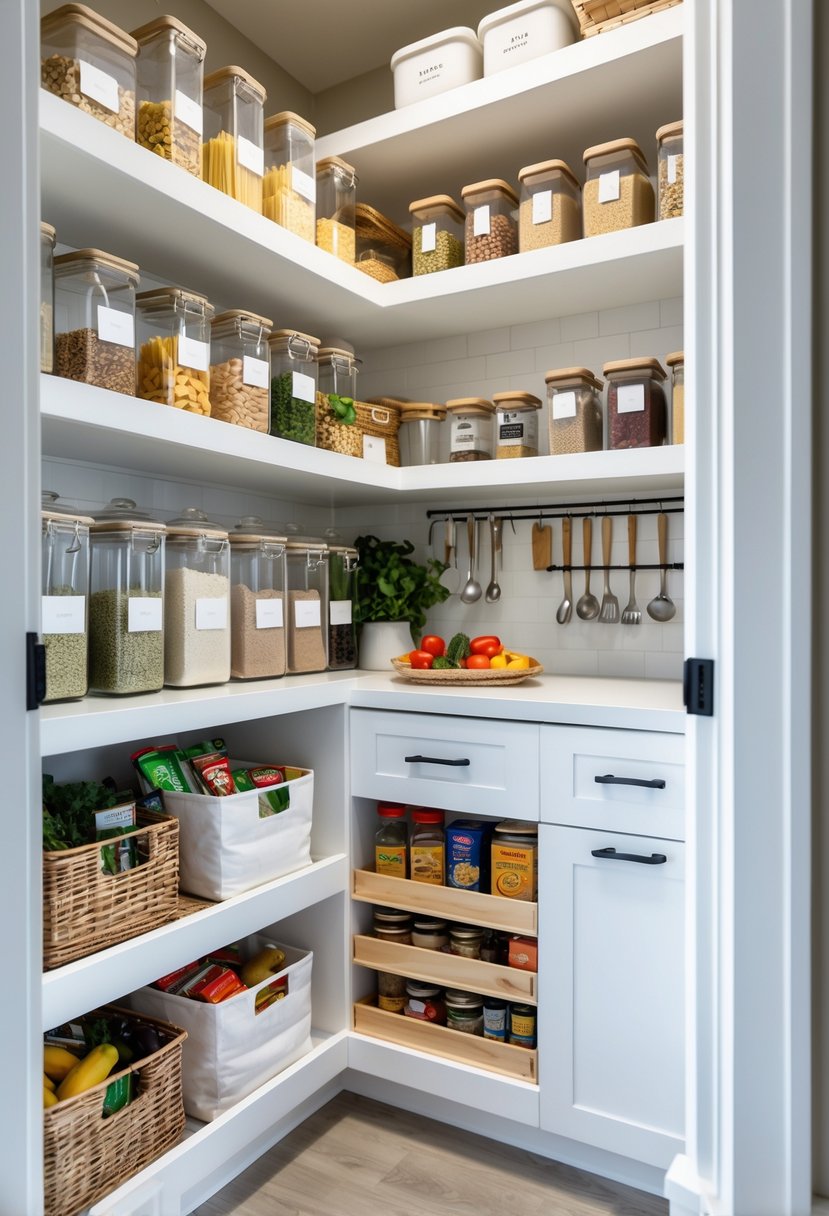
Over-the-Door and Door-Mounted Organizers:
Over-the-door organizers add storage without messing with your cabinets. They’re perfect for spices, snacks, baking stuff, or bottles. Look for ones with adjustable shelves or deep pockets so jars and bottles don’t tip over.
Hang them up with non-permanent hooks or a slim frame—no need for power tools. Clear pockets or wire shelves keep things visible. Group like with like: breakfast on one row, baking on another, whatever makes sense for you.
Quick tip: measure your door first. Heavy glass bottles? Keep those lower down or on a sturdy shelf to avoid disasters.
Open Shelving and Visible Storage Solutions:
Open shelves mean you can see everything—no more mystery cans hiding in the back. Use matching containers (clear plastic or glass) for dry goods like flour, rice, and pasta. Airtight, stackable containers help you go vertical and keep pests out.
Put the stuff you grab all the time at eye level. Top shelves are for bulk items or those gadgets you barely use. If you’re short, a little step stool is a lifesaver. Woven baskets or bins corral the loose odds and ends.
LED strip lights can brighten up dark shelves. Label shelf edges or use color coding so you can spot what you need fast, especially during the dinner rush.
Spice Rack and Small Item Organization:
A spice rack—on the wall, in a drawer, or a tiered shelf—clears up space and makes cooking less of a hunt. Sort spices alphabetically or by what you use most. Why waste time searching?
Tiny items like teabags or bouillon cubes? Drop them in small bins or drawer dividers. Magnetic spice jars that stick to a metal strip are a cool space-saver. For glass jars, a non-slip liner helps keep things upright.
Decant bulk spices into small jars to keep things neat and cut down on wasted packaging. Keep measuring spoons or other small tools close to your spice area so you’re not running around the kitchen.
Labeling Jars and Bins for Efficiency:
Labels make life easier for everyone. Big, clear ones with what’s inside (and maybe the date) go right on the front. That way, nobody has to guess.
Waterproof labels or a label maker keep things tidy. For containers you reuse, chalkboard labels or removable stickers are handy. Color-code by category if you want: blue for baking, green for grains, yellow for snacks—whatever works for you.
Keep a master list of your bulk items and container sizes near the pantry door. It’ll save you from buying duplicates and helps with grocery planning.
Long-Term Maintenance and Creative Solutions:
Keep things simple and let your storage adapt as you go. Regular checks, good labels, and creative use of hidden nooks keep your pantry working for you—not against you.
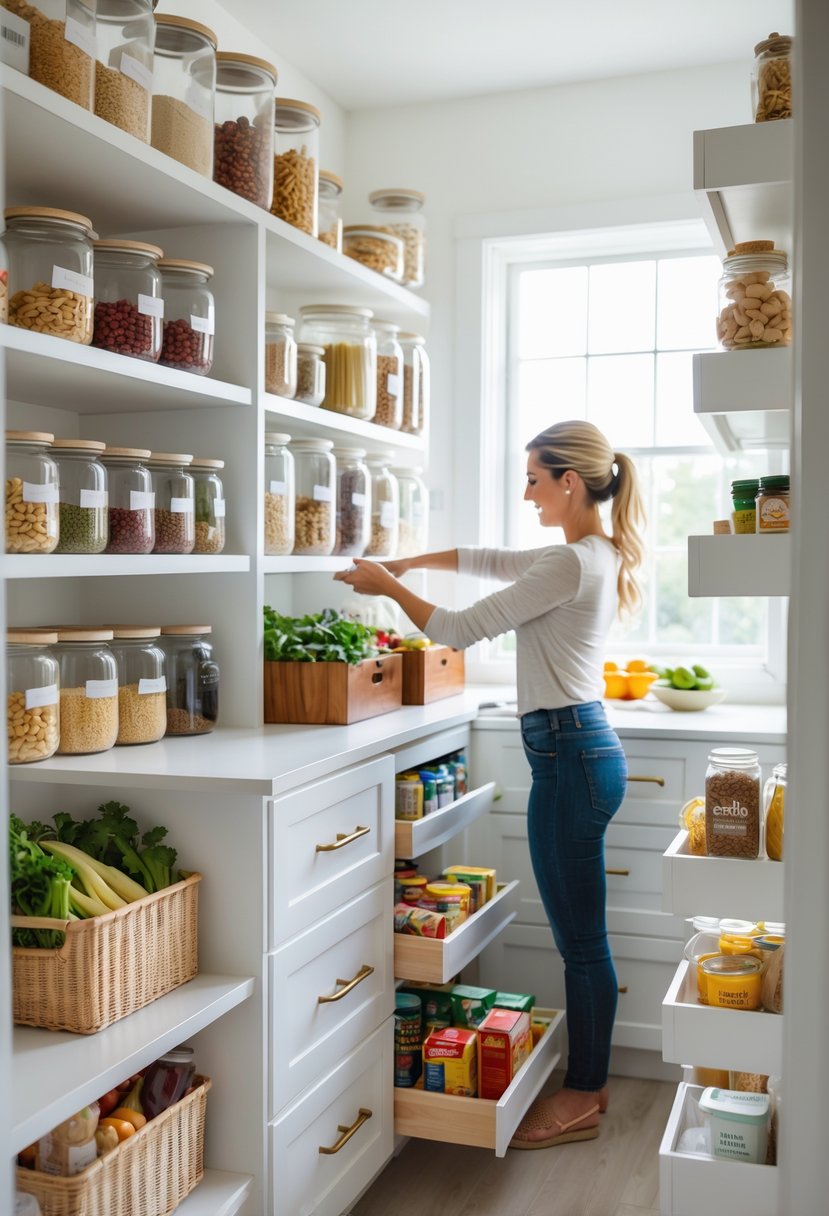
Maintaining Your Pantry Systems:
Set a weekly 10-minute timer to clear out expired stuff and straighten things up. Label fronts with what’s inside and when it should be used—makes restocking a breeze. Store like with like—baking, cans, snacks—and keep the everyday stuff where you can grab it fast.
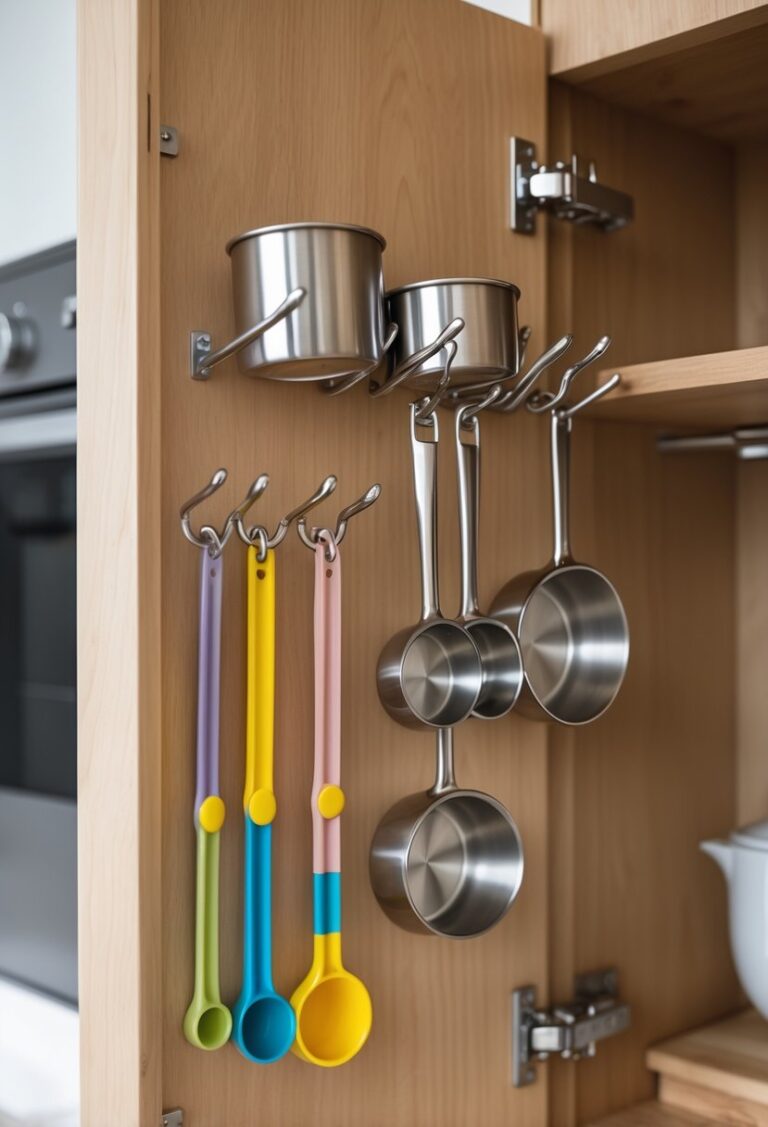
Clear bins help with loose packets, risers work for plates or cans. A slim notebook or a whiteboard on the pantry door keeps track of what you’re running low on. For deep shelves, older items go in front, new ones behind. Little hooks inside the door are great for scissors or measuring spoons—no more drawer chaos.
Seasonal Rotations and Hidden Pantry Features:
Rotate seasonal stuff every few months. Holiday bakeware can go up high in labeled bins, while picnic gear moves down for summer. That way, you’re not wasting prime space on things you barely use.
Hidden pantry tricks add storage without the clutter. A pull-out shelf for small appliances, or a tall, skinny cabinet for spices—these tweaks make a difference. Super tight kitchen? A hidden pantry behind a sliding or fake cabinet door keeps your supplies out of sight but still organized.
Frequently Asked Questions:
Here’s where you’ll find some straightforward, real-world tips for wrangling every inch of pantry space—even if you’re not into clear bins or you’re just trying to keep that walk-in from turning into a disaster zone. I’ve tried to stick to stuff that actually makes life easier, not just pretty pictures.
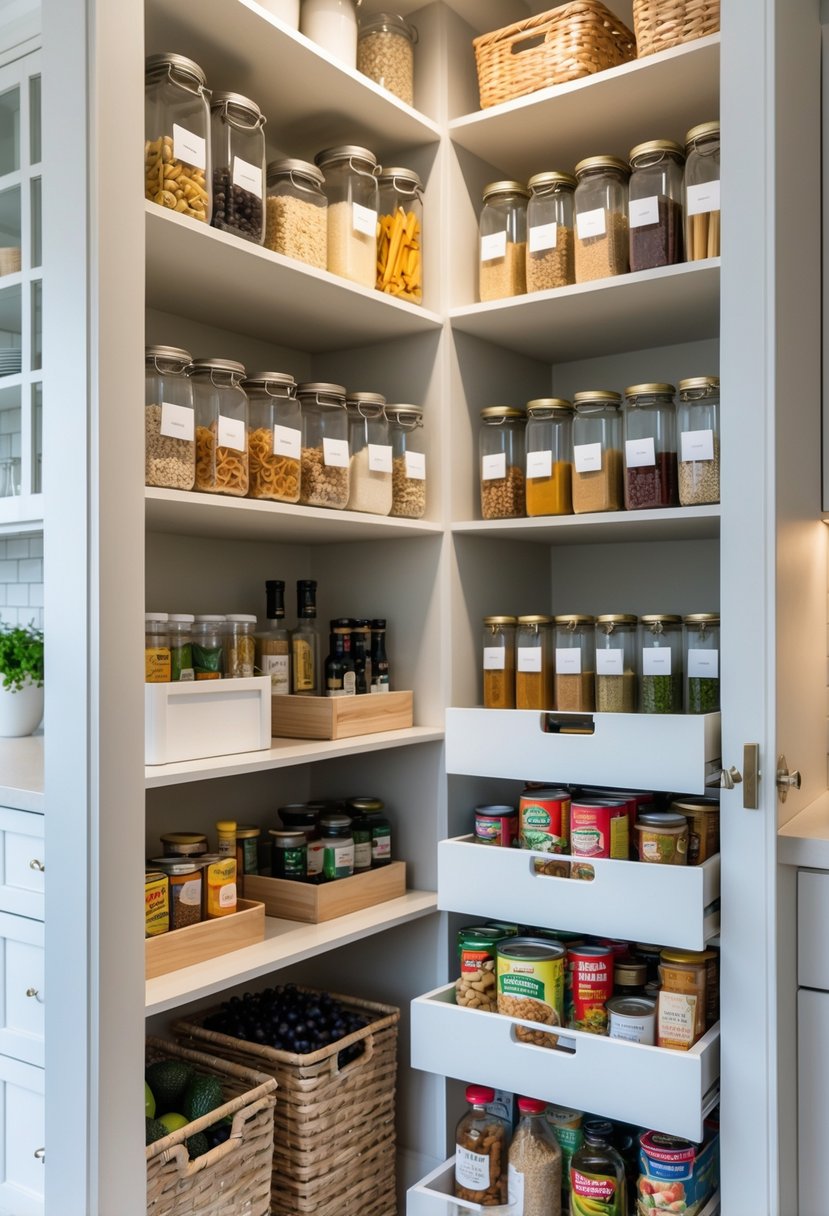
How can I maximize space in a small kitchen pantry?
Honestly, adjustable shelves are a game changer. You can tweak them for those awkwardly tall cereal boxes or squeeze in all your spice jars without leaving a ton of wasted space. Shelf risers? They let you double up—think plates stacked above cans, or whatever else you need to cram in.
Don’t forget the back of the door. That’s prime real estate for spices, foil, or those random little packets that always get lost. Slim racks or even one of those over-the-door organizers can keep your go-tos right where you need them.
Stackable, skinny bins are lifesavers for baking stuff or rice. If you slap a label on the front, you won’t have to dig around every time you need something.
Got weird gaps? Measure them and see if you can wedge in a pull-out shelf or a rolling cart. You’d be surprised what fits—baking trays, cutting boards, that mixer you only use at Christmas.
How can I organize my pantry if I don’t want to use containers?
If bins aren’t your thing, just group similar stuff right on the shelves—keep baking supplies together, line up all the canned veggies, and put snacks where you can actually see them. I’d put the things you use all the time at eye level (why make life harder?).
Try labeling the shelf edges instead of the food itself. A strip of label tape or even a piece of paper does the trick—it’s a quick way to spot what’s missing or running low.
Boxes and cans can go in tidy rows, labels facing out so you’re not playing hide and seek. A little step stool stashed nearby means you can actually use those top shelves, too.
If you really need a basket, save it for those weird-shaped things like onions or potatoes. Most stuff can just sit out, and honestly, that keeps things simple and easy to grab.
What are the best ways to keep a walk-in pantry organized and efficient?
Try setting up zones for different needs—baking, snacks, canned goods, breakfast stuff, and whatever else you use a lot. It makes sense to keep coffee or breakfast things close to the countertop or coffee maker, right where you’ll want them first thing in the morning.
Stuff you grab all the time? Keep it at eye level, front and center. Top shelves are great for those giant bags of flour or the holiday cake stand you only use once a year. Heavy appliances and jars can hang out on the bottom, where they’re less likely to crash down on your toes.
If you’re tired of digging through the back, pull-out drawers or shallow slide-out shelves are a game changer. A labeled system helps, too, though it’s easy to let it slide—just try to rotate older stuff forward so you don’t end up with mystery cans from 2019.
Pantries can be dark caves, so slap on some LED strip lights. If your shelves go way up, a little step ladder saves a lot of hassle. Honestly, good lighting and easy access make it way less likely you’ll let things get messy in the first place.