19+ Japandi Kitchen Ideas: Minimalist Warmth and Functional Zen Design
Japandi kitchens blend Japanese simplicity with the cozy, practical feel of Scandinavian design. You get clean lines, lots of wood and stone, and a soft, muted color palette that feels calm, efficient, and—honestly—pretty timeless.
This style really tries to balance beauty with real-world usability. It’s not just about looking good; it’s about making the kitchen easy to live in. You’ll see smart storage, unfussy cabinetry, and textured finishes that make the space peaceful but never cold.

Embrace the Wood Theme:
Go for light, natural woods on cabinets, open shelving, or even the kitchen island—it’s just so warm and grounding. Mixing wood with stone countertops and earthy touches keeps things interesting. Simple wood counters and organic materials give that quiet, natural vibe that’s hard to fake.

Go Dramatic with All Black:
Don’t be afraid of black in the kitchen. Matte black cabinets or dark stone counters bring a sense of depth and a little drama, but it’s still soothing somehow. If you pair them with pale wood, soft fabrics, and unfussy hardware, it stays modern and not too heavy.

Add a Tall Green Accent:
Stick a big plant—maybe a snake plant or a pothos on a trellis—in an empty corner. It brings natural texture and a breath of fresh air, literally. Pick a neutral pot and something easy to care for. No need to overthink it.

Focus on the Backsplash:
For the backsplash, keep it subtle. Soft neutrals like beige, grey, or unglazed tile let the wood and stone do the talking. Matte finishes are great—no glare, a bit of texture. Patterns? Keep them minimal. The idea is calm, not busy.

Go All Out with Minimalism:
Neutral colors, barely-there decor, and clean surfaces are the name of the game. Only leave out what you actually use, and keep counters clear. That’s how you get that quiet, balanced Japandi minimalism without feeling sterile.

Create Depth with Distinct Layers:
Mix up your materials—wood, stone, maybe a bit of ceramic. Try matte next to glossy. Layer in different lighting—task, ambient, accent. If you can swing it, a skylight is always a win. The whole point is to let textures and zones stand out without shouting.

Add Metallic Accents for a Classic Touch:
Slip in a few metallic touches—brass pulls, bronze faucets, maybe a slim trim here and there.
- Pendant or statement lights in warm metals look great with rattan shades.
- Just don’t overdo it; a little shine goes a long way for that refined-but-chill look.

Be Intentional with Decor:
Curate, don’t clutter. Choose a few things that bring calm—maybe linen curtains for soft light, rattan baskets for storage, or a set of handmade pottery. Let each piece breathe. Less is definitely more here.

Use Symmetrical Tiles:
Stick to even, simple tile patterns for backsplashes or floors. Neutrals and basic shapes keep things orderly and relaxed. It’s minimal, but you get just enough texture and rhythm to keep it from feeling flat.

Center Minimalism Into Other Areas:
Let minimalism run through the whole kitchen—think handle-free cabinets, open shelves, and simple surfaces. Lean into Scandinavian function and tuck appliances away. Keep things sparse but practical for that airy, uncluttered feeling.

Keep Patterns Consistent:
Stick with one or two motifs—wood grain, neutral tiles, or a subtle textile—across the kitchen.
- Go for matching tones and textures
- Let any bold pattern be a single focal point
Result: a calm, balanced look that doesn’t try too hard

Match the Tone of Wood with Other Colors:
Pair rich wood tones with earthy colors, stone, ceramic, and a hint of metal so everything feels connected. Don’t go wild with the palette—just a few warm and cool shades across cabinets, counters, and textiles. Layer in textures like matte stone or woven linen for depth without adding more colors.

Hold Onto Consistent Details in Small Cooking Spaces:
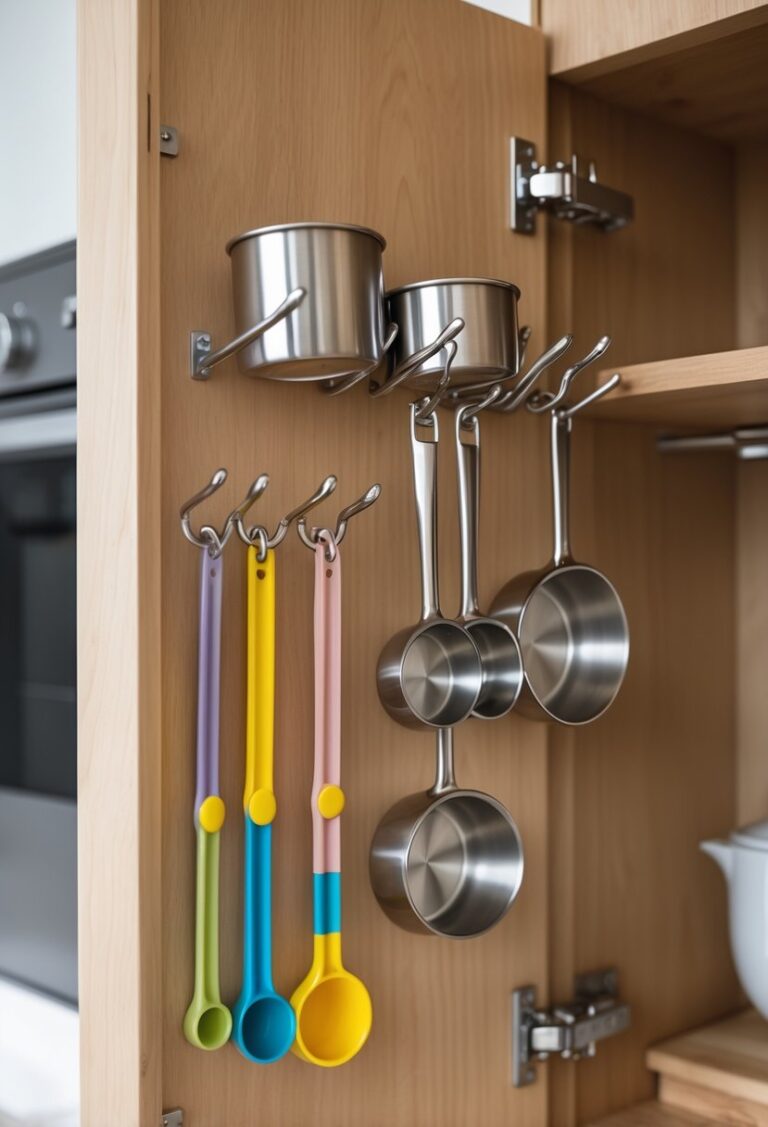
In a smaller kitchen, keep finishes and hardware consistent to cut down on visual clutter. Hide stuff away with clever storage—deep drawers, pull-outs, whatever works. That way, the kitchen feels bigger and you’re not fighting mess all the time.

Create Balance Across the Space:
Spread color, texture, and materials evenly. Maybe dark cabinets, light counters, and wood accents. Leave little imperfections—they add character and nod to wabi-sabi. Surfaces should stay clear; it’s all about calm energy.

Introduce Flow with Curved Pieces and Lighting:
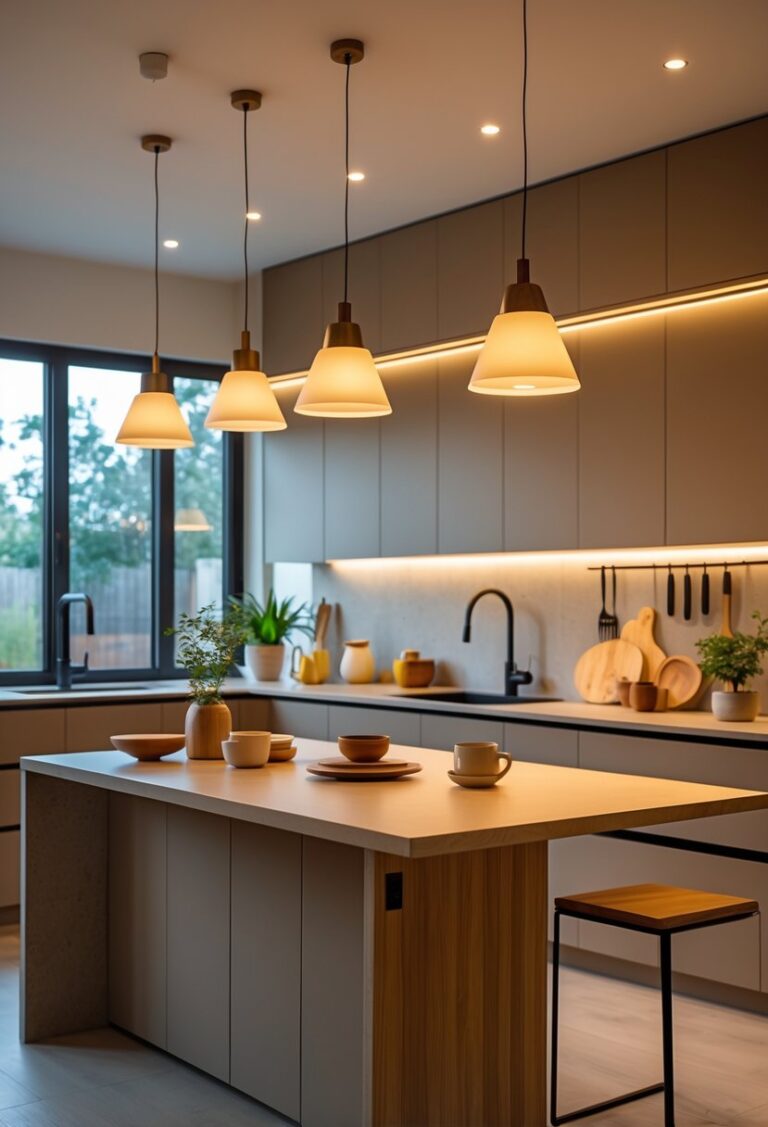
Break up straight lines with curves—a rounded island or arched shelves. Add layered pendant lights for movement.
- Curves soften the space.
- Hanging lights bring rhythm and a bit of depth.
Keep materials natural so the vibe stays easy and relaxed.

Make a White Kitchen Pop with Wooden Seats:
White cabinets with wooden stools? It just works. The wood breaks up all that brightness and brings warmth. Go for simple, clean-lined seating so the space feels cozy but not cluttered. It’s a classic combo for a reason.

Mix Sharp Lines with Soft Curves:
Try putting boxy cabinets and counters next to rounded pendants, curved chair backs, or organic shapes. Low-profile furniture with straight lines beside soft curves keeps things modern and calm without feeling stiff.

Avoid Intricate Structures and Fixtures:
Keep it simple—clean lines, plain hardware, nothing too ornate. Go for minimal lighting and let the materials do the talking. Subtle details make the kitchen feel calm and genuinely functional.

Try Stone Slab Walls or Backsplash:
Large natural stone slabs on the wall or backsplash add texture and a sense of calm. The grain and roughness give the space an organic touch that pairs perfectly with wood. Pick a slab that works with your cabinets for a bold but simple focal point.

Final Thoughts About Japandi Kitchen:
Japandi kitchens? They’ve got this knack for mixing clean lines with cozy, earthy materials, creating spaces that just feel… grounded. There’s a real focus on quality—no one’s interested in filling the room with stuff just for the sake of it. Instead, you get thoughtful design, the kind that leans practical rather than flashy. Those little details—wood grains, soft colors, clever storage—somehow add up to a kitchen that feels both welcoming and like it’ll stand the test of time. It all comes down to finding that sweet spot between function and harmony, honestly.