The Long Room Solution: Genius Furniture Layouts to Flatter Your Narrow Living Room
Long, narrow living rooms can be a real puzzle, but with a little creativity and the right furniture layout, you can end up with a space that’s both practical and actually enjoyable to hang out in. The trick? Try making defined seating areas along the length of the room, but don’t forget to keep a clear walkway. Plopping the sofa across from the TV gives you a natural focal point, and smaller bits like armchairs or benches can fill in the awkward spots without making things feel cramped.
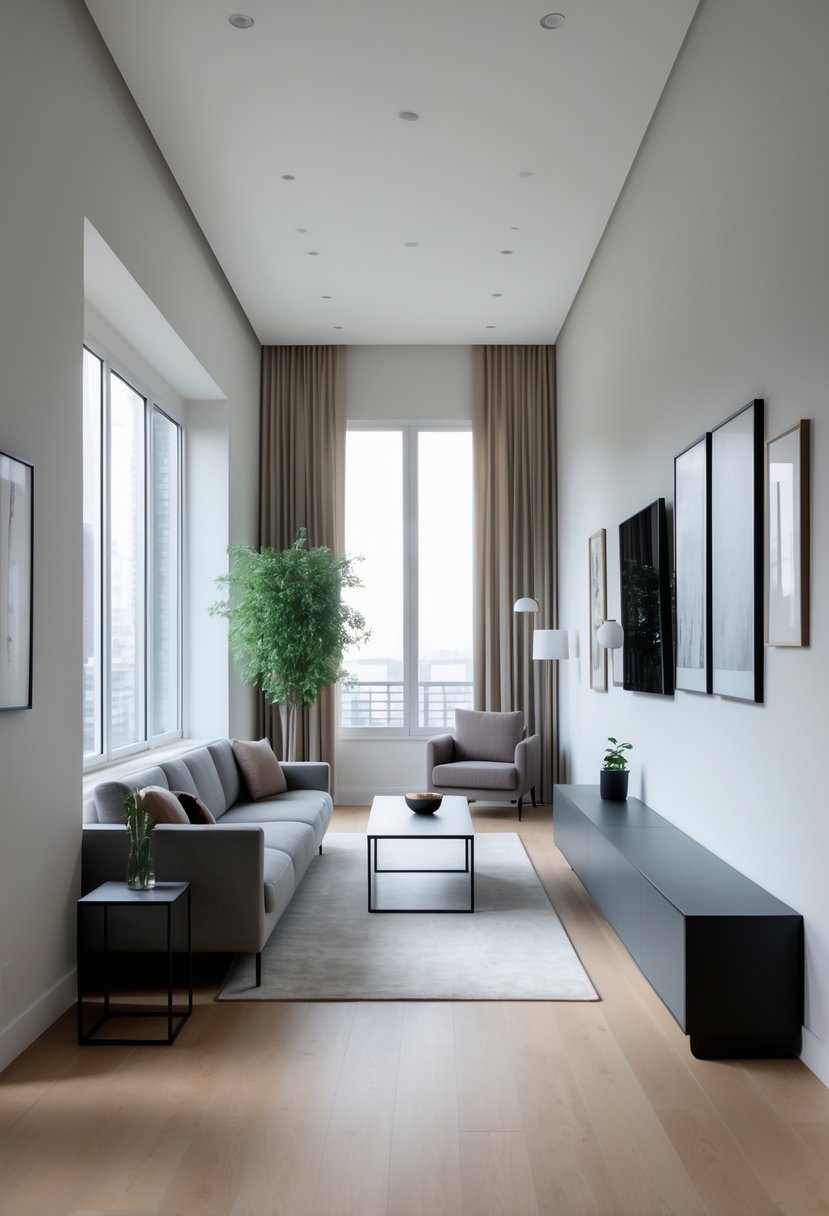
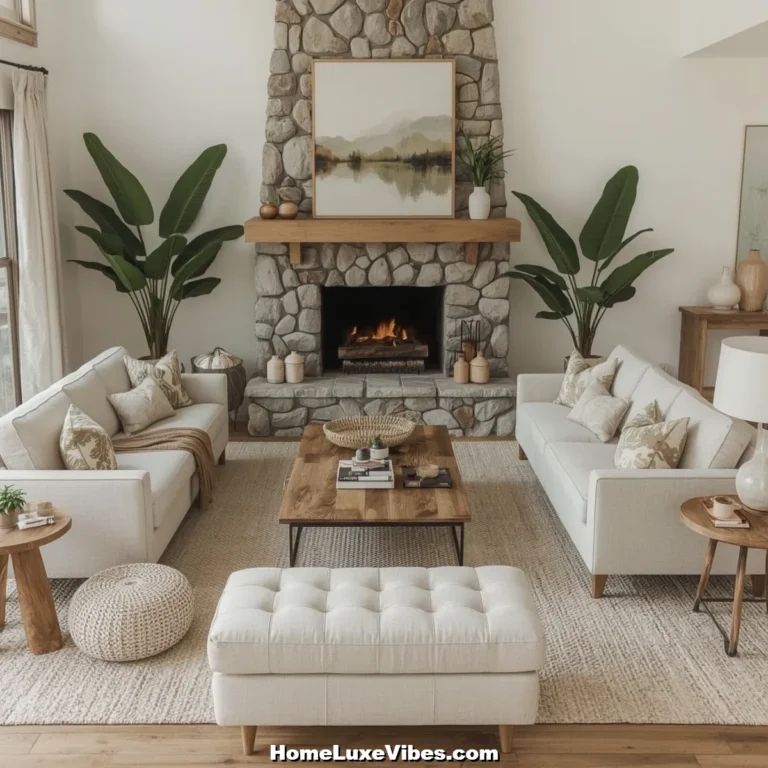
Symmetry can really help keep things feeling grounded in a long, skinny space. Matching chairs or a pair of sofas with a central coffee table gives you a nice anchor, and tossing in a few rugs and some strategic lighting breaks up the space visually (and adds a little coziness, which never hurts).
If you can, use the room’s length to your advantage—furniture can carve out zones for reading or working, so the living room actually serves multiple purposes. It makes the whole setup a lot more livable, even if the shape is a bit awkward.
Key Principles of Furniture Layout for Long Narrow Living Rooms:
Getting a long narrow living room to work means thinking about organization, making sure people can move around easily, and picking furniture that actually fits. It’s all about balancing the weird shape so you end up with a spot you actually want to use.
Identifying Room Zones:
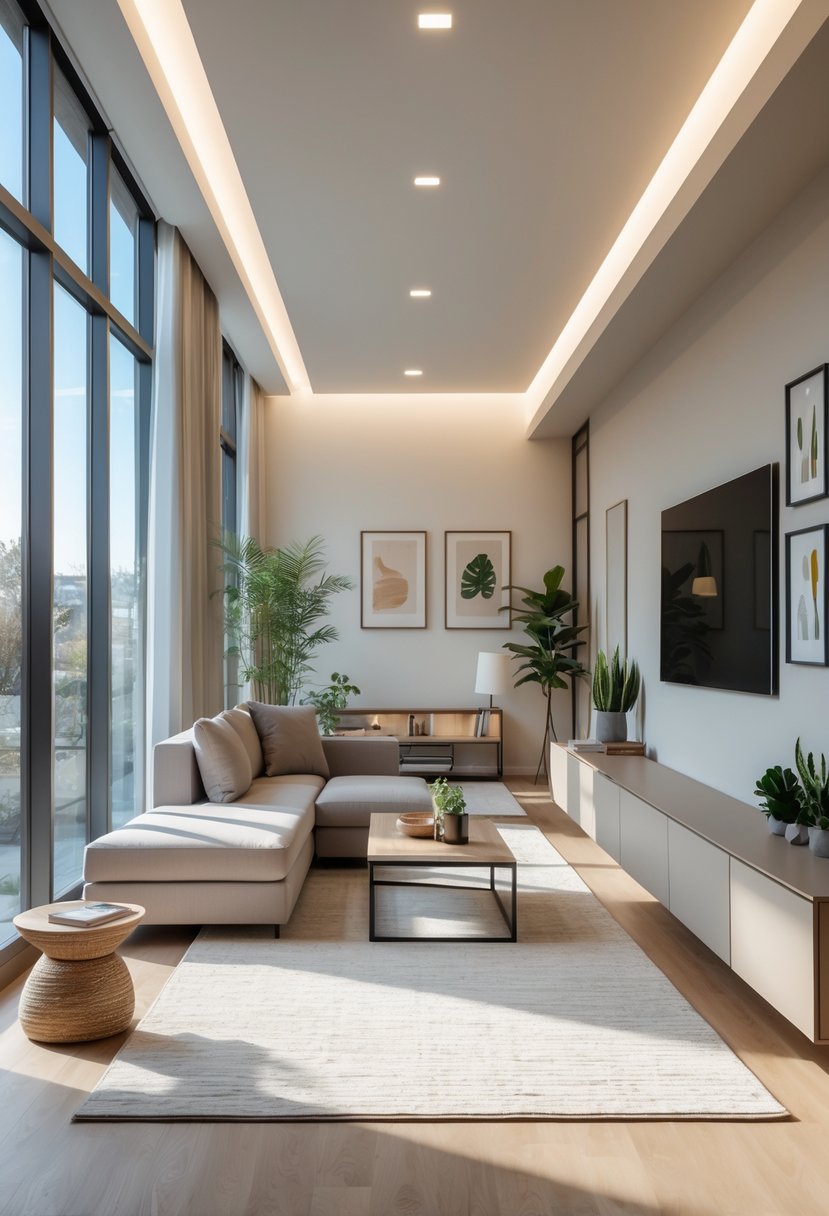
Breaking the space into zones gives each part of the room a job. Maybe you want a main seating area, a reading nook, or a little workspace—dividing things up like this makes the room feel more intentional instead of just a long hallway.
Every zone should have something it’s meant for: chatting, watching TV, relaxing, you name it. Arranging furniture around these ideas keeps things from feeling crowded or random. Rugs and lighting can help mark out these spaces without putting up any walls.
Honestly, using a handful of smaller pieces instead of one massive sofa can make zoning a lot easier in a narrow room. It helps break things up and keeps the vibe from getting too heavy.
Optimizing Traffic Flow:
If there’s one thing that can ruin a long narrow living room, it’s bad traffic flow. People shouldn’t have to squeeze past furniture or zigzag just to get across the room.
Try to leave a walkway that’s at least 30-36 inches wide—enough for someone to pass through without bumping into stuff. Don’t put big pieces right in the middle of the main path, and give everything a little space to breathe.
If you’ve got more than one doorway, pay attention to how people naturally move through. Sometimes, using low-profile or open-backed furniture makes the room feel less boxed in and helps sightlines, too.
Choosing the Right Furniture Scale:
Oversized furniture in a long, skinny room? Yeah, that’s usually a no-go. It just makes everything feel tighter. Stick to slim furniture—think sleek armchairs, compact sofas, and skinny rectangular coffee tables. Matching sets can give you that symmetry that helps balance out the room’s length.
Multifunctional pieces—storage ottomans, benches with cubbies—are a bonus. Heavy or dark furniture tends to shrink the room visually, so best to avoid those if you can. When your furniture actually fits the space, the whole room just feels better.
Effective Seating Arrangements and Layout Strategies
Long, narrow living rooms really benefit from some thoughtful planning. The right arrangement can make seating feel inviting and not like you’re stuck on a train. Keeping walkways open, mixing up seating, and using flexible pieces can help you get the most out of the space.
Creating Conversation Areas:
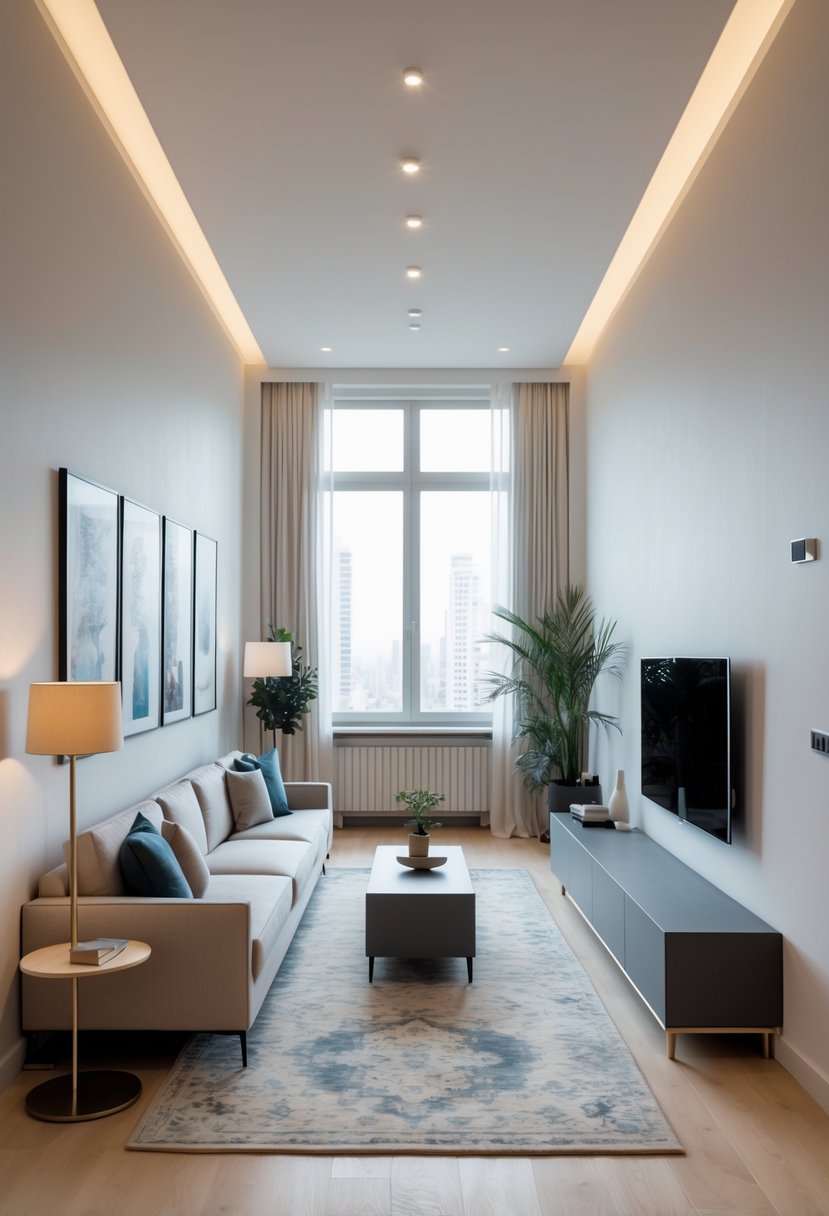
If you want people to actually hang out, cluster your seating close together to make a cozy conversation zone. A sectional sofa is great for anchoring one side, and it gives you plenty of seats without chopping up the flow. Add a couple of accent chairs facing the sectional, and suddenly you’ve got a natural spot for chatting.
Leave a little breathing room—18-24 inches between chairs and sofas is usually enough. A small coffee table or a few poufs in the middle are both handy and help people interact. Rugs or clever lighting can help set the conversation area apart from the rest of the room, so it doesn’t just blend into the background.
Balancing Sectionals and Accent Chairs:
Sectionals are comfy and use space well along a long wall, but they can feel like a behemoth if you’re not careful. Pairing the sectional with one or two accent chairs keeps things interesting and gives people options.
Go for chairs that are slim or armless so they don’t crowd the room. Set them across from or next to the sectional to keep the arrangement open. This way, you don’t end up with everything pressed against the walls, and there’s still plenty of room to move around. Poufs or stools can be tossed in for extra seats without adding bulk.
Floating Furniture Techniques:
Floating furniture—basically, pulling it away from the walls—can be a game changer. It helps break up the long lines and makes the room feel more dynamic. Try floating a sectional and a couple of accent chairs in the middle, leaving clear paths around them. It keeps walkways open and stops the room from feeling like a bowling alley.
Use a rug or some lighting under the floating group to visually anchor it. It’s an easy way to add depth and comfort while making the most of your space.
Space-Enhancing Accessories and Decor Solutions:
Accessories and decor can completely change the vibe in a long narrow living room. The right touches—rugs, vertical elements, smart storage—help define zones, draw the eye up, and keep things tidy.
Zoning with Area Rugs:
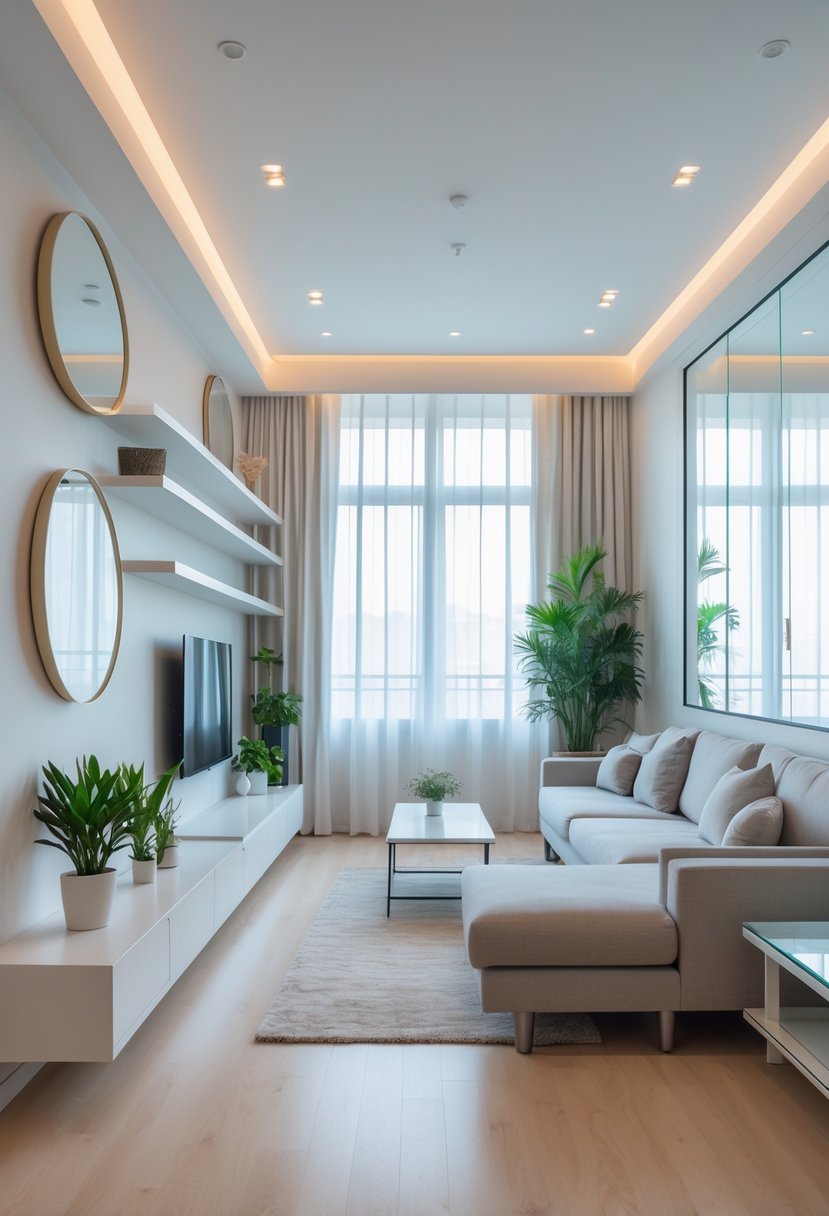
Area rugs are your friend here. A big rug under the main seating area makes it feel like its own little world. If you want to play up the room’s length, try a runner to guide people through.
Light colors or simple patterns keep things airy. Layering or overlapping smaller rugs can split the space into lounging, dining, or work zones without making it look chopped up. Plus, rugs help muffle sound, which is a bonus in echoey narrow rooms.
Utilizing Vertical Elements:
Tall stuff—built-in shelving, floating shelves, big plants—draws your gaze up, making the room seem taller and less like a corridor. Gallery walls are great for filling blank vertical space with art or photos, and they don’t eat up any floor area.
Wall sconces are a clever way to add light without taking up space. Layered lighting adds depth, and a few vertical plants or hanging greenery bring life without cluttering things up.
Maximizing Storage with Built-In Shelving:
Built-ins are a lifesaver for storage in tight rooms. Shelves can run the length of the wall or just fill a corner to carve out zones. Floating shelves are lighter visually and work well above sofas or near entryways.
They’re perfect for books, decor, or electronics—anything you want off the floor. Closed cabinets underneath can hide the less pretty stuff. Custom built-ins can even work around weird windows or doors, so you don’t waste an inch.
Lighting, Colors, and Finishing Touches:
Lighting, color, and those last little touches can make or break a long, narrow living room. You want the space to feel soft, balanced, and welcoming—not like a tunnel.
Layered Lighting Approaches:
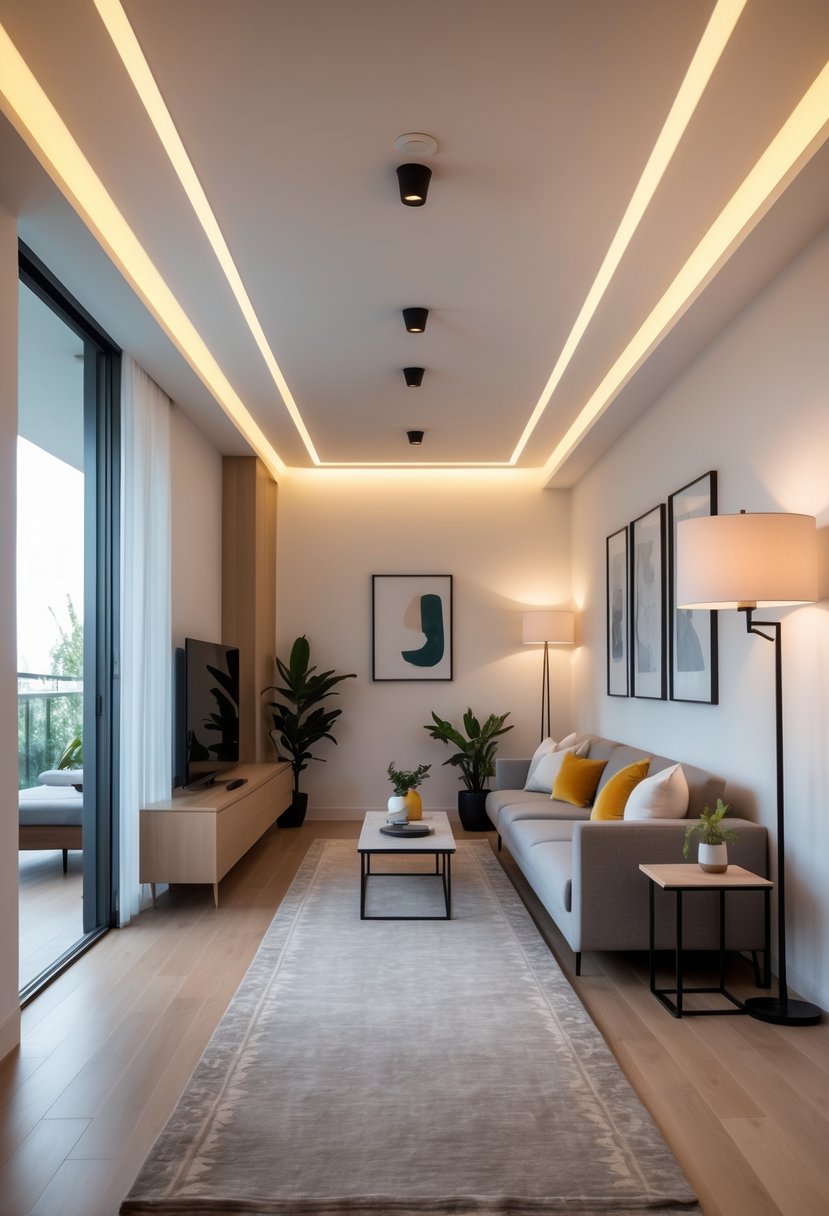
Layering your lighting is key. You need ambient lighting for the basics, task lighting for reading or working, and accent lighting to highlight special spots.
Pendant lights over the seating area or side tables help carve out zones and draw the eye up. Floor lamps in the right places warm up dark corners and make the room feel less boxy.
Recessed lighting can provide even brightness without crowding the ceiling. If you can, add dimmers—sometimes you want it bright, sometimes you want it cozy.
Choosing a Cohesive Color Palette:
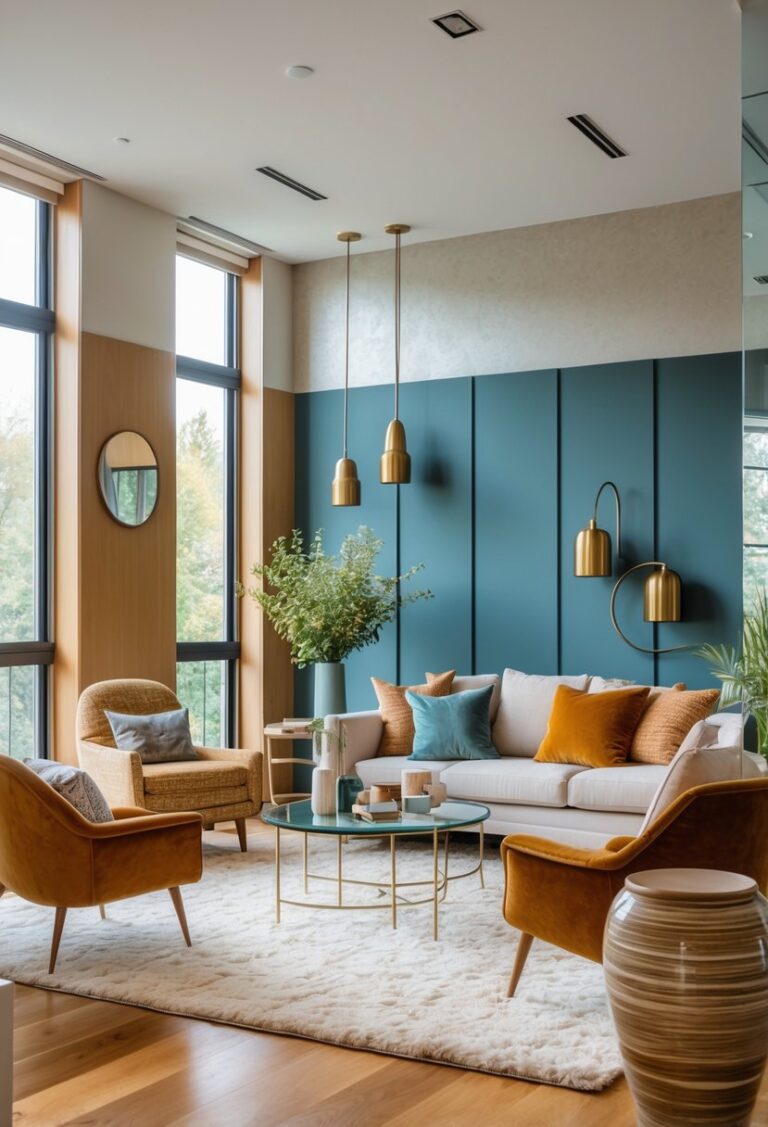
Picking the right colors really matters here. Light, neutral shades—think soft gray, beige, off-white—help the room look wider. A few darker or richer accents add personality without making things feel heavy. Keep the color palette consistent across walls, furniture, and accessories to avoid visual chaos.
Here’s a quick cheat sheet:
| Element | Suggested Colors |
|---|---|
| Walls | Light taupe, soft gray |
| Main furniture | Warm beige, ivory |
| Accent pillows/rugs | Deep blue, forest green |
It’s not rocket science, but it does make a difference.
Choosing Curtains and Artwork:
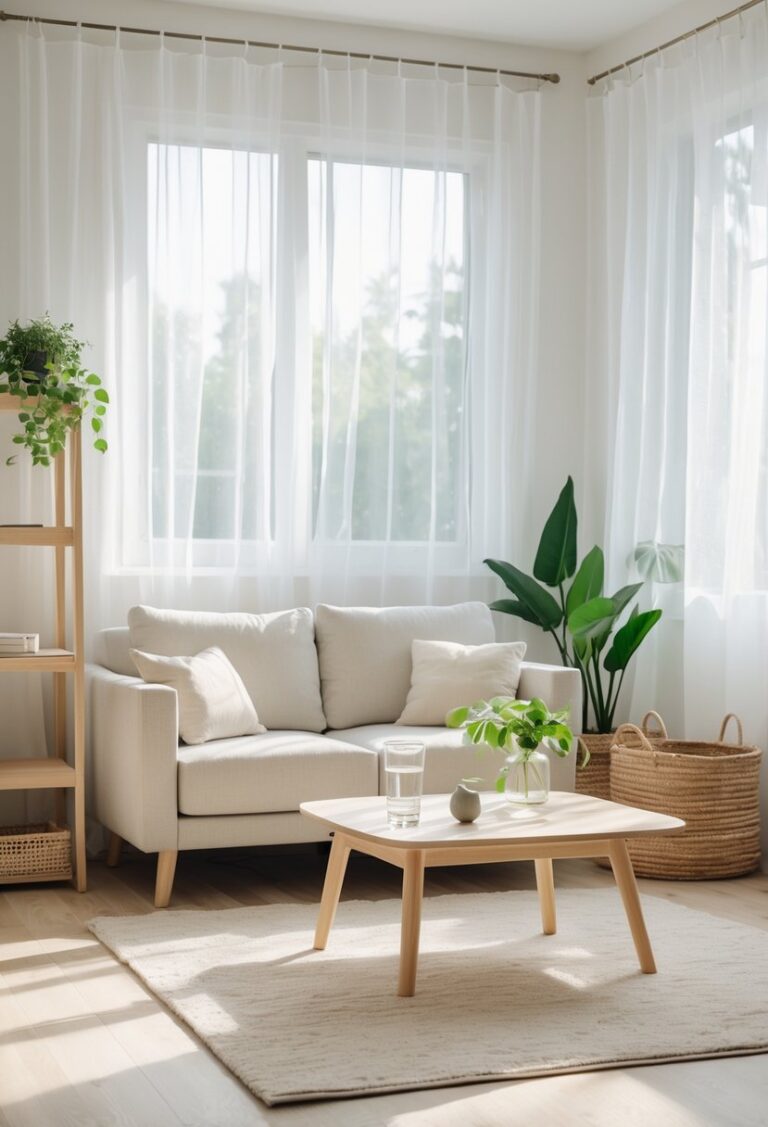
Curtains should do you a favor—go for floor-to-ceiling, light, and sheer fabrics to make windows look taller and let the light in. Sheers keep things airy and don’t block your view.
When it comes to art, horizontal pieces are your friend. They play up the length of the room and don’t make it feel even taller (which you don’t need). A few well-placed pieces along the longest walls break up the monotony. Simple frames and colors that match your palette keep things calm.
Together, curtains and artwork add softness and style, and they help reinforce the room’s shape.
Frequently Asked Questions:
Arranging a long narrow living room takes a bit of thought, but it’s worth it. Space-saving furniture and clear walkways can really improve the feel and function of the room.
How can I arrange furniture in a long narrow living room to include a television viewing area?
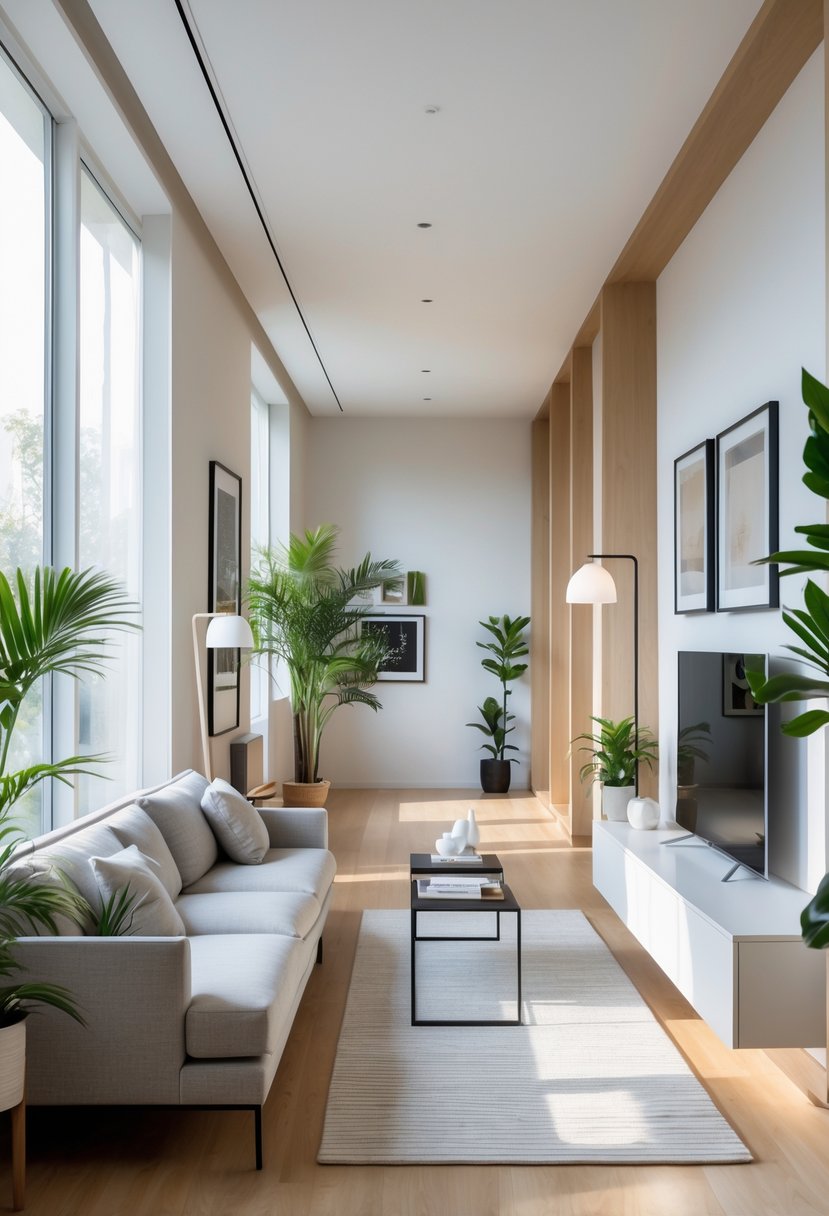
Put the TV on a long wall to get the best viewing angle. Place the sofa straight across or at a slight angle for a clear line of sight. Low-profile furniture helps keep things open and less crowded.
What design strategies work best for decorating a long and narrow living room?
Stick with light colors and don’t overdo the décor—less is more when you’re fighting a cramped vibe. Mirrors or smart lighting can help the room feel bigger. Use rugs or groupings of furniture to carve out zones, but don’t block the main pathways.
What is the ideal layout for a long and narrow living room that has multiple doors or entrances?
Line up your main furniture along the longest wall to keep movement between doors easy. Slim or armless chairs are less likely to get in the way. Leave the center open for smooth traffic flow.
How should I position a sofa and chairs in a rectangular living room to optimize space?
Try the sofa along one long wall, then place chairs across or at angles to create a conversation spot. Small side tables work better than a giant coffee table. Lower furniture helps keep sightlines open.
What are some effective ways to incorporate a fireplace into a narrow living room layout?
Arrange seating around the fireplace to make it the star. If space is tight, go for built-in shelves or slim benches nearby. Steer clear of bulky furniture that blocks access or the view.
Are there any creative solutions for arranging furniture in a very narrow living room space?
Well, honestly, narrow living rooms can be a real puzzle. You might want to try lining up your main pieces—like the sofa—along one wall, just to keep a clear path for walking. Sometimes, pulling a chair or two away from the wall helps carve out these cozy little nooks for sitting or even tucking in a small shelf. Oh, and if you can find an ottoman that hides stuff inside? Total win. It’s all about squeezing in function without feeling like you’re living in a storage closet.