Give Your Bathroom a Glow-Up: Surprisingly Simple DIY Bathroom Vanity Upgrades (No Plumbing Needed!)
Looking for a bathroom refresh that won’t drain your wallet? A DIY vanity upgrade can deliver a big style boost for way less than a full remodel. With a little paint or stain, some new hardware, maybe a faucet swap, and a fresh countertop or sink, you can get a high-end vibe without the sticker shock. The best part? You get to call the shots—work at your pace, pick your materials, and spend what you want.
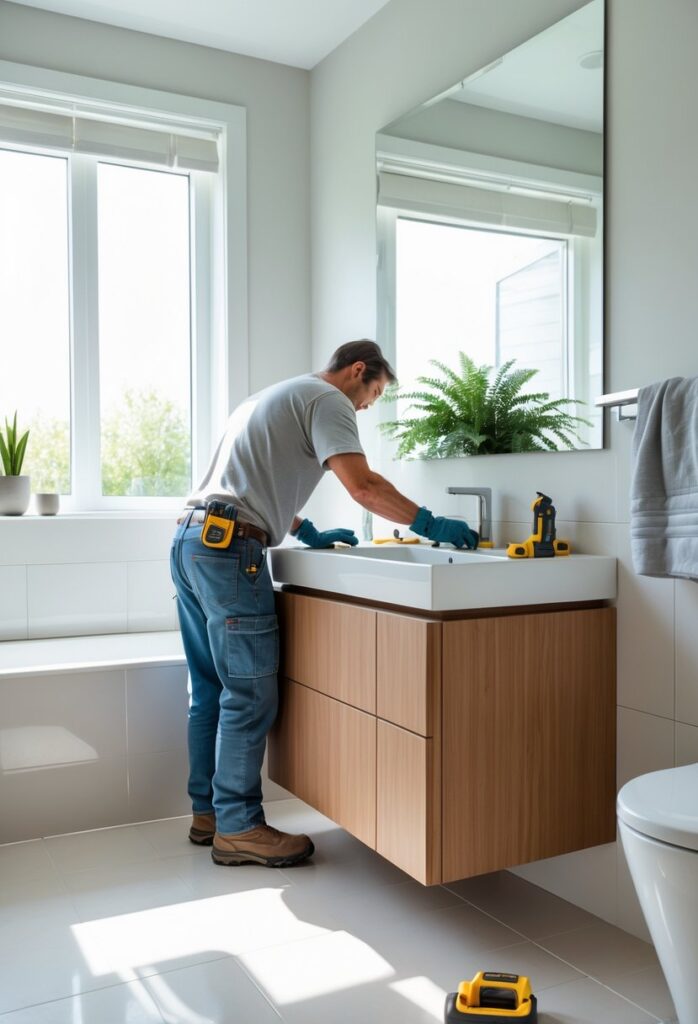
This guide covers the whole process—planning, hands-on steps, style inspo, storage upgrades, and those little questions that pop up along the way. Whether you’re after a quick cosmetic refresh or a bigger DIY project, you’ll find options to match your vision and skill set.
Planning Your DIY Bathroom Vanity Upgrade:
Before you start tearing things apart, it helps to have a plan. This section is all about figuring out what you’ve got, what you want, what you can spend, and what you’ll need—so you’re not making frantic hardware store runs mid-project.
Assessing Your Existing Bathroom Vanity:
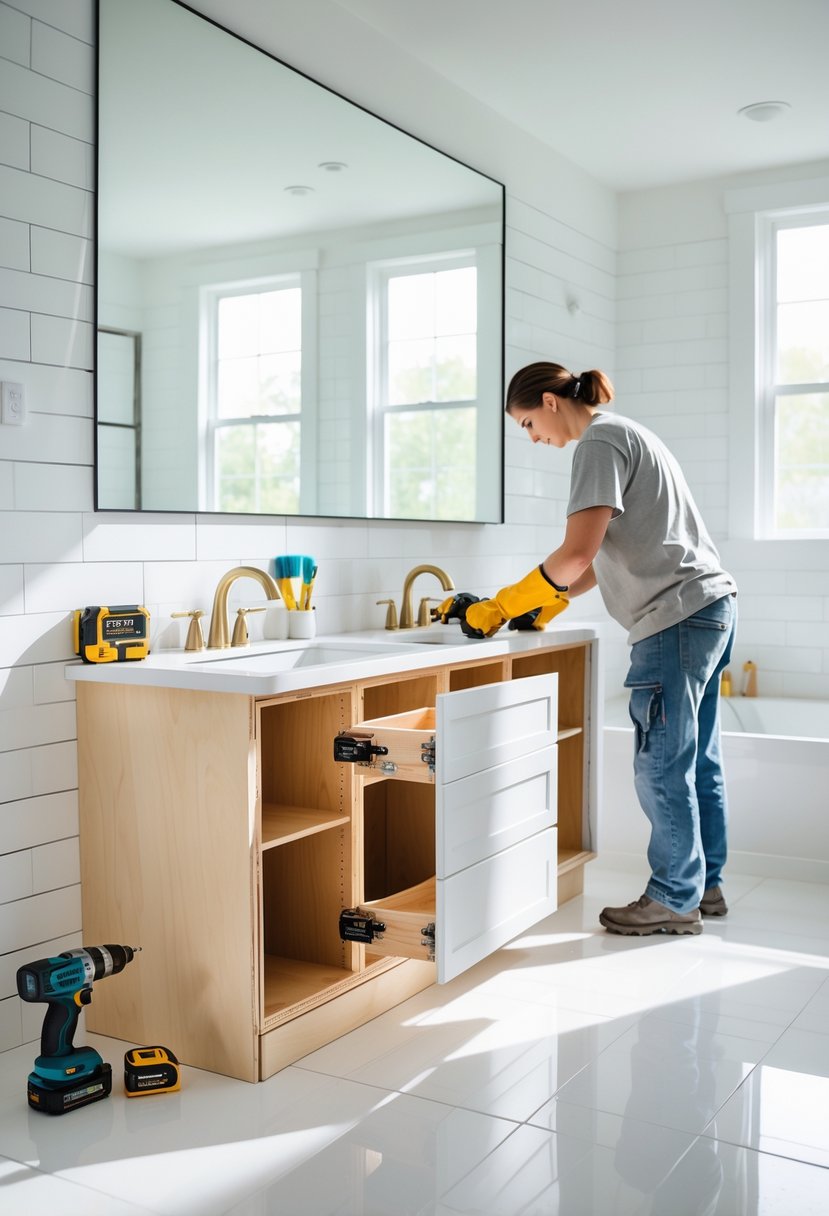
Start by poking around your current vanity. Is there water damage under the sink? Drawers falling off their tracks? Any soft or funky-smelling spots at the bottom? Get your tape measure out and jot down the height, width, and depth, plus where the plumbing sits—moving pipes is not fun, trust me.
Open every door and drawer, and don’t be shy about looking behind panels for hidden mold or rot. Snap a few pics and note what materials you’re dealing with (particleboard, plywood, solid wood?) and the type of countertop. It’ll help you decide if you’re refinishing, refacing, or just ripping the whole thing out.
Setting a Vision and Style:
Pick a vibe and stick to it: modern, farmhouse, transitional, glam—whatever makes you happy. Decide on your finish (paint or stain), hardware (matte black, brass, brushed nickel), and sink style before you start shopping. It’s a pain to realize halfway through that your new faucet clashes with the drawer pulls.
Throw together a quick mood board—three photos and a list of must-haves like soft-close drawers or under-cabinet lighting is plenty. If you’re on a tight budget, focus on the things you see first: paint, hardware, maybe a new countertop. The rest can wait if money runs out.
Budgeting and Timeline:
Break down your costs: demo, plumbing, countertop, sink/faucet, paint and primer, hardware, tools, and a little extra for the stuff you didn’t expect (because there’s always something). Figure on a 10–20% buffer for surprises like mystery leaks or weird plumbing.
Sketch out a timeline: prep and demo (day 1), repairs and priming (maybe two days), painting or finishing (allow for drying between coats), and then hardware and plumbing reassembly. Add time if you’re hiring anyone or waiting on deliveries. Paint and sealants always seem to need more drying time than you think.
Gathering Materials and Tools:
Write up a shopping list before you start—no one wants to be halfway through sanding and realize they forgot wood filler. Usual suspects: moisture-resistant primer, paint, sandpaper, new knobs or pulls, faucet, sink, silicone caulk, and something for the countertop (or a resurfacing kit if you’re not replacing).
You’ll want: tape measure, stud finder, drill, screwdrivers, sander or sanding blocks, paint roller, angled brush, caulk gun, gloves, goggles, and a mask. If you’re messing with plumbing, grab an adjustable wrench and plumber’s tape—or just book a pro so you can sleep at night.
Step-by-Step Upgrade Techniques:
Time to get your hands dirty. Here’s how to tackle the big stuff: prepping, painting or staining, swapping hardware, and changing out the countertop, sink, and faucet. I’ll mention tools, measurements, and a few “don’t make my mistake” tips along the way.
Painting or Staining the Vanity:
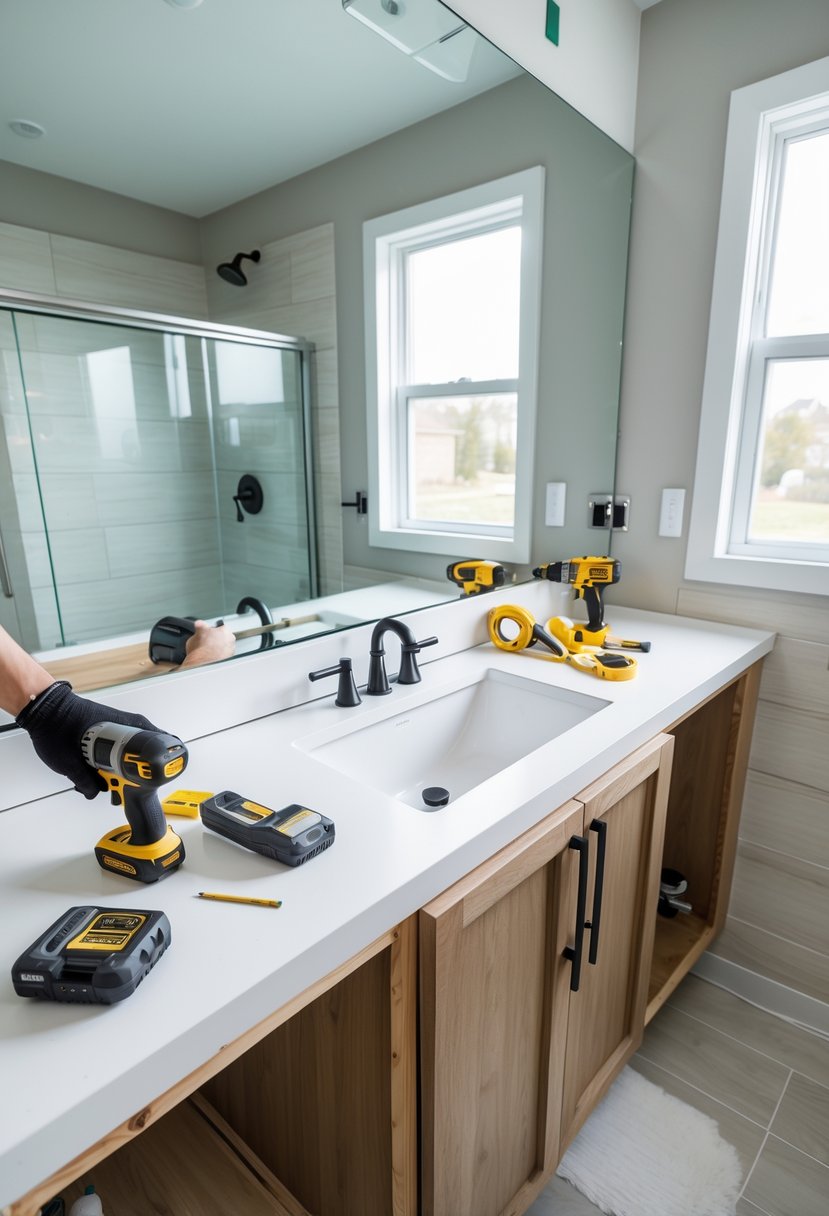
First, take off all the doors, drawers, and hardware. Clean everything with a degreaser (bathroom gunk is real), then sand with 120–150 grit to knock down the shine. Fill any dents or gouges with wood filler, let it dry, and sand again.
Use a good primer—moisture is the enemy here. For paint, go with semi-gloss or satin enamel made for bathrooms. If you’re staining, use a pre-conditioner on softwoods, then stain, and finish with a waterproof topcoat like polyurethane.
Roll on thin coats and use a brush for tricky spots. Let each coat dry fully, then lightly sand between layers with 220 grit. Don’t rush—reattach doors and hardware only after everything’s cured, or you’ll get fingerprints and regret.
Supplies: sandpaper, degreaser, wood filler, primer, paint or stain, foam roller, angled brush, polyurethane. Pro tip: test your color on the inside first—you might hate it once it’s dry.
Upgrading Hardware and Knobs:
Measure the distance between existing holes before buying new knobs or pulls. Standard sizes are 3″, 3.5″, and 5″ center-to-center. Get screws that actually fit your doors—too long and you’ll poke through the other side.
Pick hardware that won’t rust in a steamy bathroom. Brass is trendy and ages well if it’s lacquered. If you’re mixing metals, let one finish dominate or it’ll look chaotic.
Remove old hardware with a screwdriver, clean out the holes, and use a template if you need to drill new ones. Drill pilot holes to avoid splitting the wood, and don’t over-tighten or you’ll strip it out.
Tools: tape measure, template, drill, countersink bit, screwdriver, new knobs/pulls. If your hinges are looking rough, swap those out too for a more polished look.
Replacing or Covering the Countertop:
Measure the vanity top and sink cutout carefully before you buy anything. For granite, check the edge style and thickness—3 cm (about 1 1/4″) is pretty standard. On a budget? Laminate or a resurfacing kit can fake the look of stone for less.
To replace, shut off the water, disconnect plumbing, and pull off the old top. Set the new countertop in place dry before securing. If you’re doing an undermount sink in granite, honestly, call a pro for the template and install—it’s tricky.
Covering an old top? Use a high-bond primer and a specialty countertop paint or epoxy. Apply thin, even coats, let it cure, and seal the edges with silicone so water doesn’t sneak in.
Tools: tape measure, jigsaw (for laminate), silicone caulk, epoxy or adhesive, level. If you want granite, most stone shops will cut the sink holes for you—worth it.
Swapping Sinks and Faucets:
Shut off the water and open a faucet to release pressure. Disconnect supply lines and the P-trap. If the sink is heavy, support it from below before you lift it out.
Pick a sink that works with your vanity: drop-in for existing cutouts, vessel for above-counter drama (but you’ll need a taller faucet), undermount for solid surfaces. Match faucet reach and spout height to your sink so you don’t splash everywhere.
Install the faucet before setting the sink if you can—it’s just easier. Use plumber’s putty or silicone as needed, tighten connections, and check for leaks by running water for a few minutes. Nothing worse than a surprise drip later.
Tools: adjustable wrench, plumber’s putty, silicone, Teflon tape, bucket. If you’re eco-minded, look for water-saving faucets—they’re better than they used to be.
Popular DIY Vanity Styles and Ideas:
Need some inspiration? Here are a few DIY vanity styles that real people actually pull off—plus some features and materials that make each one stand out.
Rustic and Farmhouse Vanities:
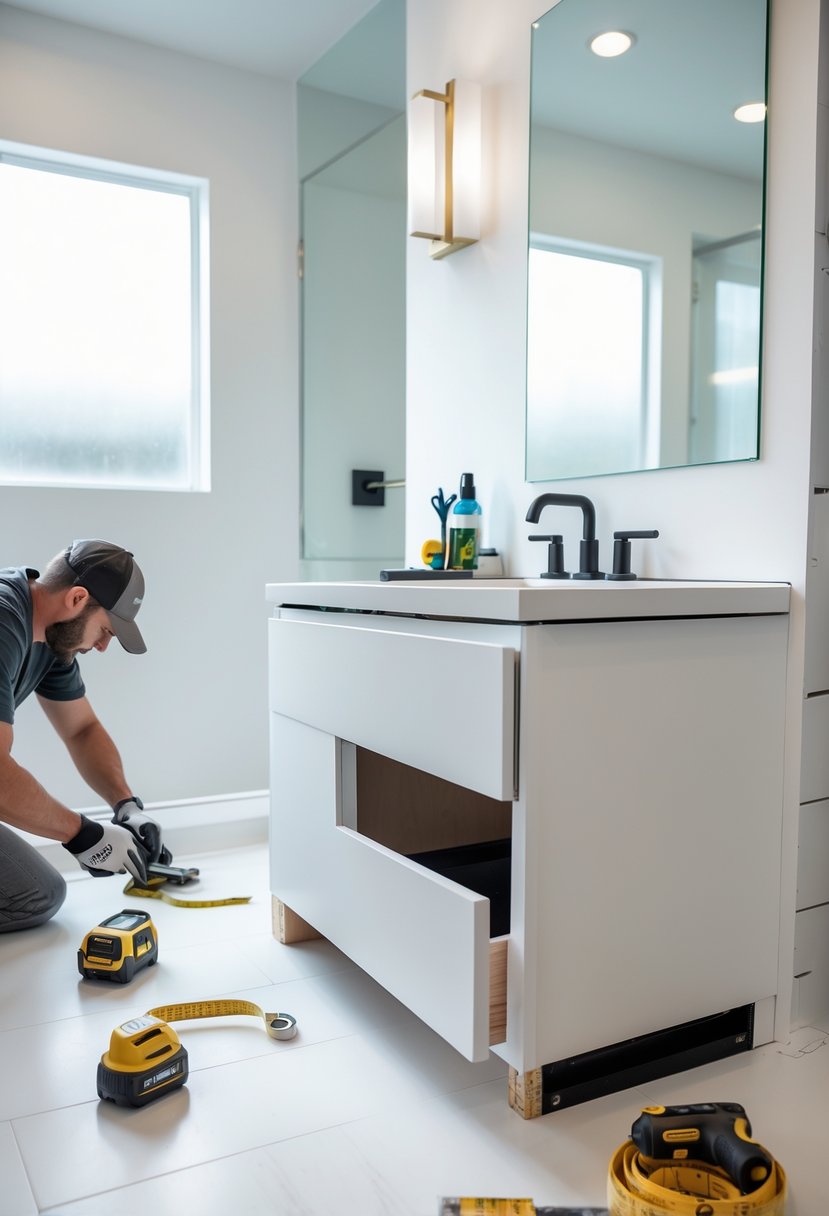
Rustic and farmhouse vanities are all about warmth and character. Think reclaimed wood, pine, or oak with knots and grain on display. Shaker-style doors, open shelves, and chunky hardware like iron or oil-rubbed bronze help sell the look.
If you want genuine rustic vibes, don’t sand out every imperfection—leave a few saw marks or distress the edges a bit. Seal it with something tough like polyurethane or marine varnish. Top it off with butcher block or honed stone. Exposed brackets or quirky hardware add charm without requiring fancy woodworking.
Assembly’s not too scary: build a solid base, slap on a pre-cut top, and anchor it to studs. This style fits everything from a single to a double vanity and works great in smaller spaces too.
Floating and Modern Designs:
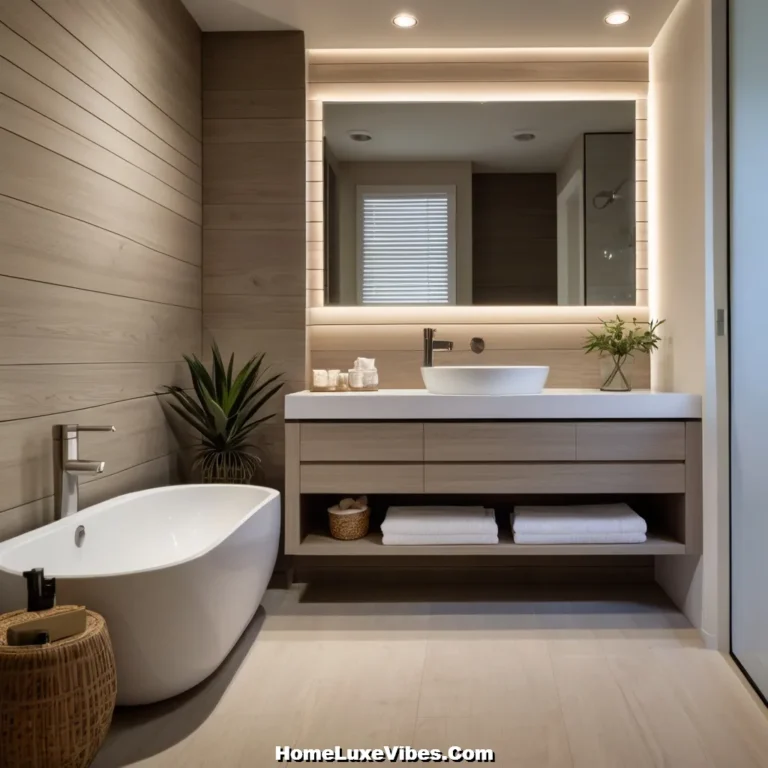
Floating vanities look sharp and modern, and they make cleaning the floor a breeze. Usually, you’re working with plywood or MDF boxes faced with oak or laminate for that sleek finish. Integrated sinks or slim solid-surface tops keep the lines clean.
If you’re DIY-ing, be sure to find and reinforce your wall studs, use a sturdy mounting cleat, and double-check that plumbing lines up. Soft-close drawers and skinny bar pulls complete the modern look. Materials like matte lacquer, walnut veneer, or a neutral paint can really elevate things.
They’re a space-saver too—a single or double wide works, and for double vanities, you can use two matching units with a shared countertop or mirror in between.
Double and Small Vanity Solutions:
Double vanities are perfect for shared bathrooms—two sinks, more storage, and a wider top. For DIY, use two matching cabinets or a long one with a center support. Quartz or laminate is sturdy for the countertop, and you’ll need to cut for two sinks.
Short on space? Go small and vertical. Narrow vanities, corner units, even pedestals can free up precious floor area. If you’re crafty, convert an old dresser by cutting a sink hole and adding support. Wall-mounted cabinets or tall shelves give you storage without bulking up the vanity itself.
Plan plumbing early. For doubles, you might need to move drains. In tiny bathrooms, offset sinks or single-hole faucets can help save space and sanity.
Repurposed Furniture Vanities:
Turning a dresser or vintage cabinet into a vanity is a fun way to get something unique—and usually cheaper than custom cabinetry. Choose a solid piece with a flat top, remove drawers as needed, and cut out space for plumbing.
Reinforce the top with plywood, cut holes for the sink, and add a waterproof layer between wood and countertop. Vessel sinks or drop-in bowls are easiest if you’re not a pro carpenter. Swap out the hardware, sand and paint, or stain for a fresh look.
This approach works for rustic styles and can even become a double vanity if your furniture’s wide enough. It’s a solid choice if you want storage and personality without breaking the bank on custom work.
DIY Bathroom Vanity Build and Storage Enhancements:
Here’s the gist: if you want to build a vanity that actually works for your space, you’ll need to think through the planning, pick materials that make sense, and pull it all together with some smart storage and a few finishing touches. It’s mostly about getting your measurements right, figuring out a layout that won’t drive you nuts, and choosing details that feel like you—not just something out of a catalog.
DIY Bathroom Vanity Plans and Blueprints:
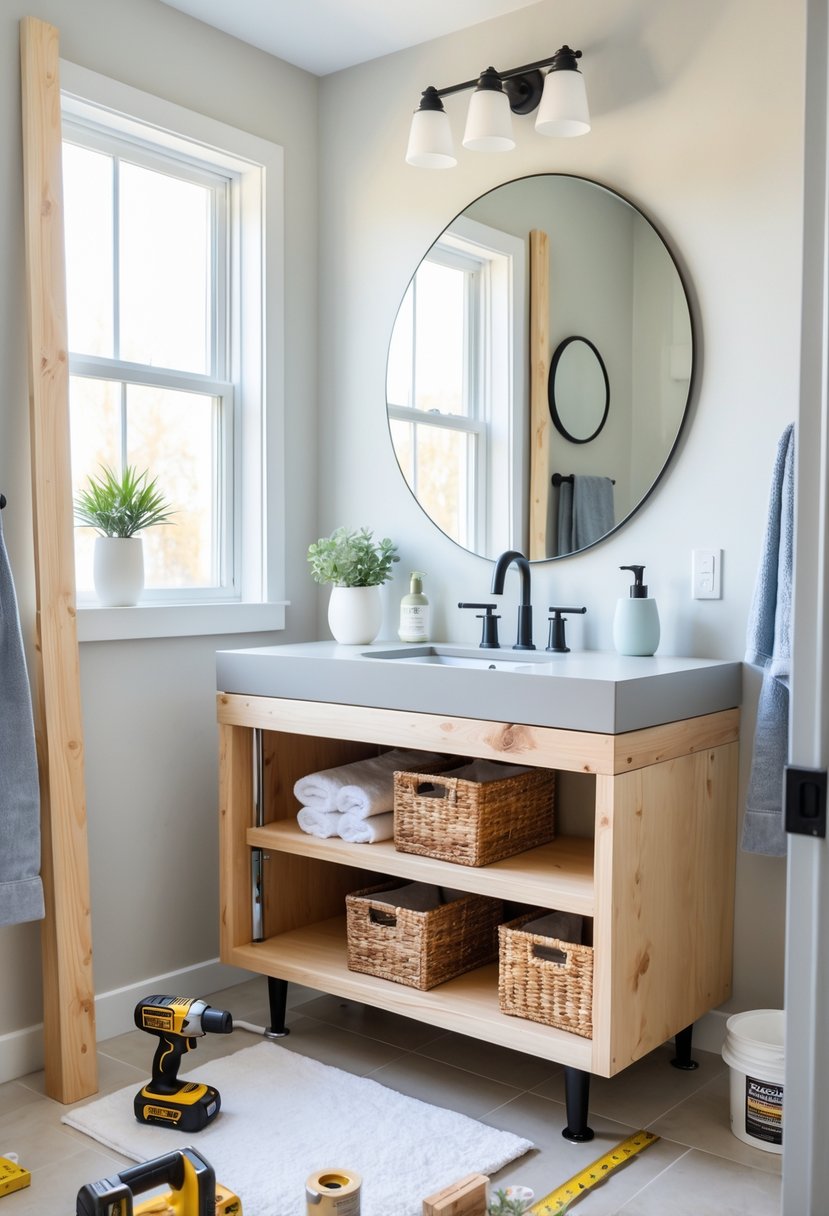
Start with the tape measure—width, depth, height, and don’t forget to mark where the plumbing comes in. For a small master bathroom, honestly, a 24–30 inch vanity is usually plenty. If you’re lucky enough to have space for a double, you’re looking at two basins (24–30 inches each) or just go big with a single 60–72 inch counter. Sketch a quick blueprint—front, side, and top views. Doesn’t have to be fancy, just clear enough to help when you’re cutting wood and second-guessing yourself.
Next, materials: 3/4″ plywood or real wood for the cabinet box, 1×2s for the frame, and 1/2″ plywood for any drawers. You’ll want to jot down hardware, too—drawer slides, hinges, handles, brackets. Oh, and make a cut list and a tools list (circular saw, drill, clamps, level, the usual suspects). If you’re going for a stone top, you’ll need to plan for extra support and where the seams go. Print or sketch your plan, double-check that doors and plumbing won’t get in each other’s way, then start cutting—one piece at a time, no rush.
Increasing Storage and Organization:
Think about what you actually use every day. Adjustable shelves behind doors are great for towels and cleaning stuff. Put one or two not-too-deep drawers up top for all the little things—cosmetics, toothbrushes, whatever else piles up. For bigger stuff like towels or backup shampoo, deeper drawers or pull-outs under the sink are a lifesaver.
Vertical dividers work surprisingly well for hair tools, and if you can squeeze in a skinny pull-out (like 3–6″ wide), it’s perfect for bottles and razors. Full-extension, soft-close hardware is worth it—trust me, it just makes life easier. Inside drawers, use clear bins or labels so you’re not digging for cotton swabs. With a double vanity, you can mirror storage on each side or stash shared stuff in the middle. And don’t forget an access panel or removable back for plumbing—future you will thank you.
Finishing Touches and Decorative Upgrades:
Before you even think about color, give every surface a good sanding—start with 120 grit, then 220, and seal those edges. If you’re painting, don’t skip the primer. For wood tops, semi-gloss paint or polyurethane keeps things from getting gross, but if you’re into butcher block, go with a food-safe sealer and plan to oil it now and then.
Pick details that fit the vibe of your bathroom: shaker doors for a farmhouse feel, flat slabs if you’re more into modern, or maybe a veneered face frame for a bit of classic charm. Hardware can make a big difference—brushed nickel, matte black, brass—just match it up with your faucet or lights. If you want to go a little extra, try lighting under open shelves, add a bit of crown molding, or run a backsplash behind the sink. It’s those little things that make it feel finished.
Frequently Asked Questions:
Let’s dive into some quick, no-nonsense answers for making your bathroom look modern, adding a bit of DIY flair, or just giving your vanity a fresh coat of paint. The goal? Get it done without calling in a pro, and maybe even have a little fun in the process.
How can I give my bathroom vanity a modern look on a budget?
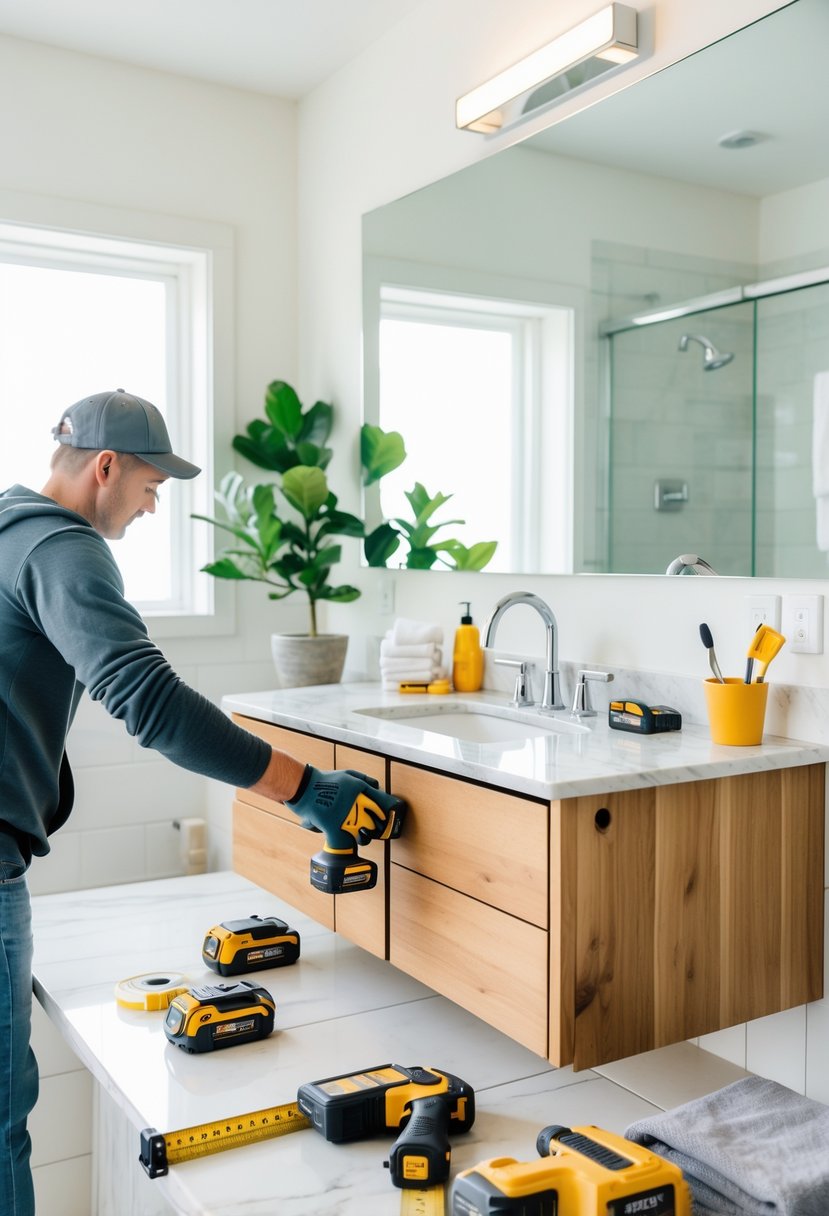
Honestly, paint does wonders. Grab a flat or satin neutral—deep charcoal, navy, or a warm gray are all solid picks. One coat of primer, then two thin coats of paint, and you’re set for a smooth finish.
Swap out the hardware for something like matte black, brushed nickel, or brass. It’s a quick switch, but it really updates the vibe. Match it to your faucet or shower hardware if you care about that sort of thing.
If you’re not ready for a full countertop swap, try a laminate or peel-and-stick stone-look top. It’s budget-friendly and you can install it in an afternoon—no need to rip out the old one.
Don’t underestimate lighting and mirrors. An LED vanity light or a frameless mirror can make the whole room feel new and a bit more high-end.
What are some creative DIY ideas for upgrading a bathroom vanity?
If you’re into texture, add wood slats or a thin reclaimed-wood face for some warmth. Just cut, glue, and finish with a clear coat so it stands up to humidity.
Or maybe ditch a couple doors and go for open shelving—show off baskets and towels instead. Take off the hinges, clean up the edges, and finish the insides so it doesn’t look half-done.
Try wallpaper or vinyl on drawer fronts if you want pattern without a lot of work. Just make sure it’s moisture-resistant, trim it to fit, and seal the edges with clear caulk so it actually lasts.
LED strip lighting is another easy upgrade—stick it under the toe-kick or inside the cabinet for a soft glow. All you need is low-voltage LED strips, a tiny transformer, and some adhesive. Super simple, but it feels custom.
What is the best way to paint a bathroom vanity for a fresh look?
Start by taking off the doors and hardware—seriously, it makes things so much easier. You’ll want to give everything a good scrub with a degreaser to get rid of any soap scum or oily residue. Let it dry; no shortcuts here, or you’ll regret it later when the paint won’t stick.
Grab some 120–150 grit sandpaper and lightly scuff up the old finish. Wipe away the dust with a tack cloth (those things are weirdly satisfying to use). After that, roll on a thin layer of bonding primer, especially if you’re dealing with laminate or shiny surfaces. Trust me, skipping primer is just asking for peeling paint.
Pick a decent acrylic or enamel paint—satin or semi-gloss is your friend in a bathroom. Use a small foam roller for the flat bits, and a brush for the tricky edges. Don’t rush; two thin coats are way better than one gloopy mess. Give each coat time to dry—yes, waiting is annoying, but it really does help.
Don’t reattach the hardware until you’re sure the paint’s totally cured, usually a day or two. If you’re worried about splashes or humidity, a clear, water-resistant topcoat isn’t a bad idea for extra peace of mind.