15+ Bedroom Layout Ideas to Master Your Space (Even the Awkward Corners!)
Here are some practical, honestly pretty doable ways to make any bedroom feel more comfortable—and, you know, actually useful. This isn’t just about where to put the bed. You’ll see ideas for arranging furniture, sneaking in storage, carving out a little work or chill zone, and keeping walkways open enough that you’re not tripping over your own stuff every morning.
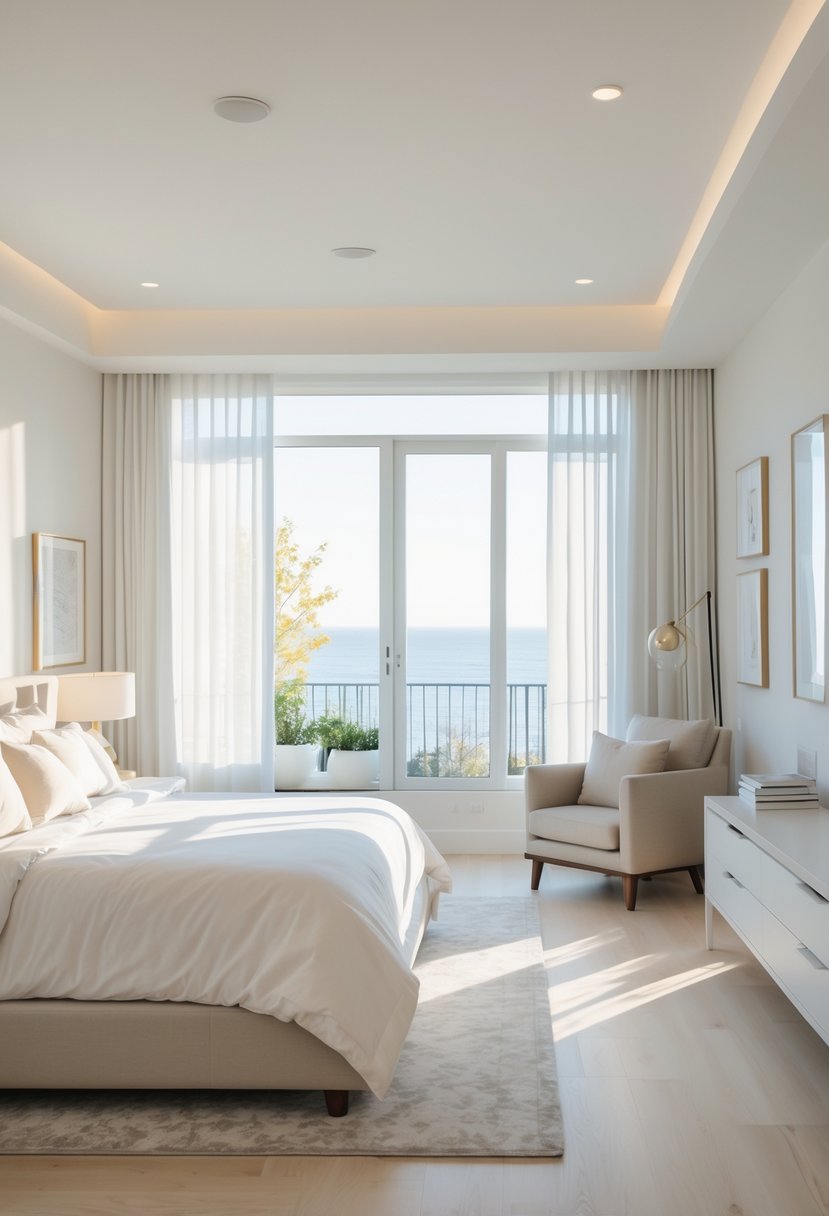
You’ll pick up how a few small tweaks—bedroom layout, furniture swaps, smarter storage—can make the whole room feel bigger and just work better. Doesn’t matter if you’re dealing with a tiny rectangle, an awkward long space, or you’ve actually got room for a chair or two. These ideas have you covered.
1. Place The Bed Against The Shortest Wall To Optimize Space:
Putting the bed on the shortest wall just opens up the floor, so you’ve got more room to move and, maybe, squeeze in a dresser or chair. It keeps things open and honestly, the space feels less boxed in.
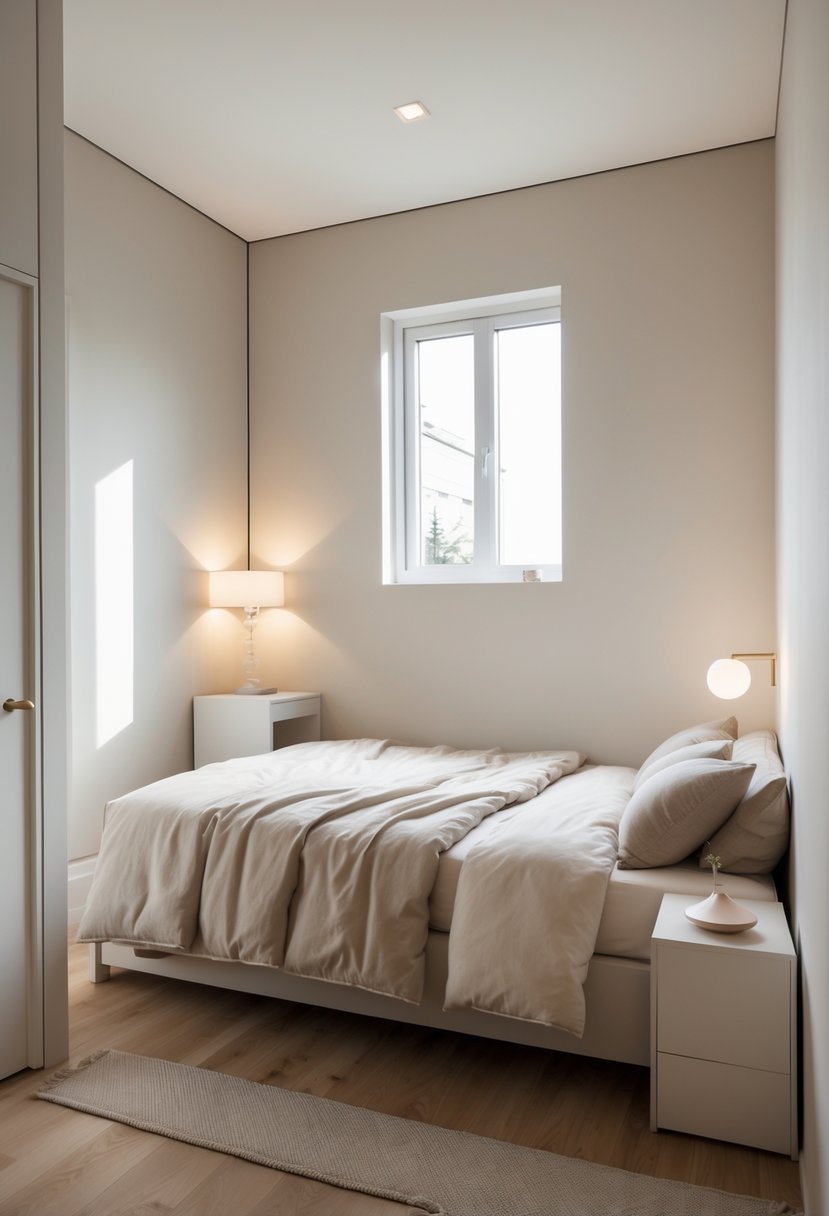
This trick is especially good in small or weirdly narrow rooms. Plus, the headboard gets to be the star, no window-blocking drama.
2. Use Area Rugs To Define Separate Zones For Sleeping And Lounging:
Try tossing a rug under the bed to ground the sleep zone, then another one for a little reading or lounging spot. Suddenly, you’ve got “rooms” within your room—no walls needed.
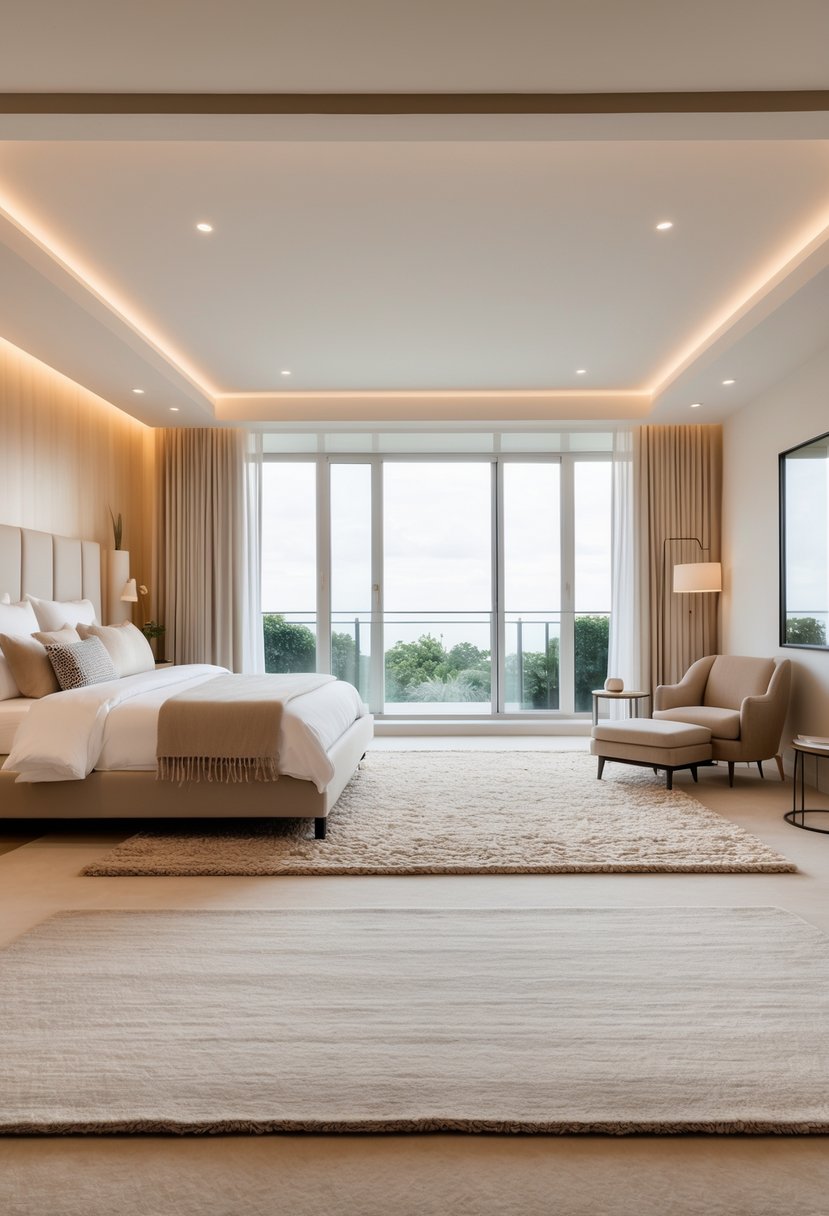
Mix up rug sizes or patterns so each area feels separate but not chaotic. Just keep the rugs sized right for the furniture—otherwise, it gets messy fast.
3. Incorporate Built-In Storage To Maximize Floor Space:
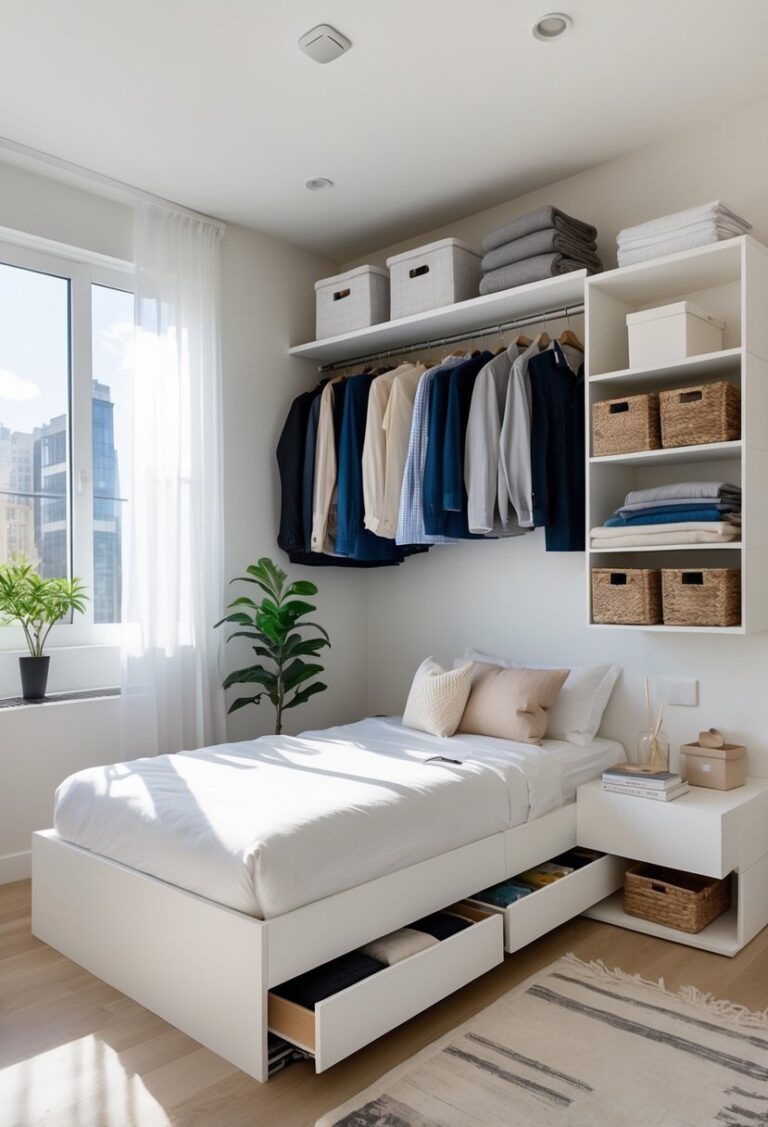
Built-ins are a lifesaver, especially in tight spaces. Think shelves on the wall, drawers under the bed, or even cabinets that wrap around. Suddenly, you’ve got storage without eating up any walking room.
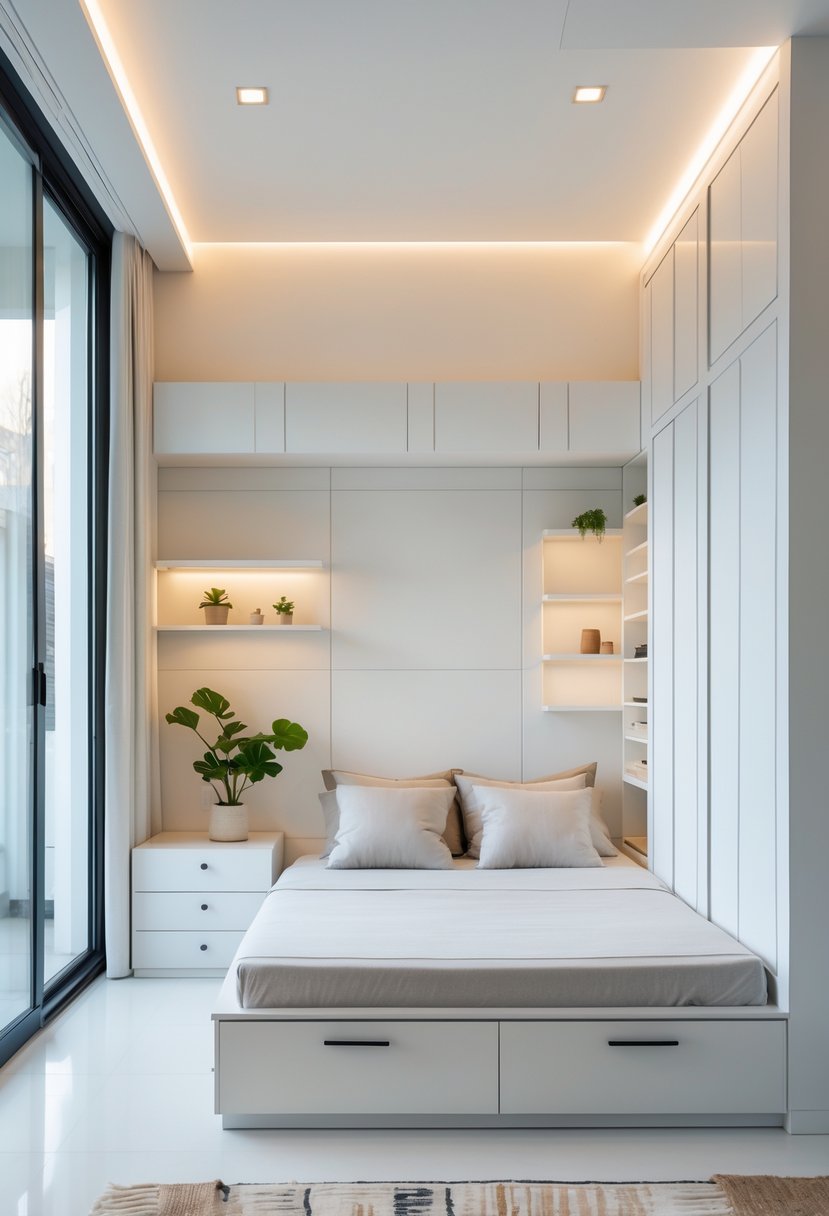
They just blend in, so you’re not tripping over extra furniture. Small bedrooms especially benefit from this—less clutter, more breathing space.
Custom built-ins are worth it if your room’s got a funky shape. Use that vertical space and stash stuff out of sight. Feels so much tidier.
4. Position Dressers Near Windows For Natural Light Access:
Placing a dresser under or beside a window? That’s a solid move—dressing by daylight just makes sense, and you can actually see what color your shirt is. A low dresser keeps the view open and lets the light in.
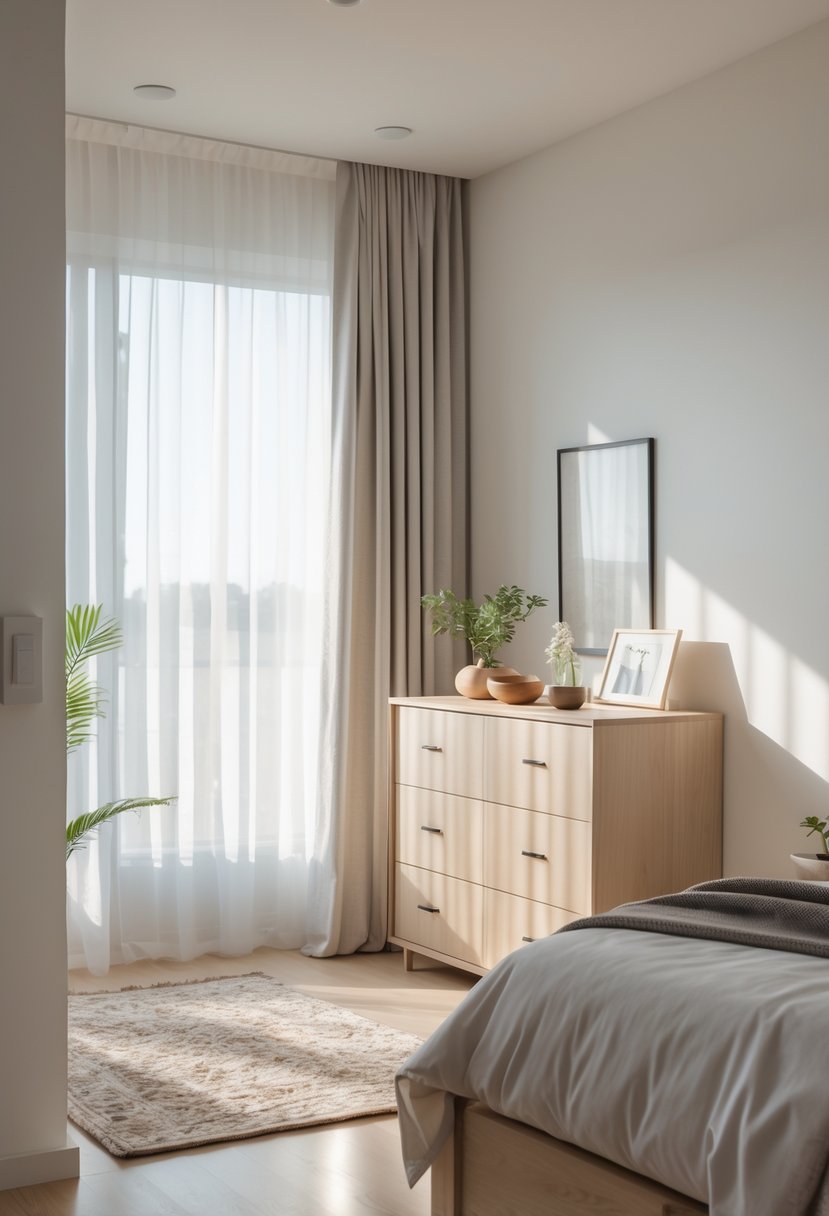
Keep the top of the dresser clear—don’t pile up tall stuff, or you’ll block the sun. A little mirror on the dresser reflects light without crowding the window.
If you’re short on space, go for a narrow or low-profile dresser. That way, you’re not blocking the window or making it hard to walk by.
5. Add A Desk In Unused Corners For Functional Workspace:
Got a lonely corner? Stick a small desk and chair there, and boom—you’ve got a workspace without eating up the room. It’s a nice way to keep work stuff off the bed, too.
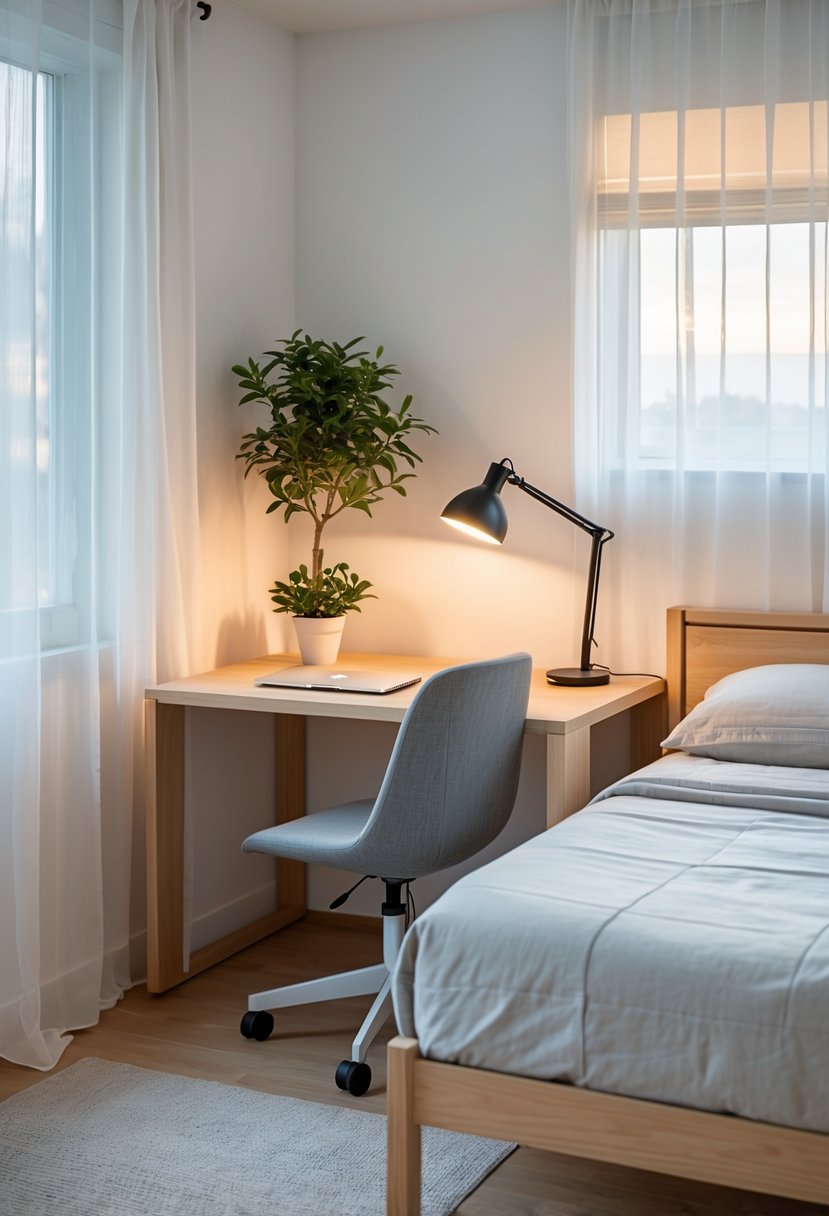
Add shelves or a pegboard above to stash supplies without hogging floor space. If you can, set up near a window, but a good lamp works if not. Makes focusing a lot easier.
6. Use Minimalist Furniture To Maintain A Clutter-Free Environment:
Minimalist furniture just keeps everything feeling open. Simple, low-profile stuff—sometimes with hidden storage—means less visual noise and more space to breathe. It’s kind of the best of both worlds.
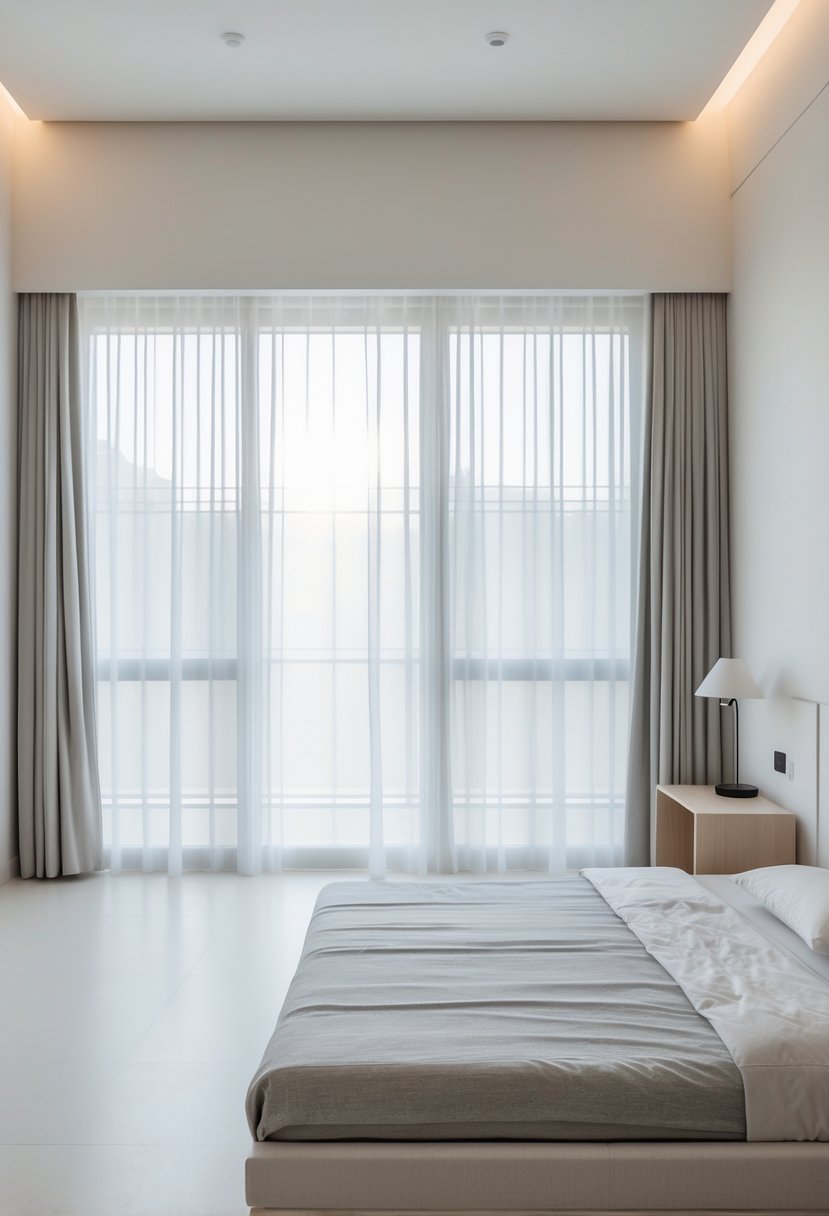
Sticking to neutral colors and clean lines gives you a calm backdrop for whatever bedding or art you like. Fewer, better things make cleaning up way less of a chore, too.
7. Create A Focal Point With A Statement Headboard:
Go bold with a statement headboard—it grounds the whole room and kind of tells you where everything else should go. Upholstered, wood, rattan, even something reclaimed—pick what fits your vibe. Just make sure it’s the right size for your bed and wall. A tall or wide headboard can be the only “art” you need.

Keep the bedding and lamps simple so the headboard pops. The room looks styled, but not overdone.
8. Arrange Seating Areas For Relaxation Separate From The Bed:
Set up a chair or maybe a loveseat across from the bed, not right next to it. It helps your brain separate sleep from “let’s just hang out and read.”

Try to put seating near a window for some natural light. Add a side table and a lamp, and you’ve got a cozy corner for coffee or a book—without messing up your actual sleep zone.
9. Use Low-Profile Furniture To Enhance Room Openness:
Low-profile beds and nightstands just open the place up. Shorter furniture makes ceilings look higher and keeps things from feeling crowded.
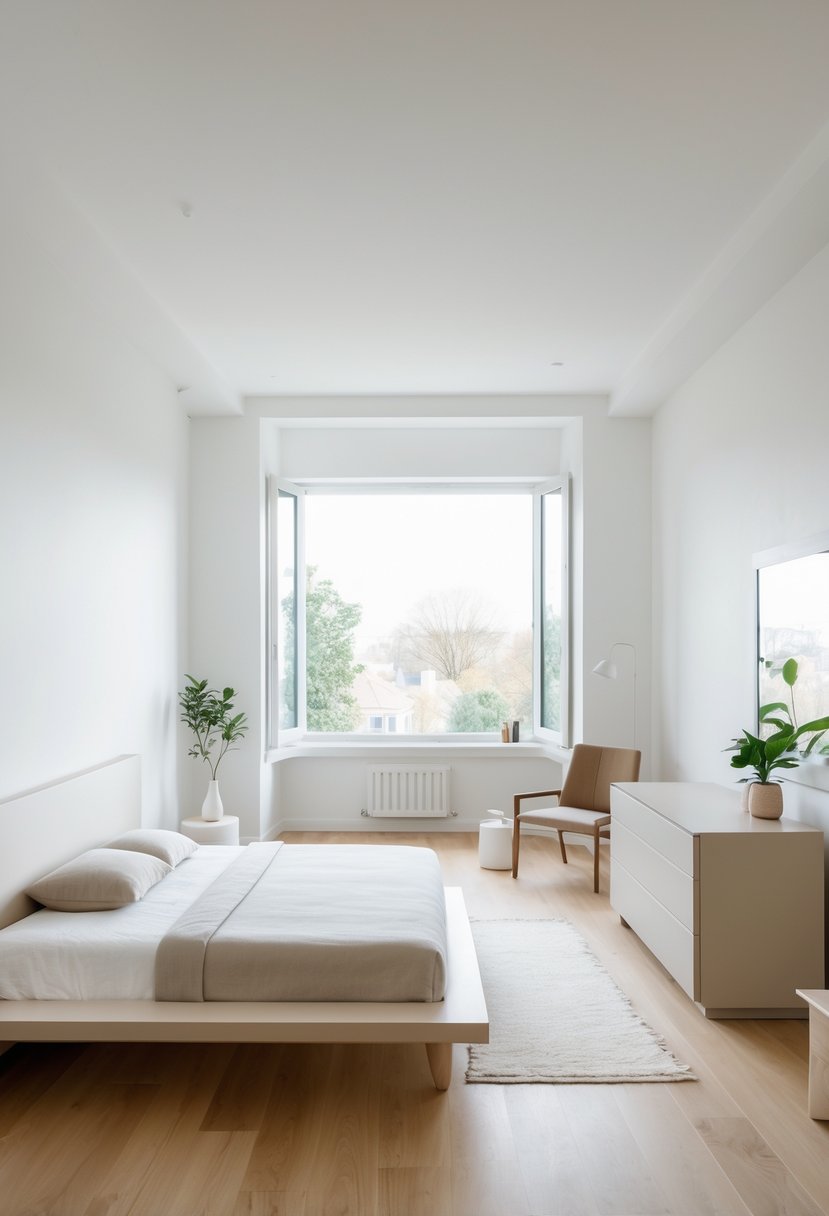
If you can, pair low furniture with wall-mounted lighting or pieces with slim legs—more floor shows, so the room feels airier. It’s a subtle trick, but it works.
10. Divide Long Rectangular Rooms Into Distinct Functional Areas:
If your room’s long and narrow, split it into zones—sleep, work, relax. Putting the bed on the short wall helps kill that bowling-alley vibe. Use rugs, lighting, or a bookshelf to mark out spaces. A desk or chair at the far end makes a little nook for work or downtime.
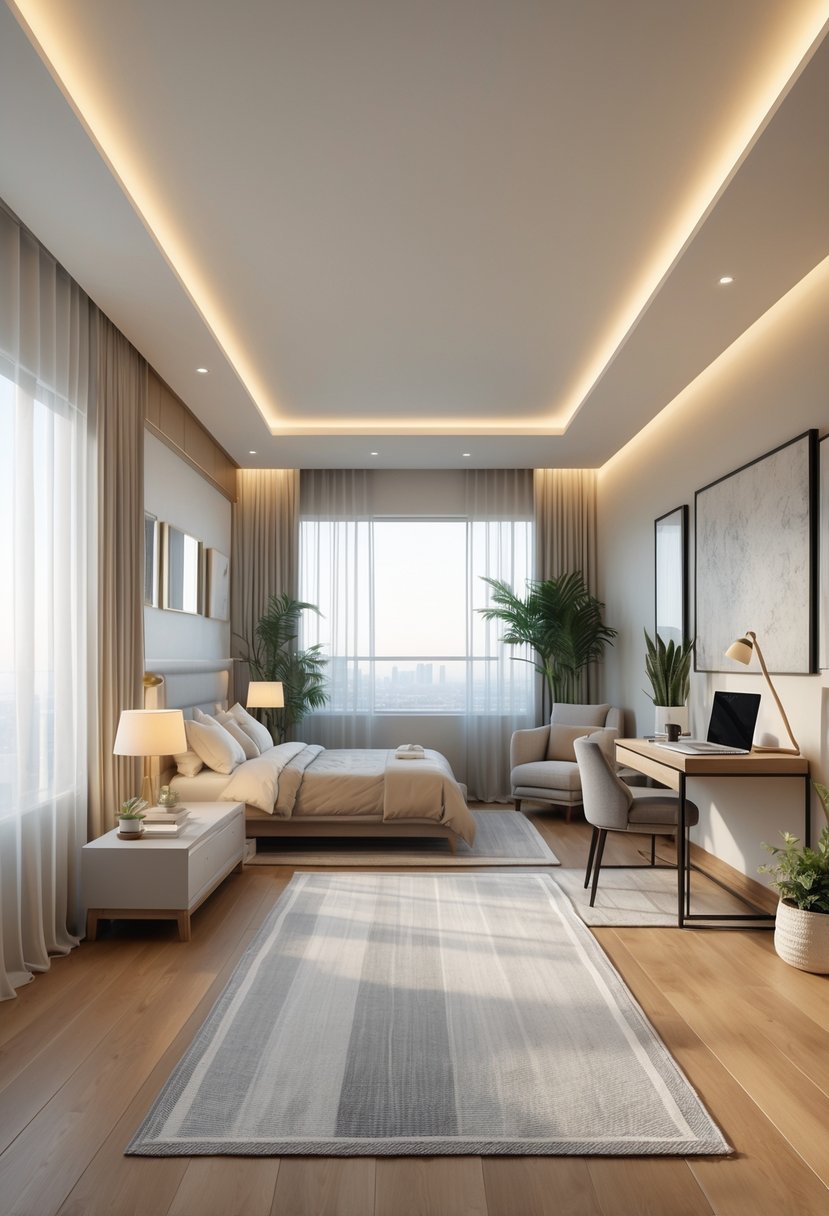
If you want privacy, try a sliding door or screen. It’s all about making the space work for you, not just fitting stuff in.
11. Choose Multi-Functional Furniture Like Storage Beds:
Multi-tasking furniture is a game changer. Storage beds or ottomans give you hidden spots for stuff, so you don’t need extra dressers or bins cluttering things up. Stash linens, off-season clothes, whatever—makes cleaning up less of a headache. Especially good in small rooms.
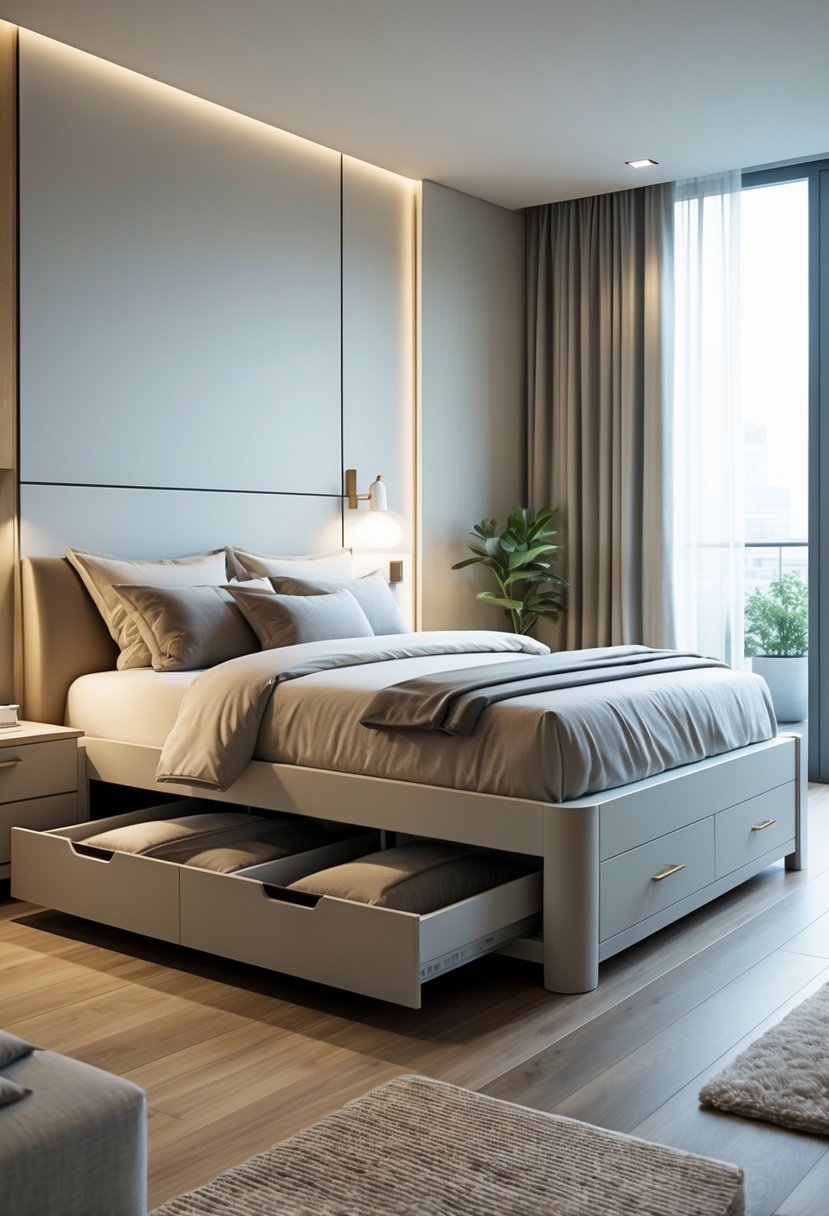
Just make sure drawers open easily and feel sturdy. Try to match the bed’s look to your style so it feels intentional, not like an afterthought.
12. Keep Pathways Clear For Easy Movement Around The Room:
Leave a good two feet or so around the bed and main furniture so you’re not bumping into things. Clear walkways just make life easier, period. Push bigger pieces against the wall and go for slimmer or double-duty furniture to save space. Wall lights and shelves help keep stuff off the floor.
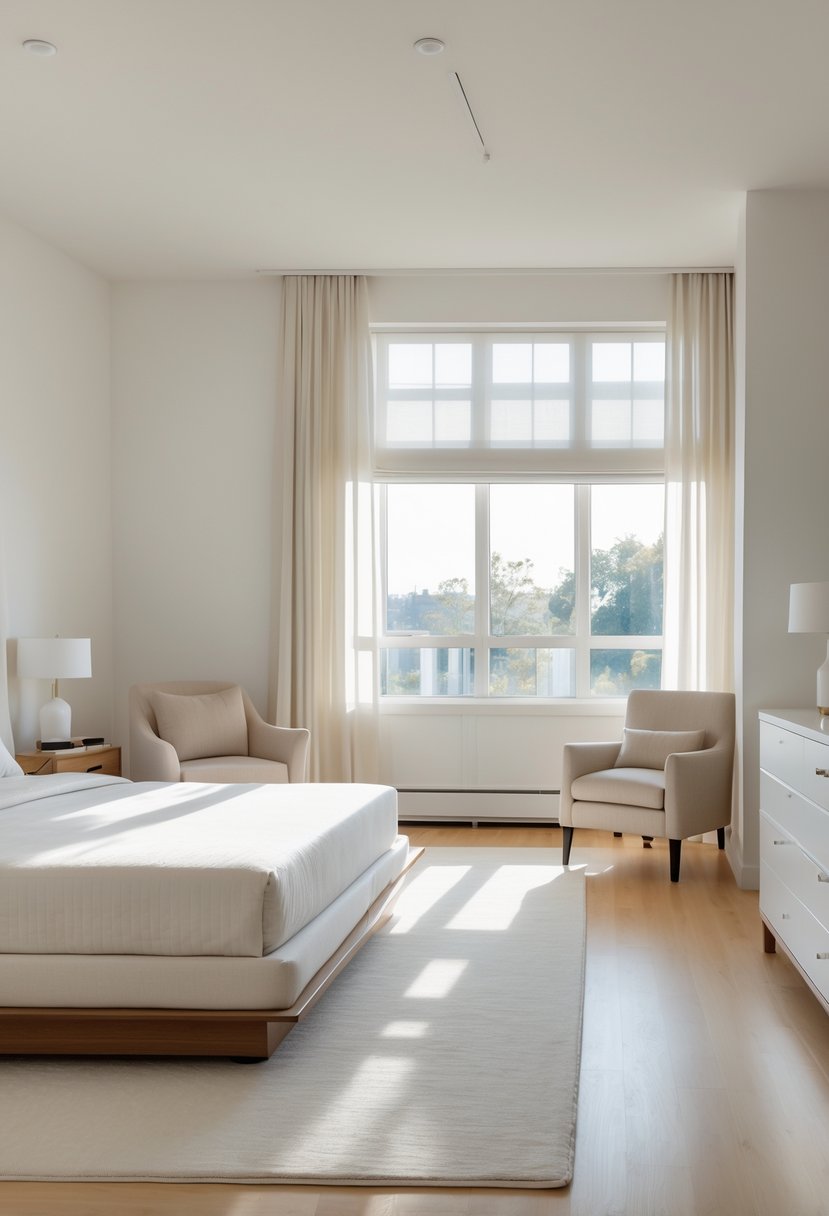
Check how doors and windows open before you commit to a layout. Walk through the room—if you’re dodging corners, something needs to move.
13. Use Mirrors To Create A Sense Of Depth And Light:
Mirrors are a classic for a reason. Put one across from a window to bounce light into darker corners—suddenly the whole room feels brighter. Full-length or a few smaller mirrors add depth and make tight spaces feel bigger. Match the frame to your decor for a pulled-together look.
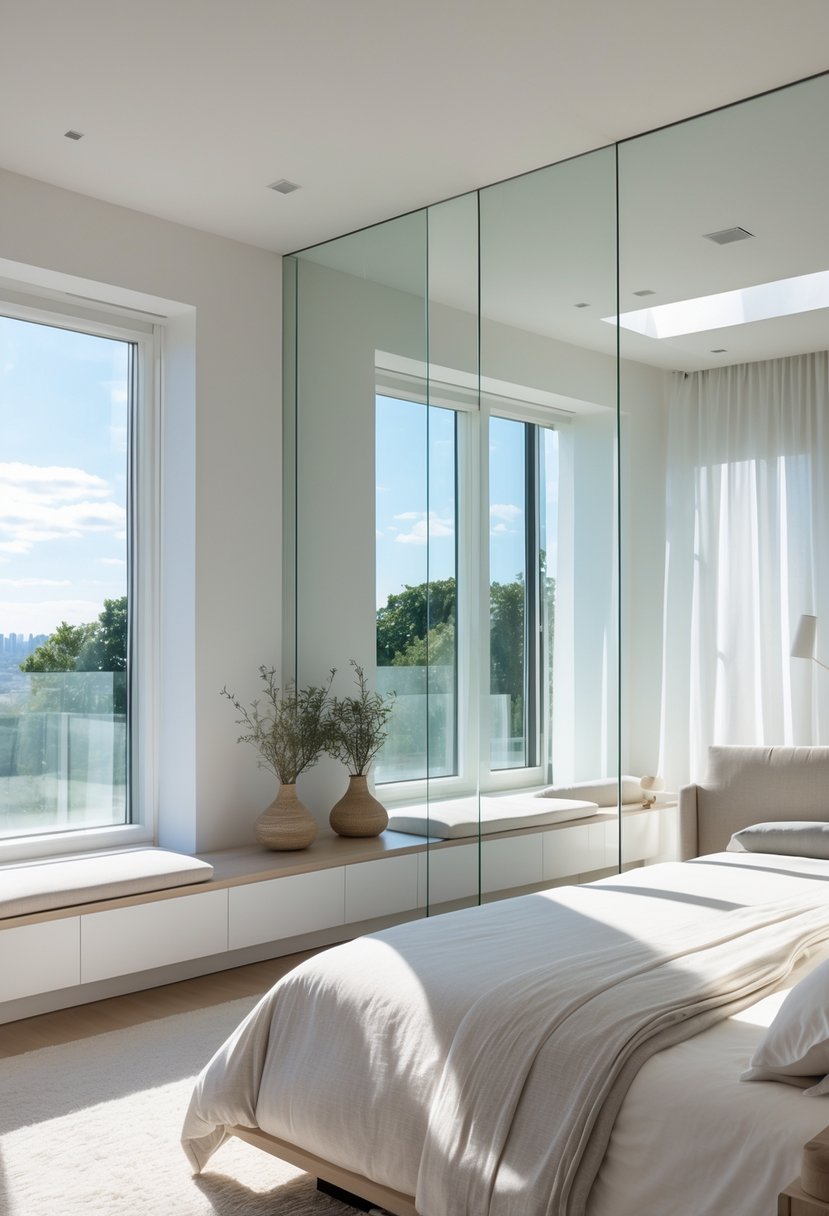
Angle mirrors to catch light or highlight something cool in the room. Keep them at eye level and wipe off fingerprints every now and then.
14. Balance Furniture Placement To Avoid Overcrowding One Side:
Try not to pile all the heavy stuff on one side of the room. Spread out bigger pieces so the space feels balanced and you can actually move around. Rugs, lamps, or a chair can balance out a bulky dresser or bed. Sometimes just shifting a nightstand or angling a chair helps more than you’d think.
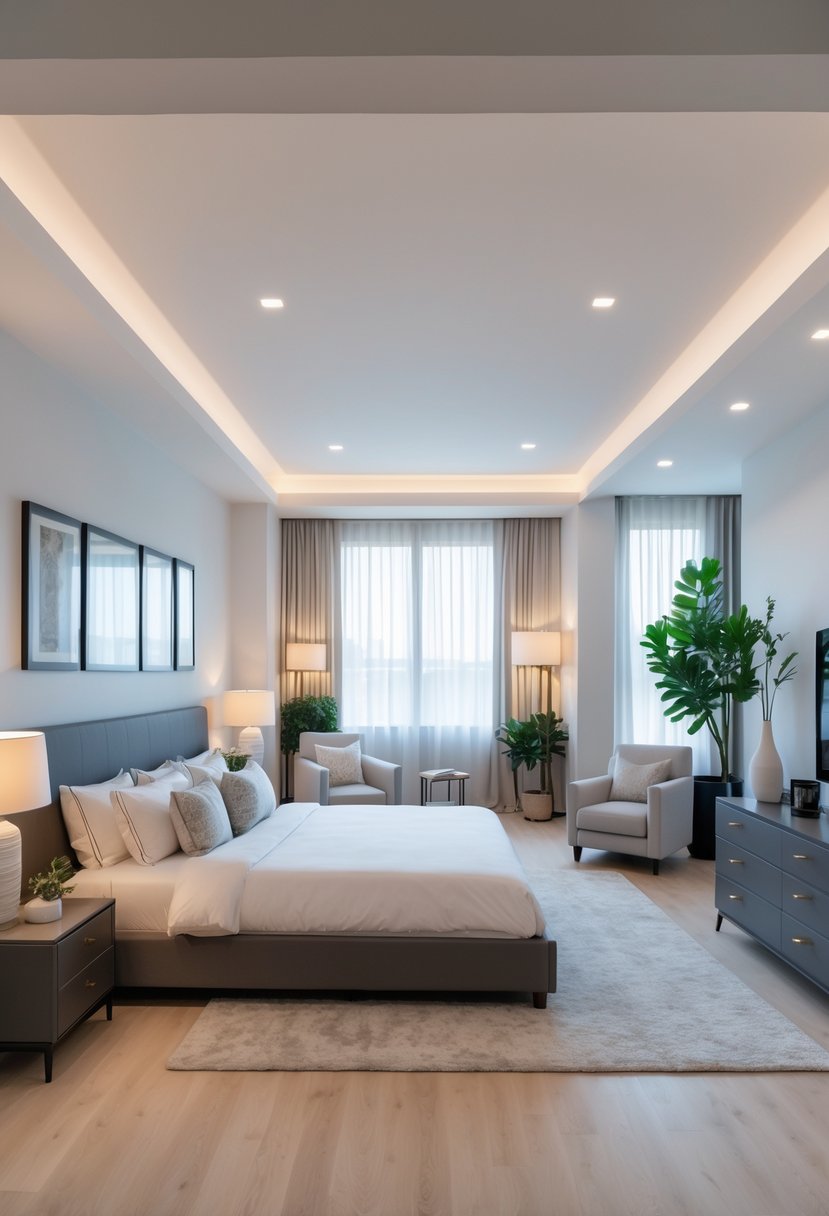
Keep walkways open, at least a couple feet wide. Makes the room feel calmer and way easier to use.
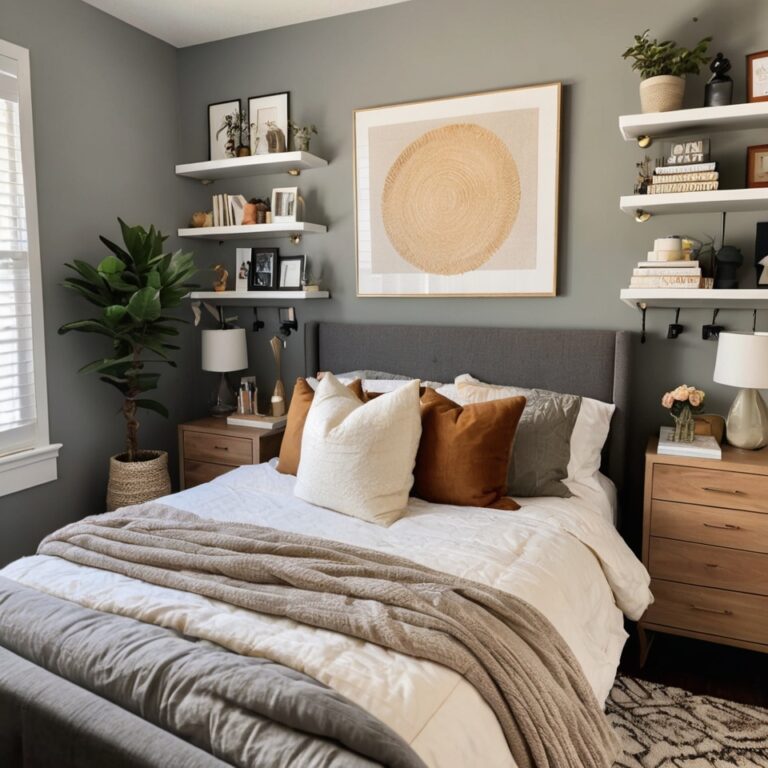
15. Arrange Bedside Tables On Both Sides Of The Bed For Symmetry:
Bedside tables on both sides? It just feels right—there’s something about that balance that makes a bedroom look pulled together. Plus, everyone gets their own spot for a lamp, book, or, let’s be real, their phone.
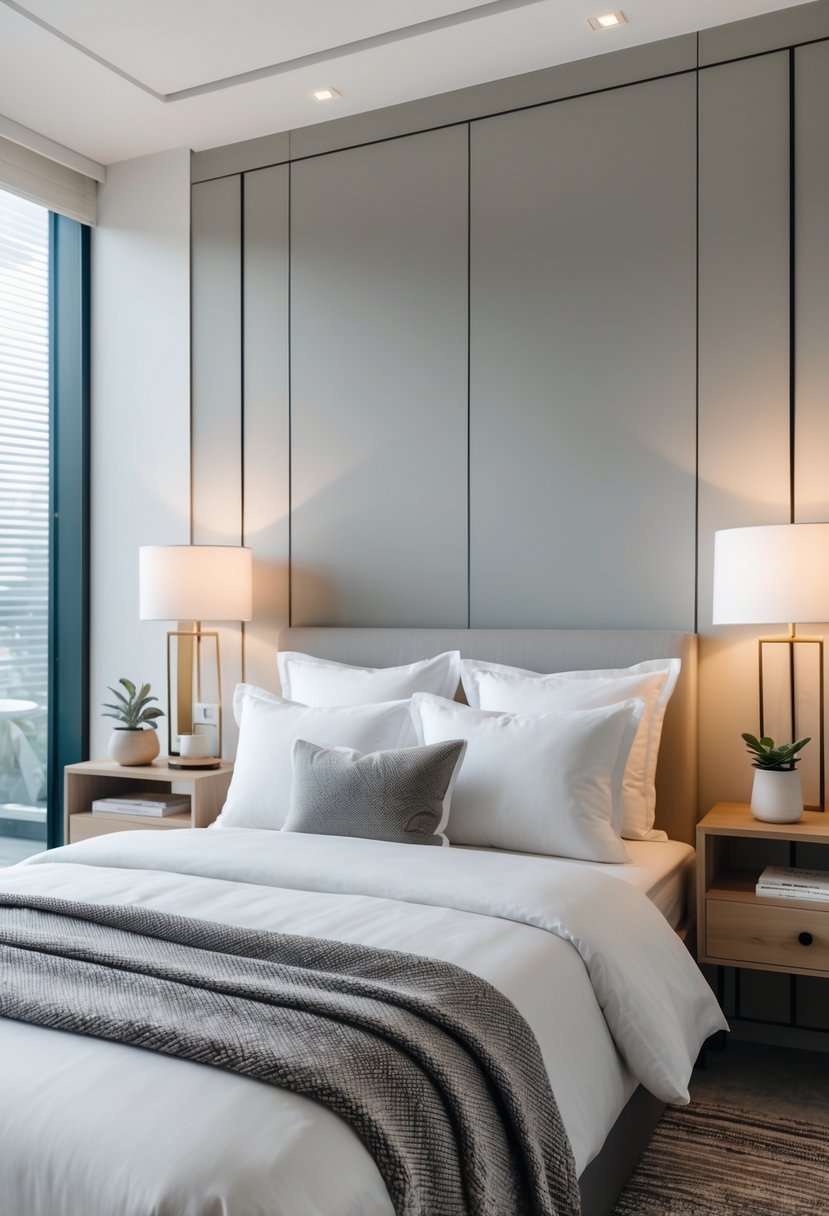
If you go for matching tables, things stay neat and a bit formal, but mixing it up with different styles can show off a little more personality. Just don’t forget to measure—nothing’s worse than squeezing past a too-big table every morning.