Stay Cozy All Winter: Your Simple Guide to Layering Bedding for the Perfect Night’s Sleep
Getting a good night’s sleep in winter is all about layering—think breathable layers that trap warmth but don’t leave you sweaty and uncomfortable. Start with the right base sheets, toss on a quilt or wool duvet for insulation, and top it off with a throw. This way, you can tweak your setup as you go—warmth and breathability, right where you want them.
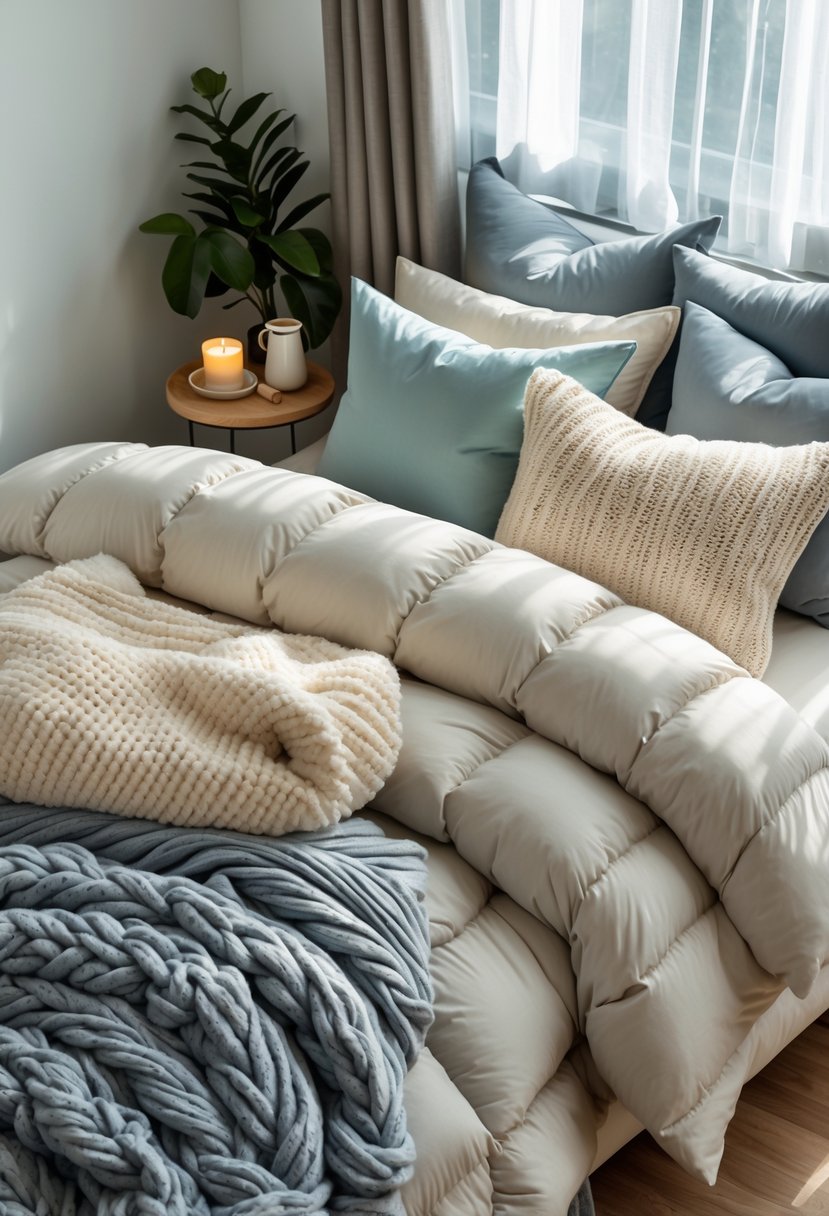
This guide covers why layering works, what to pick, and how to put it all together for warmth and airflow. If you’re tired of freezing toes or waking up sweaty, these tips will help you turn your bed into a cozy, flexible spot that actually keeps up with the weather.
Why Layering Matters for Winter Bedding?
Layering isn’t just for looks; it traps air, adds adjustable warmth, and helps wick away moisture. Honestly, it’s the easiest way to make your bed more comfortable and adaptable without a ton of effort.
Benefits of Layering a Bed:
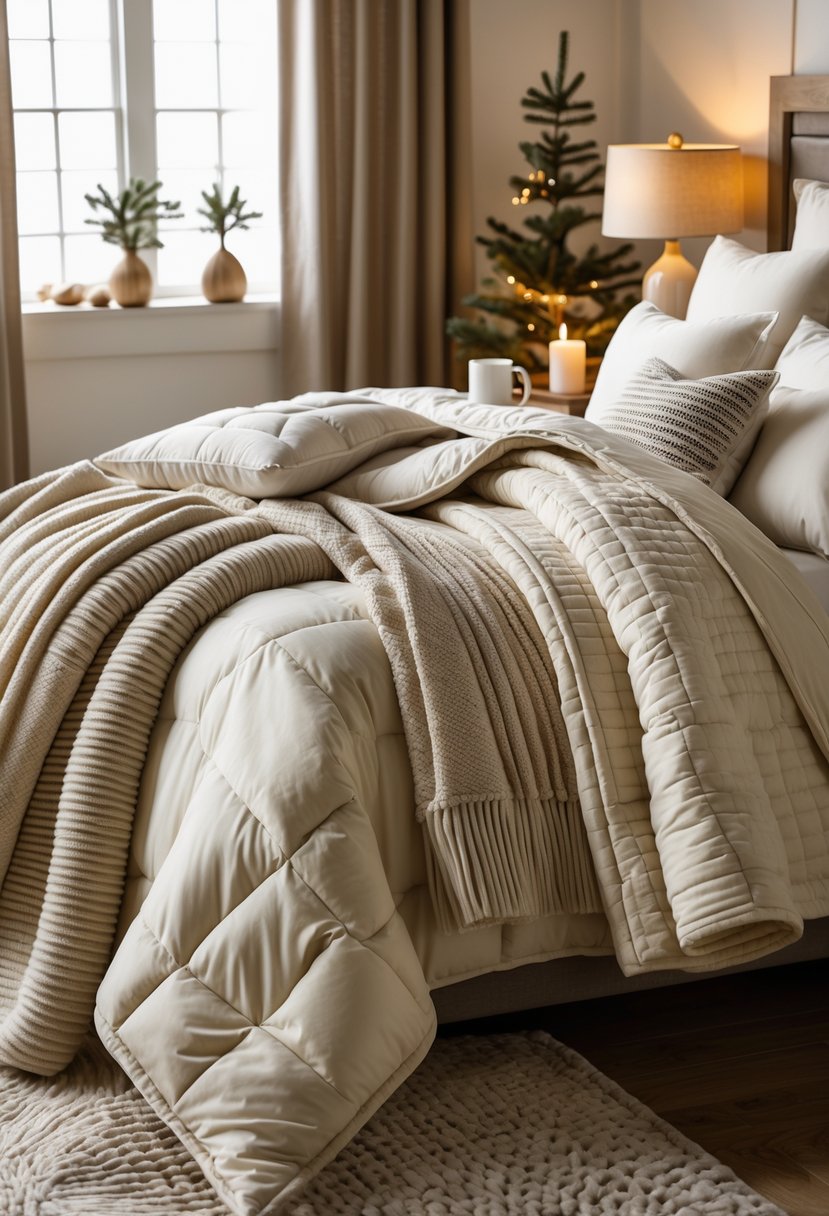
With layers, you’re not locked into one temperature all night. Start with a flannel or thick cotton sheet to keep heat close. Add a thin wool blanket or a quilt for that middle layer, then finish with a comforter or duvet on top.
This setup lets you adjust things whenever you need—ditch the quilt if you’re too warm, or grab an extra throw when it’s freezing. And hey, it helps keep your nice comforter cleaner, since the top layers take most of the wear.
Impact on Sleep Quality and Comfort:
A well-layered bed means fewer wake-ups from the cold and just better sleep overall. When layers trap heat close, your skin temperature stays steady, which, believe it or not, helps you drift through sleep cycles more smoothly.
The right textures matter too. Wool and fleece can feel super cozy and add that gentle pressure some folks find calming. And if you’re using breathable sheets, you’ll avoid waking up clammy—nobody wants that at 3 a.m.
Temperature Regulation in Cold Weather:
Layers actually manage heat better than just throwing on one giant blanket. Each layer traps air, slowing down heat loss and blocking out cold spots. Adding a mattress pad or topper underneath helps stop cold drafts from below.
Material choice makes a big difference: flannel and wool are classic for a reason, and down gives you warmth without a ton of weight. Natural fibers and breathable covers help move sweat away so you don’t end up chilly later. It’s all about balance—warm, but not stifling.
Essential Winter Bedding Layers and How to Use Them?
Let’s break down which layers do what. We’ll look at the protective base, the best sheets, the insulating stuff in the middle, and the top layer that seals in the warmth.
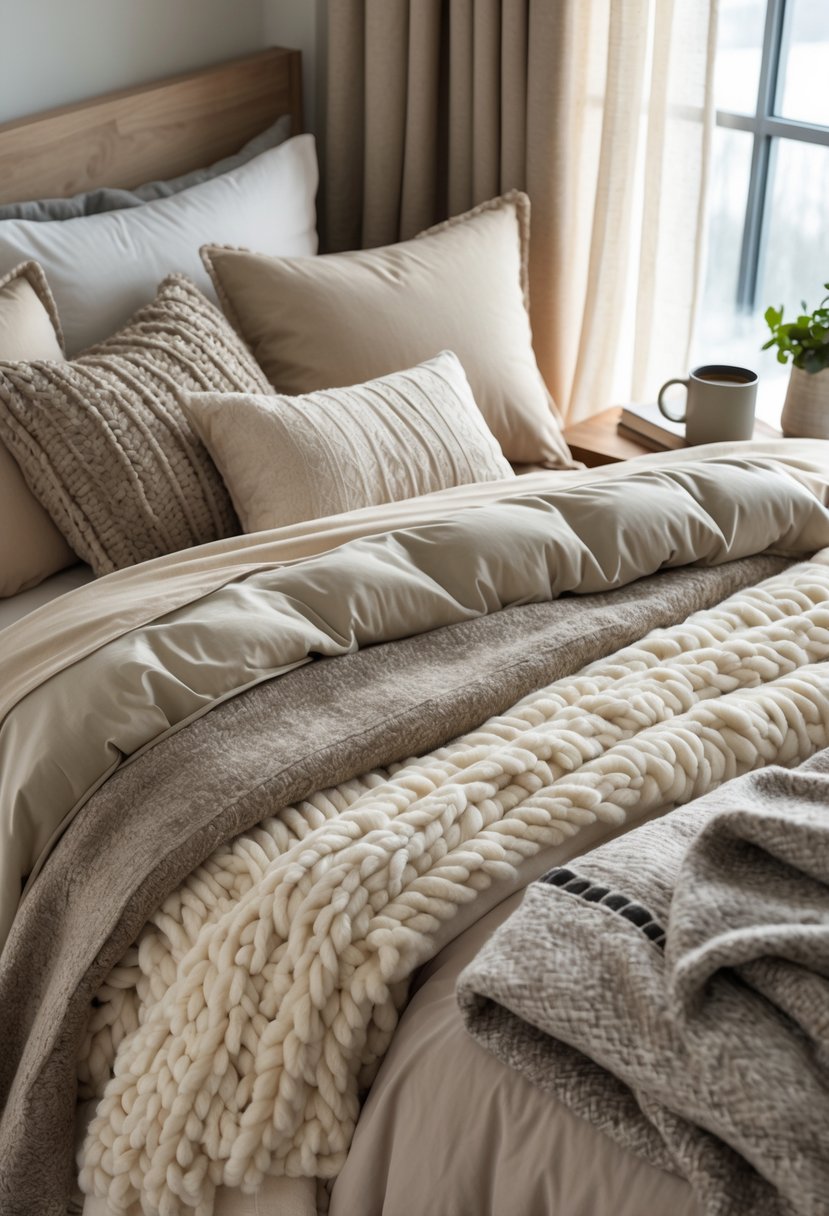
Foundation: Mattress Protectors, Pads, and Toppers
A mattress protector keeps spills, sweat, and general messes away from your mattress, plus it adds a touch of insulation. If you tend to sweat, go for a breathable protector—cotton or bamboo is great—so you don’t end up overheating.
Mattress pads add a bit of cushion and warmth. Quilted or wool pads bump up the coziness without making things bulky. They sit under your sheets and can help even out a mattress that’s seen better days.
Toppers can totally change the feel of your bed. Memory foam traps heat, so if you run hot, maybe try a gel-infused or breathable version. Go thicker (2–3 inches) if you want more insulation; thinner ones just soften things up a bit.
Sheets: Materials and Their Winter Performance
Cotton sheets are a safe bet, but for winter, look for flannel or higher thread counts. Flannel’s brushed texture holds warmth and feels soft right away—no cold shock when you climb in.
If you’re a sweaty sleeper, percale cotton or TENCEL sheets are more breathable and wick away moisture. Pair those with good insulating layers so you don’t end up cold and damp.
Flat sheets add a barrier between you and the heavier stuff, and a fitted sheet keeps everything in place. Sometimes mixing a flannel fitted sheet with a cotton flat sheet gives you the best of both worlds—warmth and breathability.
Middle Layers: Blankets, Quilts, and Coverlets
Blankets are your main insulators. Wool blankets are hard to beat—they’re warm, wick moisture, and keep working even if they get a little damp. Throw one over your sheets as a solid base layer.
Quilts and coverlets add loft and trap air without weighing you down. Cotton or down-alternative quilts give warmth and a bit of style, too. If you want more heat, pick a fluffier (higher loft) one.
Honestly, two or three thin layers beat one heavy blanket every time. Try a wool blanket, then a quilt, and maybe a lightweight coverlet. You can peel one off if you get too hot, or pile them on as needed.
Top Layers: Comforters, Duvets, and Throws
The top layer is where you lock in warmth and add a finished look. Down comforters with high fill power (think 600–800+) are super warm without being bulky. Down alternatives work well if you have allergies and still trap heat nicely.
A duvet with a removable cover is just practical—easier to wash and you can switch up the fabric depending on the season. For winter, grab a comforter labeled “warm” or “winter weight.”
Throws are your secret weapon. Keep a chunky knit or wool throw at the foot of the bed for those extra-cold nights. Layering a throw on top gives you instant warmth and a cozy vibe.
How to Layer a Bed for Maximum Warmth and Breathability?
Here’s how to put it all together—what goes where, which fabrics work best, and how to tweak your setup if the weather flips on you. It’s less complicated than it sounds, promise.
Step-by-Step Layering Process:
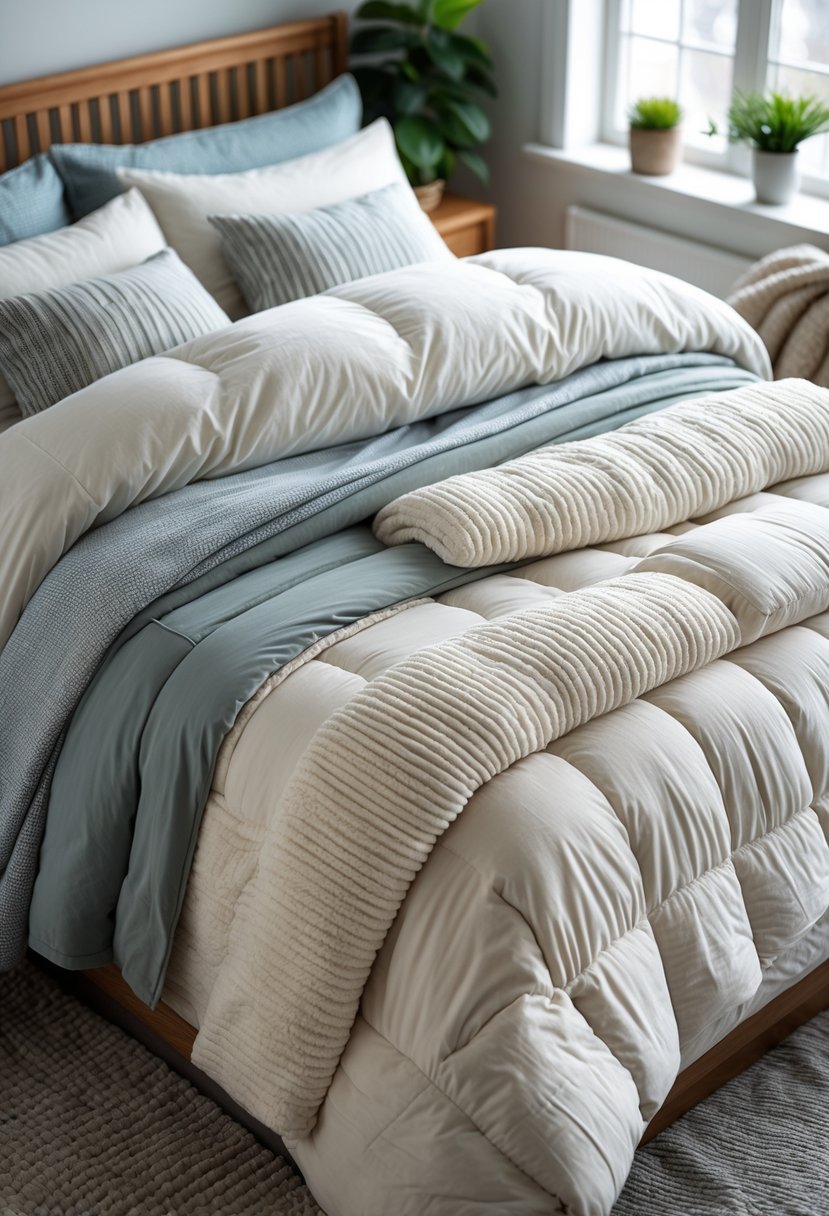
Start with a mattress pad or topper for insulation. Next, throw on a fitted sheet—cotton or flannel, depending on how cold it is.
Add a lightweight blanket or thin wool layer as your first blanket. Then a quilt or coverlet for middle insulation. The comforter or duvet goes on top; this traps air between layers and ups the warmth factor.
Finish with a throw at the foot of the bed so you can grab it if you get chilly. Match your pillow shams to your top layers for a pulled-together look. Tuck sheets and blankets in at the sides and foot—no one likes cold drafts sneaking in.
Choosing the Right Materials for Each Layer:
Natural fibers are your friend. Cotton or bamboo sheets go next to your skin since they breathe well. For blankets, wool or blends keep you warm and handle moisture like a champ.
For the top layer, a high-loft quilt or a down-fill comforter with good fill power does the trick. If down isn’t your thing, pick a synthetic fill that still breathes. In really cold rooms, flannel sheets add warmth without making things heavy.
Skip plastic-backed mattress pads or thick polyester sheets next to your skin—they trap sweat and get uncomfortable fast. For duvet covers, stick with cotton or linen so air can still circulate.
Adapting Your Setup to Temperature Changes:
On warmer nights, just use the quilt and maybe a throw. When it turns frigid, layer up with both quilt and comforter, or even two thinner duvets for modular warmth. That way, you’re never stuck sweating or shivering.
If your room’s on the humid side, stick with natural fibers and lighter layers to avoid feeling sticky. For dry, cold air, add more loft and maybe a wool or down blanket. Keep a spare blanket handy so you can adjust in the middle of the night without getting up.
If you notice cold spots—especially near your feet—add a layer or move things around until you’re comfy all over.
Styling and Enhancing Your Winter Bed:
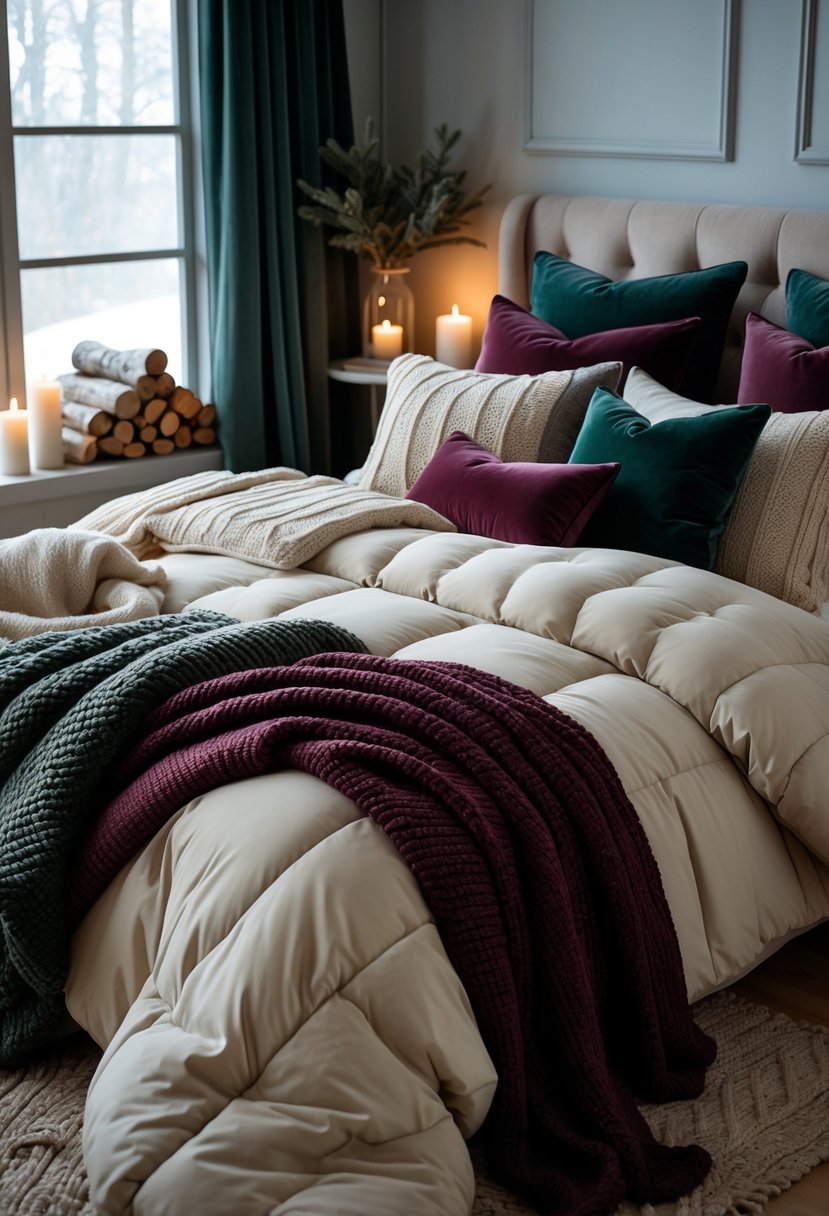
It’s not just about warmth—think easy care and layered textures that feel good and look inviting. Pick pillows and throws that fit your sleep habits and don’t make laundry a chore.
Adding Pillows for Comfort and Support:
Mix it up with pillows—use one or two supportive ones for sleeping (memory foam or down alternative work great), then add a couple of softer ones upfront for that plush, inviting look.
If allergies bug you, grab hypoallergenic pillow covers and synthetic fills—they’re easy to wash and keep dust mites at bay. For reading in bed, a small bolster or wedge pillow at the head helps with back support.
Stack sleeping pillows at the back, then decorative shams, and finish with an accent pillow. It’s functional, and honestly, it just looks nice.
Tips for Arranging Throws and Decorative Blankets:
Keep your warmest blanket or duvet closest to you so you can snuggle under it easily. A wool or down-alternative duvet is solid for core warmth; put a breathable layer underneath if you need to adjust for different nights.
Fold a heavy throw at the foot for extra warmth after dark. Drape a lighter throw somewhere in the middle or at a corner for a bit of style and quick access. Go for contrasting textures—maybe a chunky knit, fleece, or woven wool—to make things pop.
Stash an extra blanket in a basket or on a bench nearby for guests or those extra-chilly nights. And if you hate complicated laundry, pick materials that are easy to toss in the wash.
Maintaining and Caring for Winter Bedding:
Wash sheets and pillow protectors every week or two to keep things fresh. Use machine-washable protectors—they make life easier and help bedding last longer.
Check care tags on duvets and blankets. Most down-alternative comforters can go in a home washer, but wool throws might need spot cleaning or a trip to the cleaners. Air out natural-fiber blankets on sunny days—they’ll smell nicer and feel fresher.
Fluff and rotate pillows every week to keep them plump. Store extra blankets in cotton bags when not in use so they don’t get musty or attract pests.
Frequently Asked Questions:
Here you’ll find some practical ideas for keeping warm, exactly how to stack your bedding, and even how color choices might trick your brain into feeling cozier. The answers are straightforward—nothing fancy, just stuff you can actually try tonight if you want.
How can one maximize warmth by layering blankets?
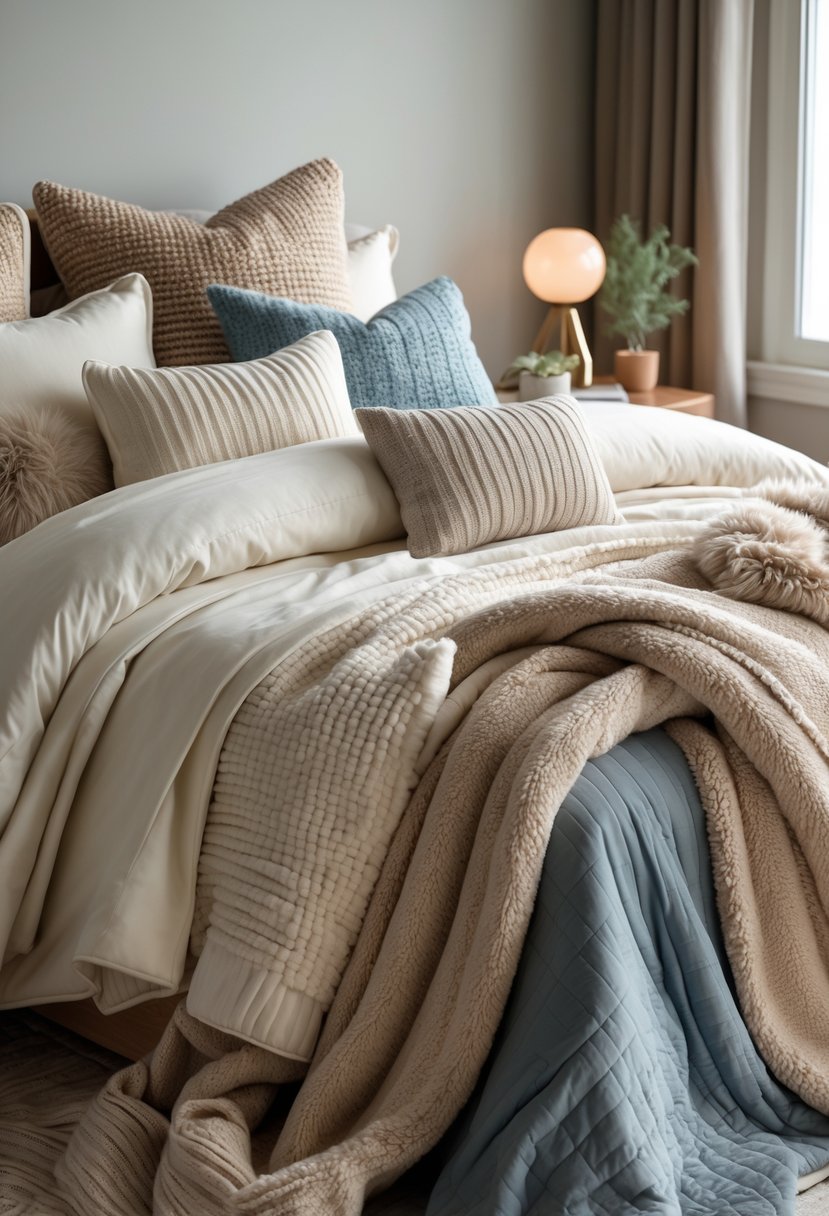
Honestly, mixing up blanket materials is key. I’d start with something light and soft—cotton or flannel—right up against your skin. Next, toss on a heavier wool or fleece blanket, and then top it all off with a big, fluffy comforter (down or synthetic, whatever you’ve got).
It’s not rocket science, but putting the thinner, more breathable layers closer to your body helps wick away any sweat, while the thicker stuff on top keeps the heat from escaping.
If you’ve got a mattress topper or an insulated pad, those can make a surprising difference too. They sort of block the cold coming up from below, so you’re not losing warmth through the mattress.
In what order should one arrange their bedding layers?
Start with a fitted sheet to cover the mattress. Then comes your flat sheet—flannel if you want it extra toasty. If you use a mattress pad or topper, that goes on next. After that, you’re building your blanket stack: thin layer first, then a medium-weight blanket, and finally your big duvet or comforter on top.
Pillows and throws are the finishing touches. I like tossing a throw at the end of the bed for my feet—easy to kick off if I get too warm, but great for those chilly nights.
Honestly, I change it up depending on the weather. If I’m sweating, I ditch a blanket. If it’s freezing, I pile on another. No shame in tweaking it night to night.
Can the color of winter bedding affect its warmth?
Honestly, the color of your bedding isn’t going to make you physically warmer, at least not indoors. Sure, dark colors absorb more light, but let’s be real—unless you’re sleeping under a spotlight, most of that extra heat just isn’t happening in a typical bedroom.
That said, color does play with your mind a bit. Warm shades like reds or oranges can make a room feel cozier, at least visually. Maybe it’s psychological, but some folks swear they feel snugger just looking at them.
If you’re after actual warmth, though, it all comes down to what your bedding’s made of. Flannel, wool, down, or some high-quality synthetic fill—those are what really count. Color’s fun, but it won’t keep you toasty on its own.